

Scope changes are a two-party process. Clients submit through a magic link, agents draft the scope, cost, and schedule impact, and both sides approve it.
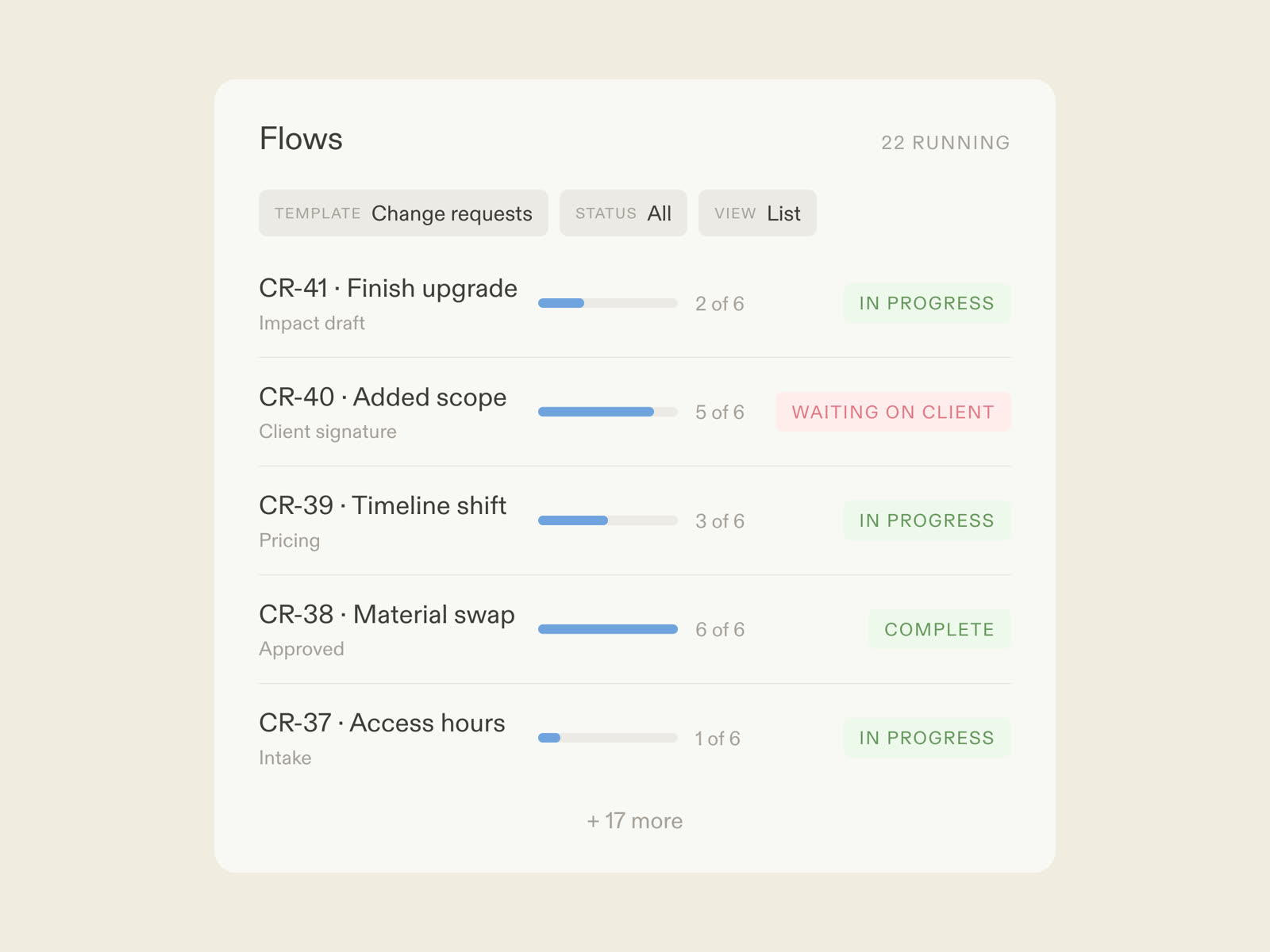






Design, run, measure, and improve in the same system
Describe how a change moves from request to signed approval, or hand Moxo your template. The AI builder makes it a working flow.
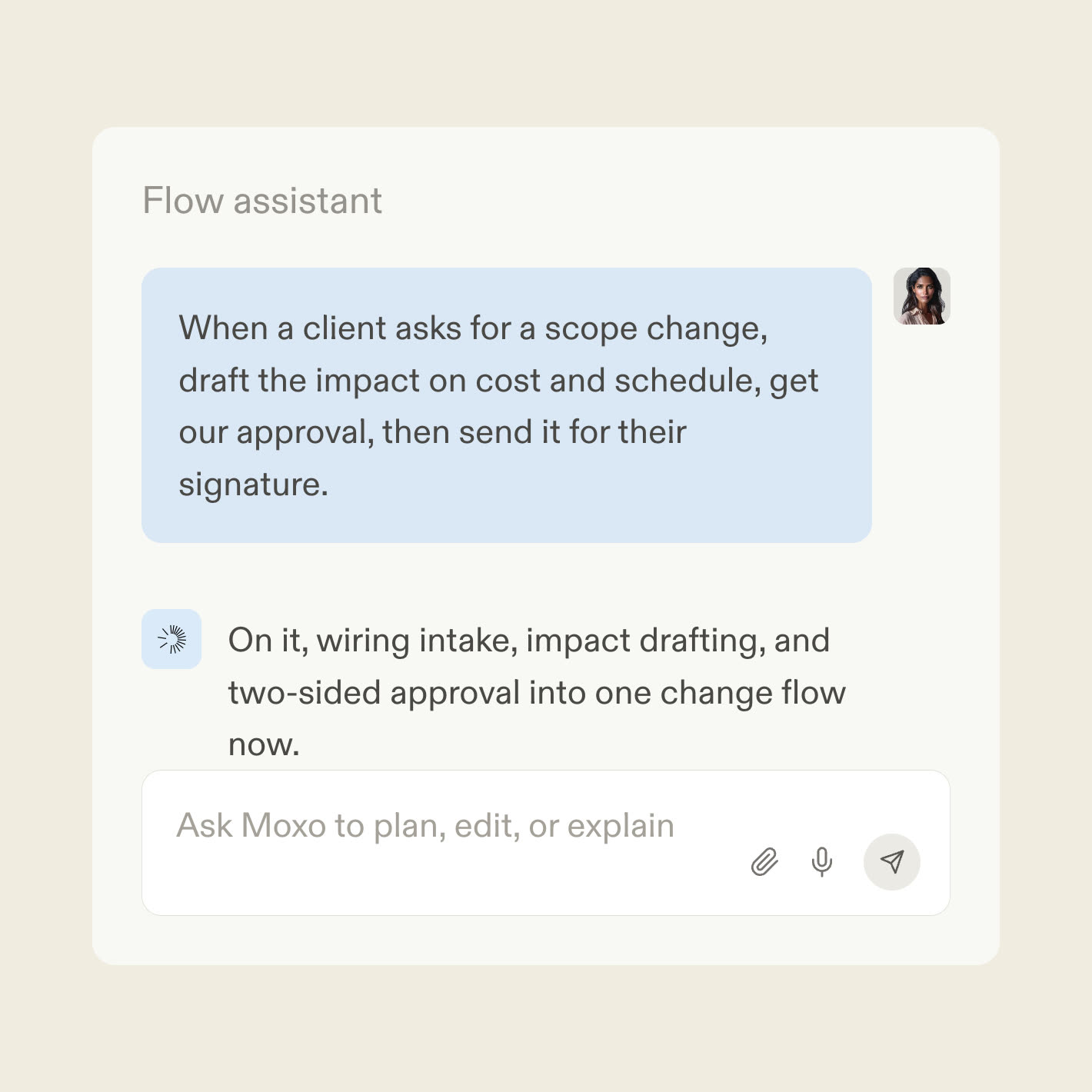
Agents classify the request, draft the impact assessment from the contract and plan, and prep options, grounded in your terms.
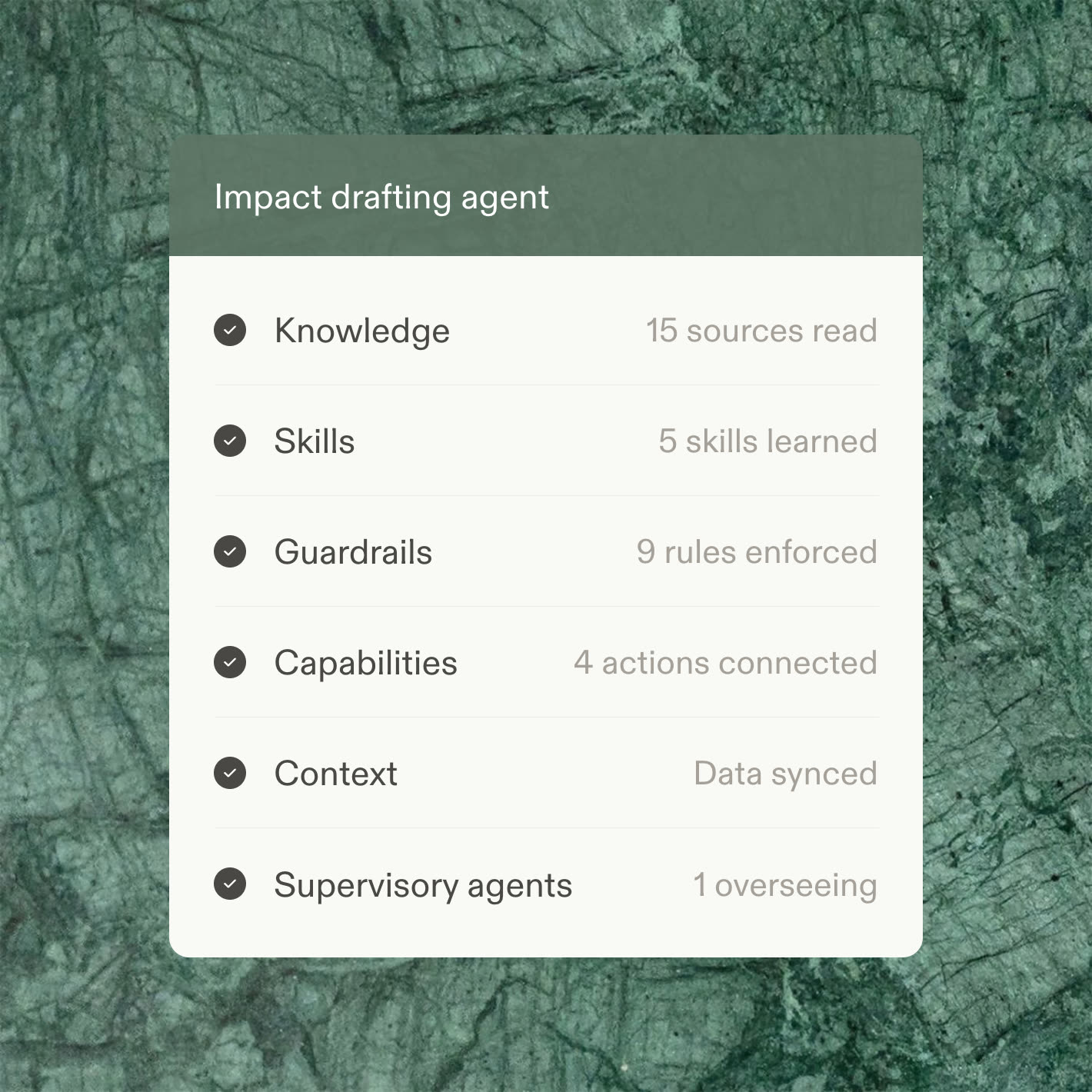
Pricing, feasibility, and priority calls route to named owners with the impact drafted. Nothing changes scope on its own.

Clients raise requests, review impacts, and sign approvals through secure magic links. One thread, no attachment archaeology.
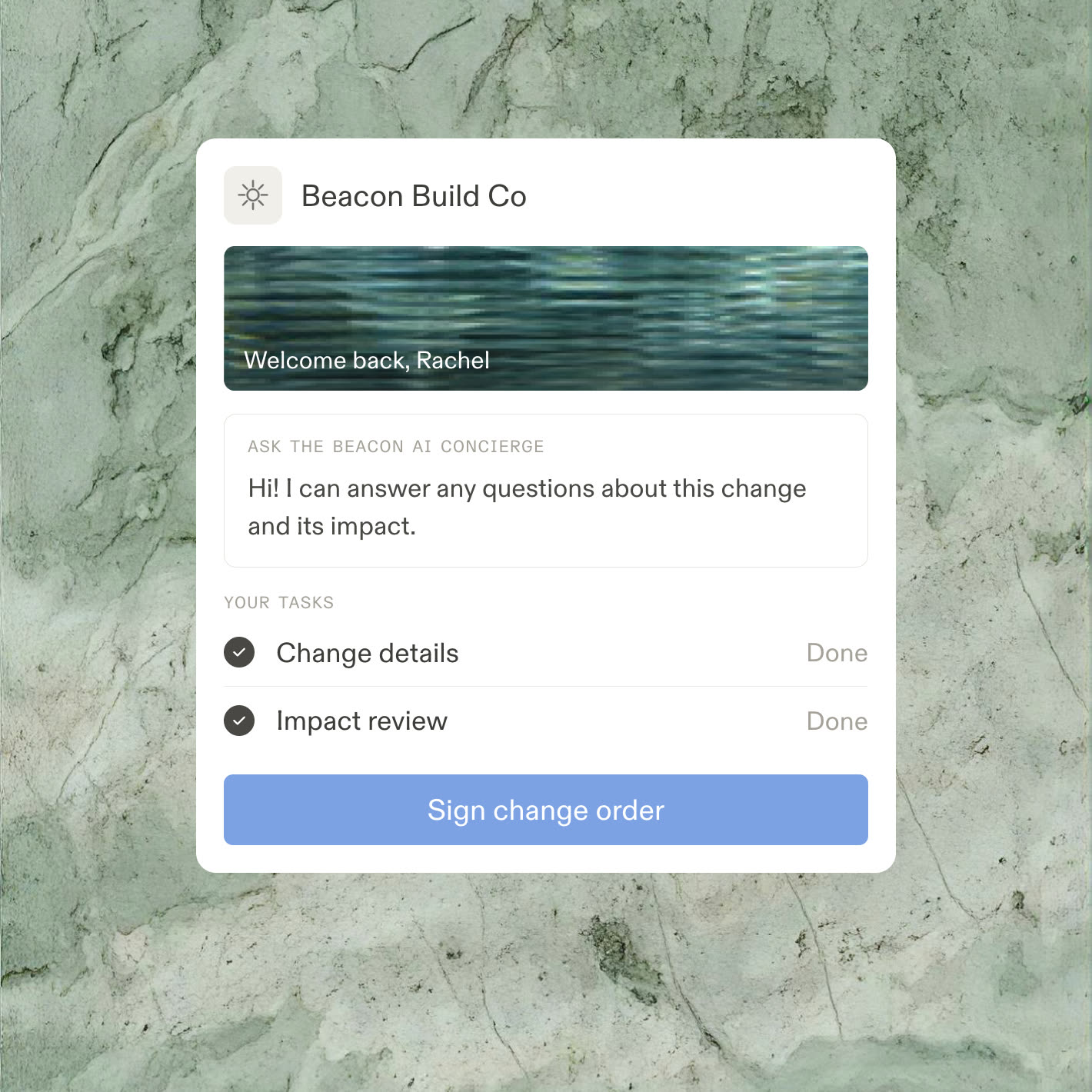
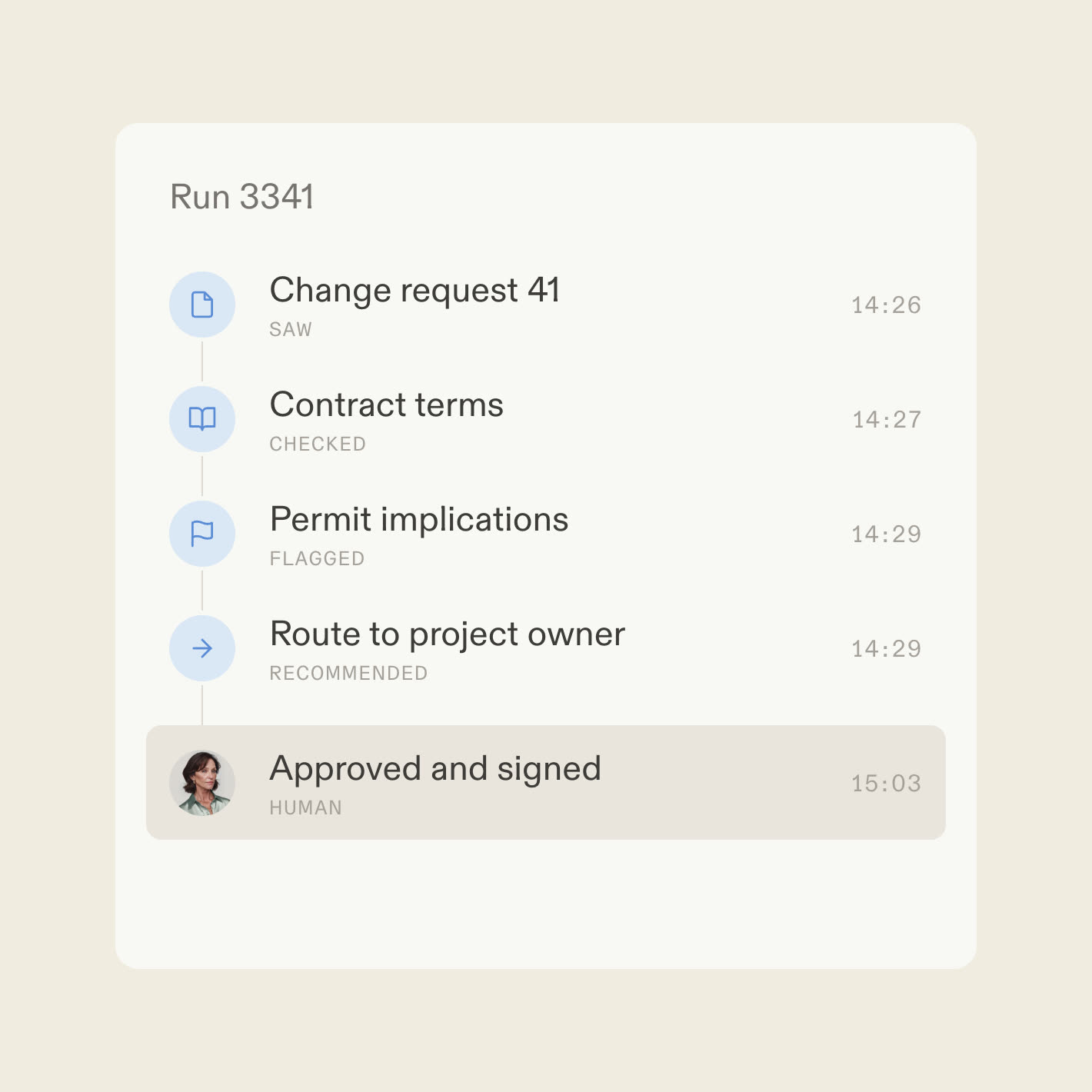
Each request leaves a trace: what was asked, what it costs, who approved on both sides, and when. No he-said scope.
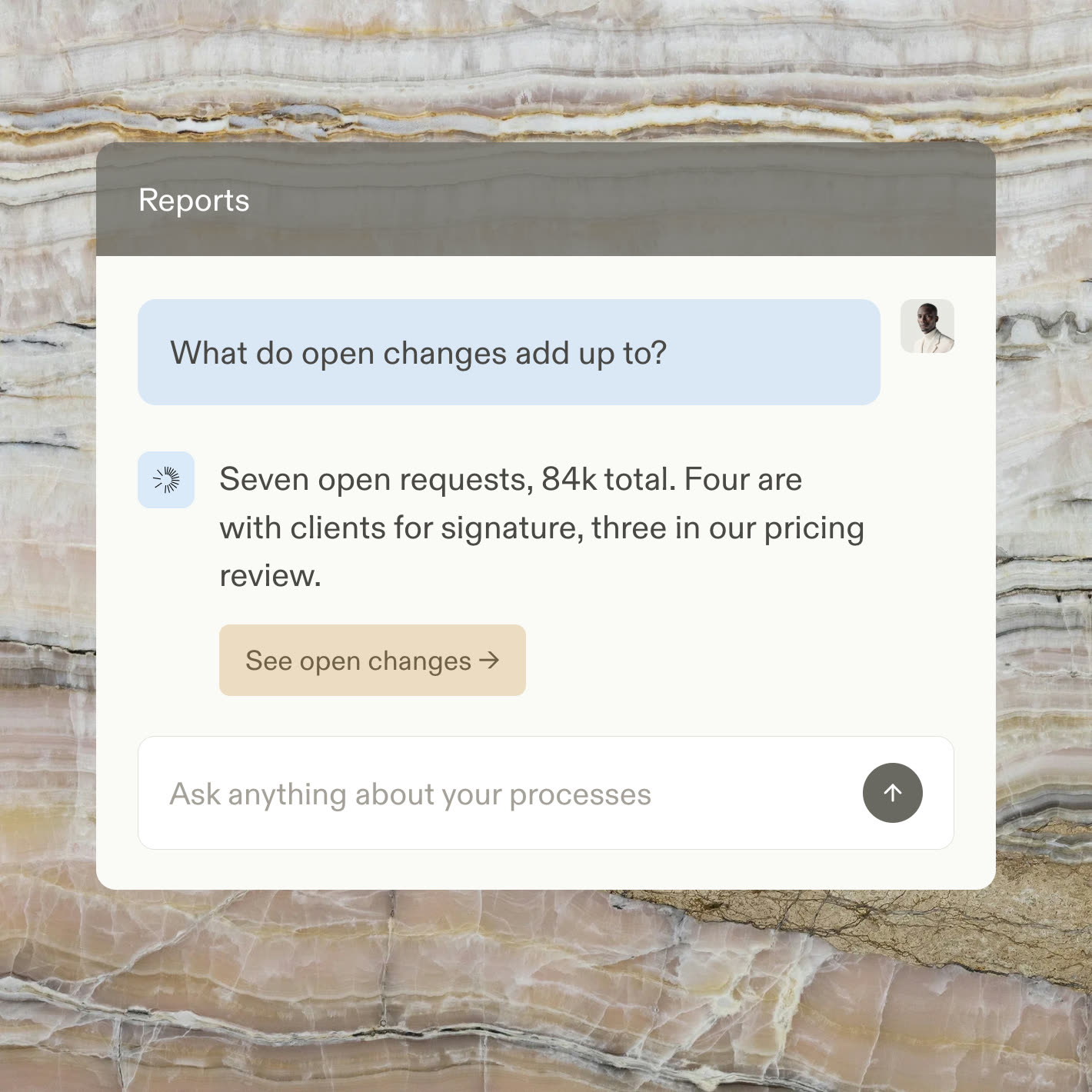
Ask what changes are open and what they add up to. Answers come from live flows, in plain language.
.webp)









Moxo is built for the trust requirements of serious operations. It includes every control enterprise teams expect: SOC 2 Type II, GDPR, SAML SSO, audit trail, data encryption, role-based access, and more.