Chief compliance officer
Anti-corruption counsel
Third-party risk manager
Procurement director
Business development lead
Regulatory affairs manager

This process is used when the organization proposes to engage a third party that may interact with government officials, operate in high-corruption-risk jurisdictions, or represent the organization in business development, sales, or procurement activities. It applies when the third party’s background, ownership, government connections, and business practices must be assessed against the organization’s anti-bribery risk framework. It is common when compliance, legal, and the business unit must coordinate to evaluate the third party, determine the appropriate level of due diligence, and approve or reject the engagement. Ideal for multinational corporations, financial institutions, and any organization with anti-bribery compliance obligations.
The anti-bribery due diligence process typically involves compliance analysts who conduct screening and due diligence research, anti-corruption counsel who evaluate legal risk and advise on the engagement, business unit sponsors who propose the third party and provide the business justification, the third party who provides disclosure information and documentation, and senior compliance leadership who approve high-risk engagements.
Risk-based third-party assessment that calibrates the depth of due diligence to the level of bribery and corruption risk. Documented compliance decisions so every third-party engagement includes a clear record of the risk assessment, findings, and approval rationale. Regulatory compliance with FCPA, UK Bribery Act, and other applicable anti-corruption laws through a demonstrable due diligence process. Reduced corruption exposure by identifying red flags — such as government connections, adverse media, or opaque ownership — before the relationship is established. Ongoing monitoring framework that ensures high-risk relationships are reassessed at defined intervals.
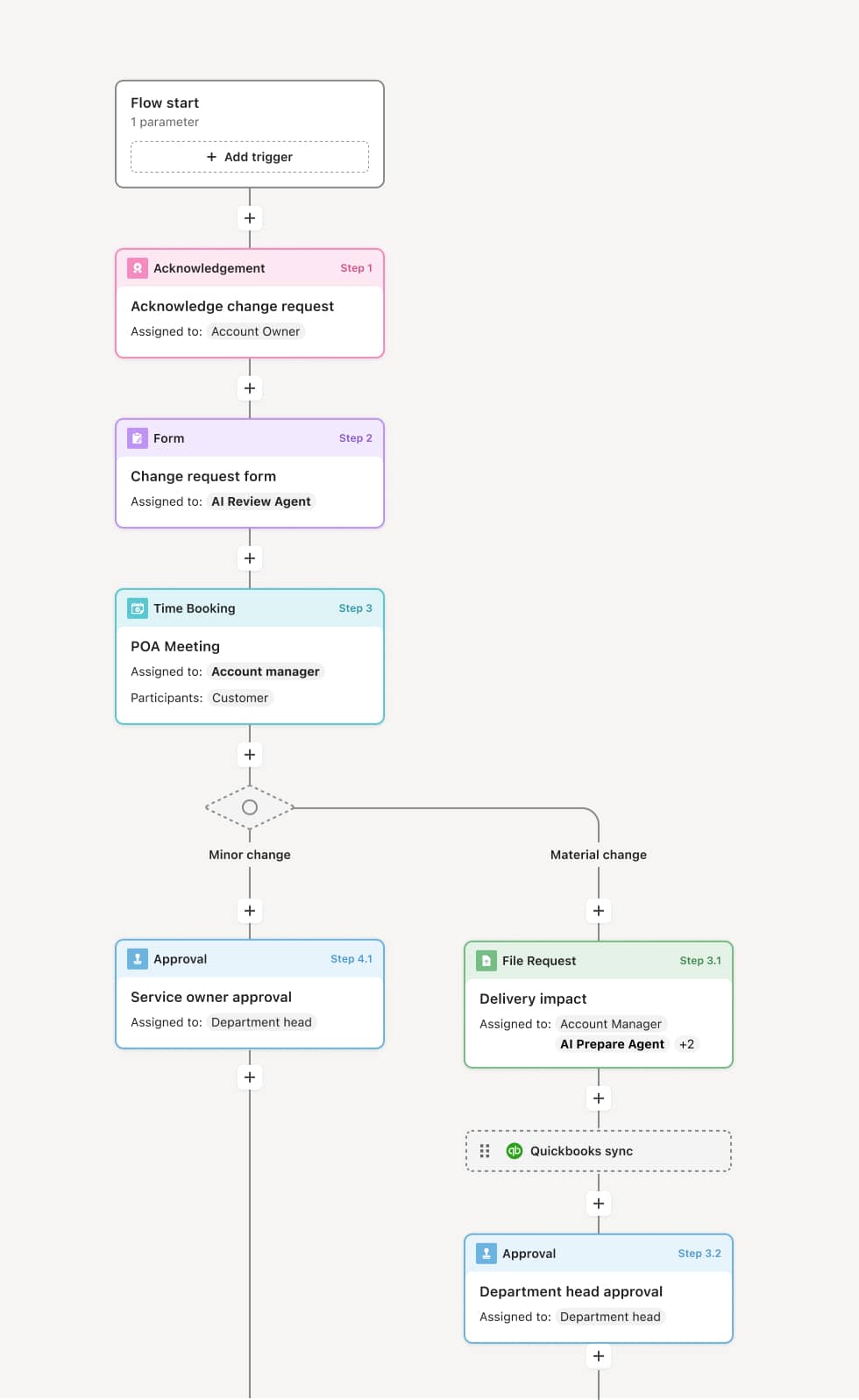
Your version of this process may vary based on roles, systems, data, and approval paths. Moxo’s flow builder can be configured with AI agents, conditional branching, dynamic data references, and sophisticated logic to match how your organization runs this workflow. The steps below illustrate one example.
Third-party risk classification
The process begins when a business unit proposes a new third-party engagement. The compliance team classifies the third party’s risk level based on factors including the nature of the engagement, geographic risk, whether the third party will interact with government officials, and the transaction value. An AI Agent can assist by pre-scoring the risk based on country corruption indices, industry risk factors, and the engagement type.
Due diligence screening
The compliance analyst conducts initial screening, which may include sanctions and watchlist screening, adverse media searches, government official and PEP (politically exposed person) checks, and corporate registry searches. For higher-risk third parties, enhanced due diligence is initiated, which may include detailed background investigations, beneficial ownership research, and site visits.
Third-party disclosure and documentation
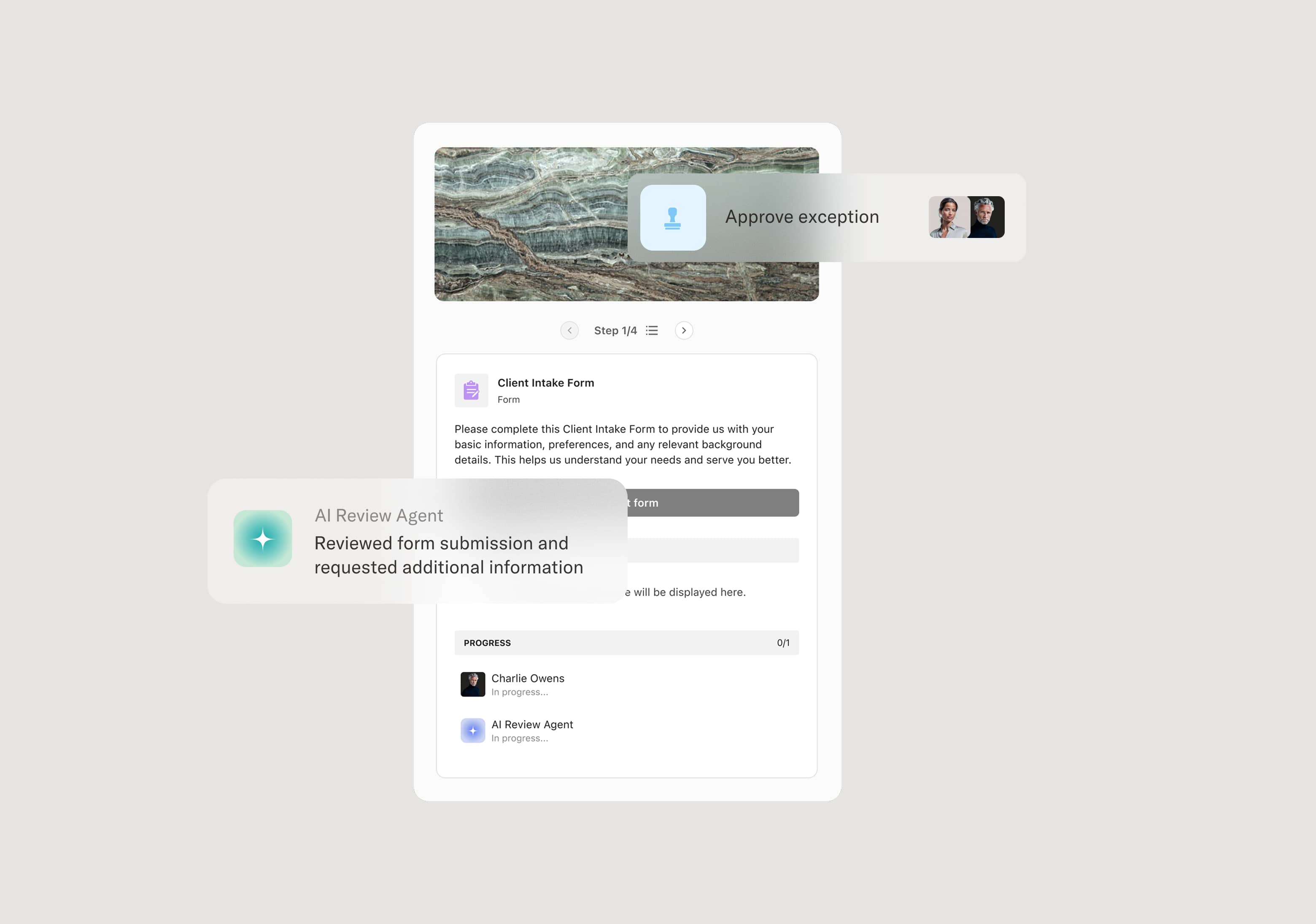
The third party is asked to complete a due diligence questionnaire disclosing ownership, government affiliations, prior legal or regulatory actions, and business relationships. Supporting documentation — such as corporate registration, financial statements, and compliance certifications — is collected. An AI Agent may verify questionnaire completeness and flag inconsistencies with screening results.
Risk assessment and findings
The compliance team evaluates all due diligence findings, identifies any red flags, and documents the overall risk assessment. Red flags may include government connections not disclosed by the third party, adverse media, sanctions matches, opaque ownership structures, or a history of enforcement actions.
Approval and engagement decision
Based on the risk assessment, the engagement is approved, approved with conditions (such as enhanced contractual protections, monitoring, or training), or rejected. High-risk engagements require senior compliance or legal approval. The decision and rationale are documented.
Ongoing monitoring and recertification
Approved third parties are entered into the ongoing monitoring program. At defined intervals or when triggered by risk events, due diligence is refreshed and the engagement is reassessed. The monitoring cycle continues for the duration of the relationship.
This process commonly relies on inputs such as the third-party engagement request, due diligence questionnaire, screening results, corporate registrations, financial disclosures, and anti-corruption risk scoring criteria. It may be triggered by a new vendor proposal, a business development request, or a contract renewal. Connected systems often include third-party risk management platforms like Refinitiv World-Check, Dow Jones Risk & Compliance, or Navex Global, sanctions screening tools, and contract management systems.
Key decision points include what level of due diligence is required based on the third party’s risk classification, whether screening and due diligence findings reveal red flags that require enhanced review, whether the engagement should be approved, conditionally approved, or rejected based on the overall risk assessment, and when ongoing monitoring should trigger a reassessment of the relationship.
Risk classification too low, resulting in insufficient due diligence for a third party that poses meaningful corruption risk. Screening conducted without follow-up on potential matches or adverse media, leaving red flags unresolved. Third-party disclosures not verified against independent screening results, allowing undisclosed government connections or ownership to go undetected. Approval decisions not documented with sufficient rationale to demonstrate a risk-based approach during a regulatory examination. Ongoing monitoring not conducted, allowing risk profiles to change without reassessment.
Orchestrates anti-bribery due diligence from risk classification through approval and ongoing monitoring across compliance, legal, business units, and the third party in a single coordinated flow.
AI Agents pre-score third-party risk based on country corruption indices, engagement type, and known risk factors, routing high-risk cases to enhanced due diligence.
Engages third parties within the workflow for questionnaire completion, document submission, and disclosure verification, keeping all interactions tracked and secure.
Routes approval decisions based on risk level so standard-risk engagements are approved efficiently while high-risk cases require senior compliance authorization.
Connects to third-party risk and screening platforms like Refinitiv, Dow Jones, and Navex Global so screening data flows into the due diligence record.
Tracks ongoing monitoring schedules and triggers recertification workflows at defined intervals, ensuring that high-risk relationships are reassessed throughout the engagement.