Process owner
Approver
Compliance reviewer
Audit manager
External auditor

Approval audit trail functions are essential whenever organizations must demonstrate that decisions were made by authorized parties following proper procedures. This applies during regulatory examinations, internal audits, financial statement preparation, litigation support, and operational reviews. The capability is critical when compliance frameworks require evidence of proper authorization, when organizations face audit scrutiny of decision-making processes, when disputes arise about what was approved and by whom, or when governance requirements mandate traceable decision records. It is foundational in regulated industries, public companies, financial services, healthcare, and any organization subject to SOX, GDPR, HIPAA, or similar frameworks.
Approval audit trail processes involve compliance and audit teams who review and validate approval records, finance leaders who rely on audit trails for financial controls and reporting, legal teams who use approval records for litigation support and regulatory response, operations managers who reference trails to understand decision history, IT and security teams who maintain system integrity for audit data, and executive leadership who are accountable for governance and control environments.
Complete traceability of every approval decision ensures organizations can demonstrate who authorized what, when, and under what circumstances for any historical decision. Reduced audit preparation effort results from approval records being captured automatically within workflows rather than assembled manually before examinations. Stronger compliance posture comes from having defensible documentation that meets regulatory requirements for authorization evidence. Faster dispute resolution follows from clear records that answer questions about decision history without extensive investigation. Improved governance confidence gives leadership assurance that approval processes are functioning as designed and producing the required documentation.

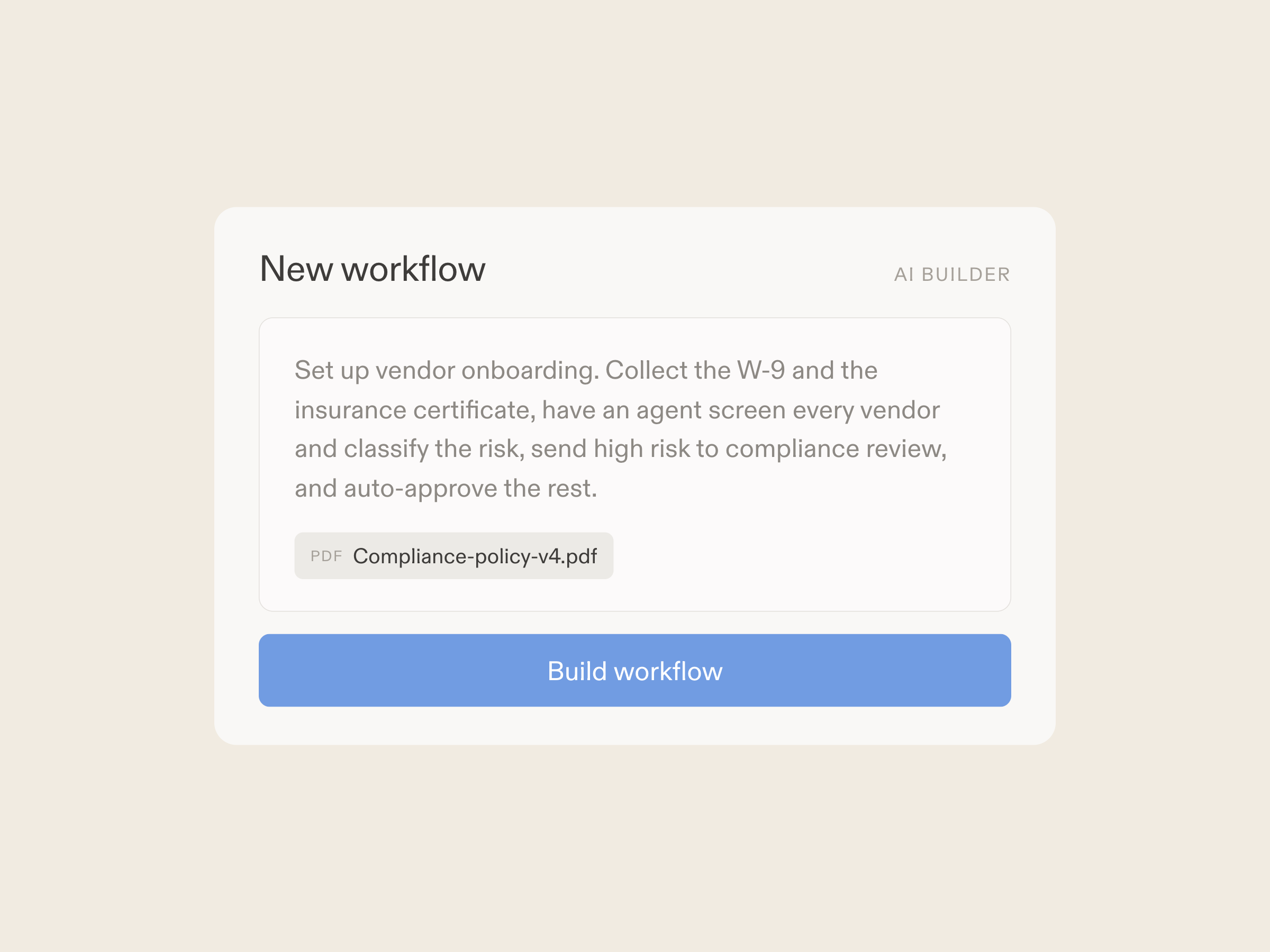
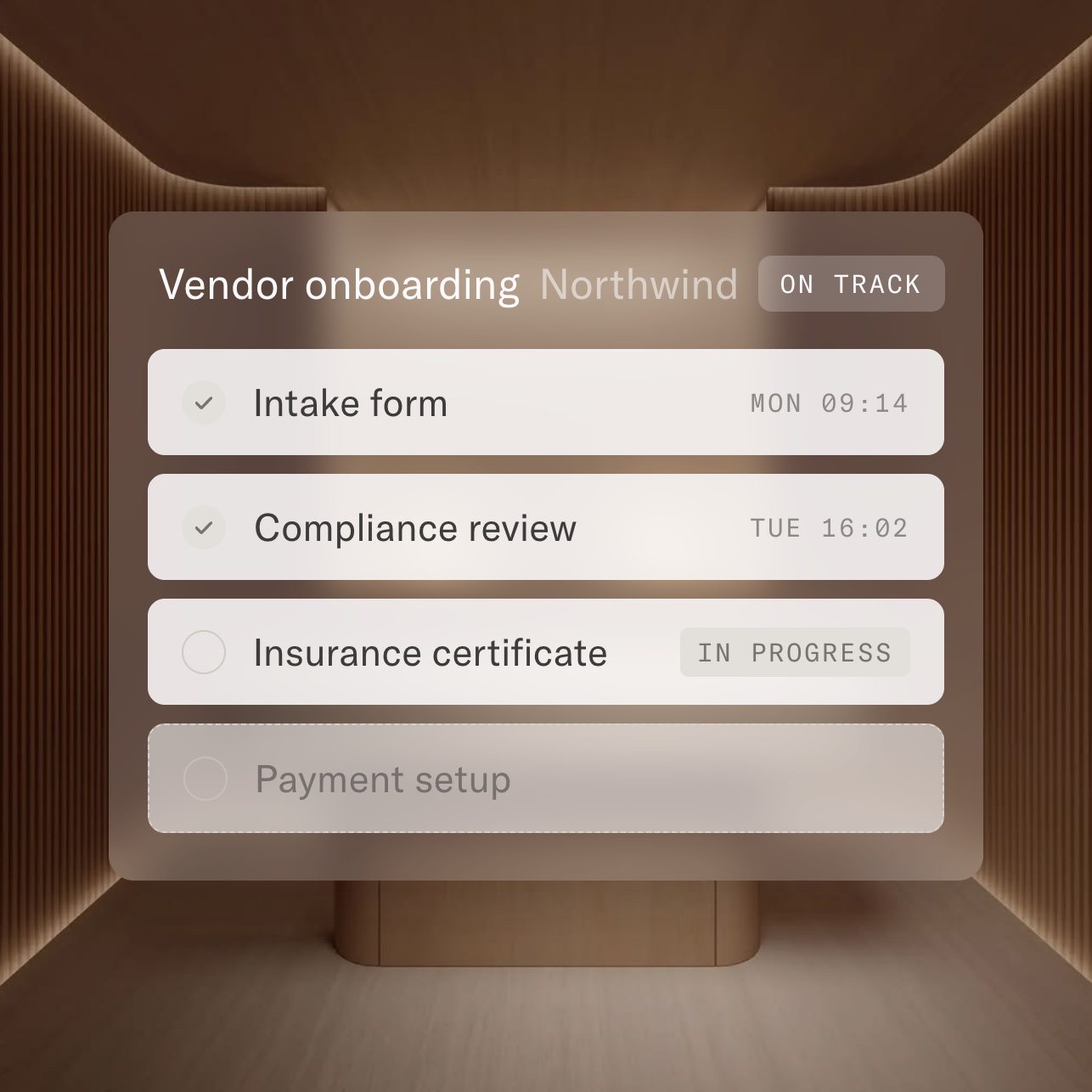
Your version of this process may vary based on roles, systems, data, and approval paths. Moxo's flow builder can be configured with AI agents, conditional branching, dynamic data references, and sophisticated logic to match how your organization runs this workflow. The steps below illustrate one example.
Automatic capture at point of decision
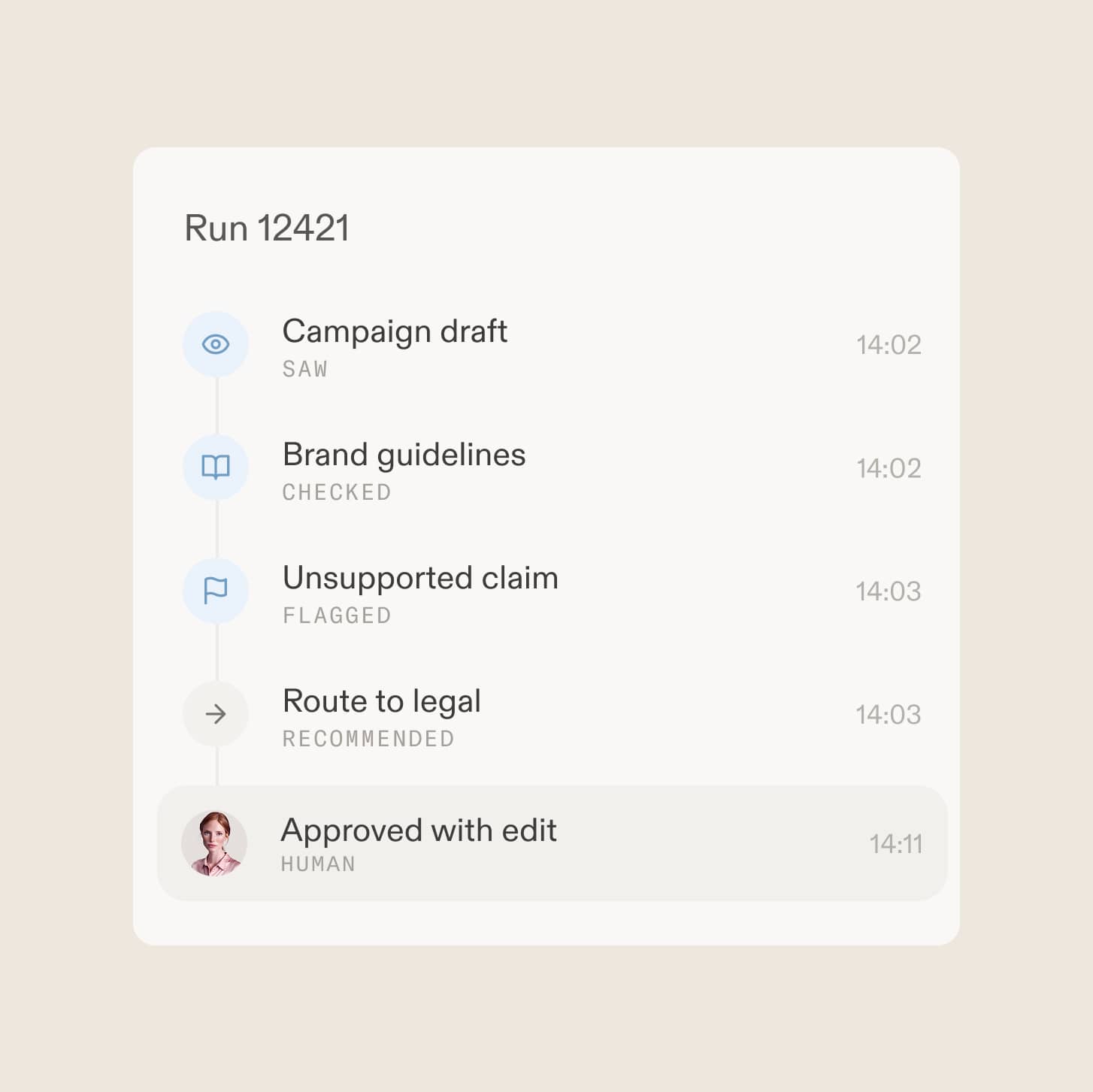
Approval audit trails begin at the moment an approval decision is made. When an approver acts on a request, the workflow automatically captures the decision, the identity of the approver, the timestamp, and the context in which the decision was made. No manual logging is required. The capture includes all supporting information visible to the approver at the time of decision.
Contextual documentation
Beyond the basic decision record, the audit trail captures the full context: what was being approved, the supporting documentation reviewed, any comments or conditions attached to the approval, and the approval path that led to this decision point. If the approval followed escalation or delegation, that history is included. AI agents may assist by summarizing the decision context for later review.
Immutable record retention
Approval records are retained in a manner that preserves integrity and prevents tampering. The audit trail cannot be edited or deleted by approvers or requesters. Retention periods align with organizational policy and regulatory requirements. Records remain accessible for the required duration regardless of personnel changes or system updates.
Access and retrieval
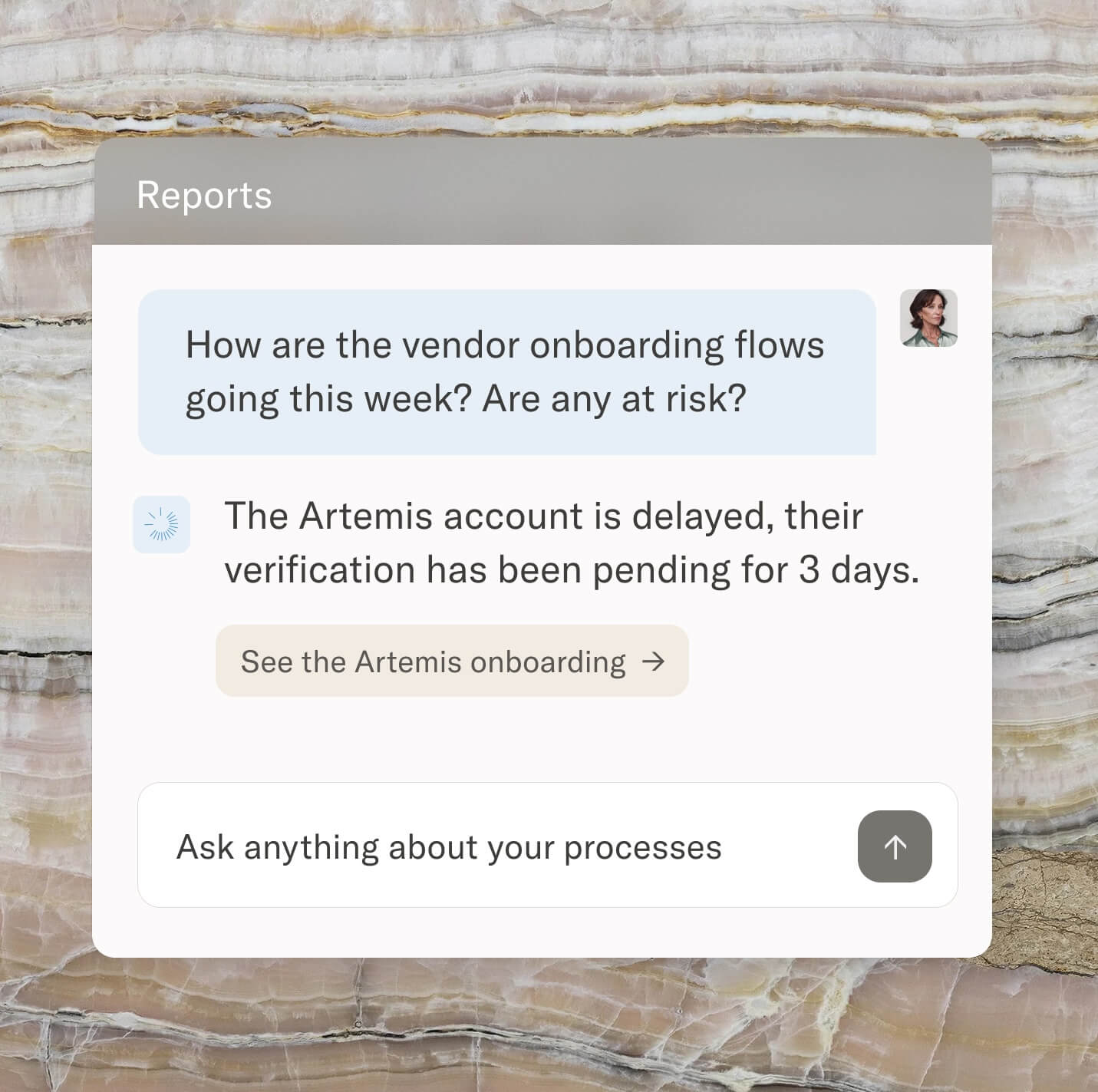
Authorized personnel can access audit trails for review, reporting, or examination support. Search and filtering capabilities allow retrieval by approver, date range, request type, or other relevant criteria. Reports can be generated for specific audits, compliance reviews, or operational analysis. Access to audit data is itself controlled and logged.
Audit and examination support
When audits or examinations require approval evidence, the audit trail provides ready documentation. Internal audit can review approval patterns and compliance. External auditors and regulators can verify that authorizations occurred properly. The audit trail answers questions about specific decisions and demonstrates overall control effectiveness.
Continuous integrity monitoring
The organization monitors audit trail integrity as part of ongoing governance. Any gaps, anomalies, or access concerns are identified and addressed. Audit trail completeness is validated as part of control testing. The capability is maintained and updated as organizational needs evolve.
This process relies on data generated by all workflows containing approval actions, including decision outcomes, approver identities, timestamps, and contextual information. It integrates with compliance and reporting functions for examination support. Supporting systems may include GRC platforms, document management systems, and any application where approvals occur that feeds into the centralized audit record.
Key decision points include determining retention periods for different approval types, who has access to audit trail data, how audit records are presented for examination, and when anomalies or gaps warrant investigation.
Approval records scattered across multiple systems, making it difficult to assemble a complete picture for audits. Manual logging required, creating gaps when documentation steps are skipped. Insufficient context captured, leaving audit records that show a decision was made but not why. Audit data accessible to those who could alter it, undermining integrity. Retention periods not enforced, resulting in records unavailable when needed for examination or litigation.
Captures approval decisions automatically at point of action so every authorization is documented without manual effort.
Retains full decision context including supporting documentation, comments, conditions, and the approval path that led to the decision.
Maintains immutable records that cannot be altered by approvers or requesters, preserving audit integrity.
Provides search and retrieval capabilities for examination support, allowing authorized personnel to find specific approvals or generate reports.
Tracks escalation and delegation history so audit trails reflect the complete decision path, not just the final approval.
Supports compliance with regulatory frameworks by maintaining the documentation required for SOX, HIPAA, GDPR, and similar requirements.