HR compliance manager
People operations director
Risk management officer
Security director
Regulatory compliance lead
Workforce program administrator

This process is used when the organization requires periodic or event-triggered background rescreening of current employees based on regulatory requirements, industry standards, or organizational policy. It applies in regulated industries such as financial services, healthcare, education, and government contracting where ongoing screening obligations exist, as well as when employees are promoted to roles with greater access, authority, or fiduciary responsibility. It is common when HR, compliance, and the employee’s manager must coordinate rescreening without disrupting employment. Ideal for financial institutions, healthcare organizations, government contractors, and any organization with ongoing workforce screening requirements.
The ongoing screening process typically involves HR compliance coordinators who manage the screening schedule and vendor submissions, compliance officers who define screening requirements and review results, managers who are informed of role-change screening requirements, the employee who provides updated consent when required, and screening vendors who conduct the rescreening and report results.
Continuous workforce compliance through periodic rescreening that catches disqualifying events after the initial hire. Role-appropriate verification when employees move into positions with greater access, authority, or regulatory requirements. Reduced organizational risk by identifying criminal convictions, license lapses, or sanctions that occur during employment. Regulatory compliance with industry-specific ongoing screening mandates in financial services, healthcare, education, and government contracting. Documented screening program that demonstrates the organization’s ongoing commitment to workforce integrity during audits and examinations.
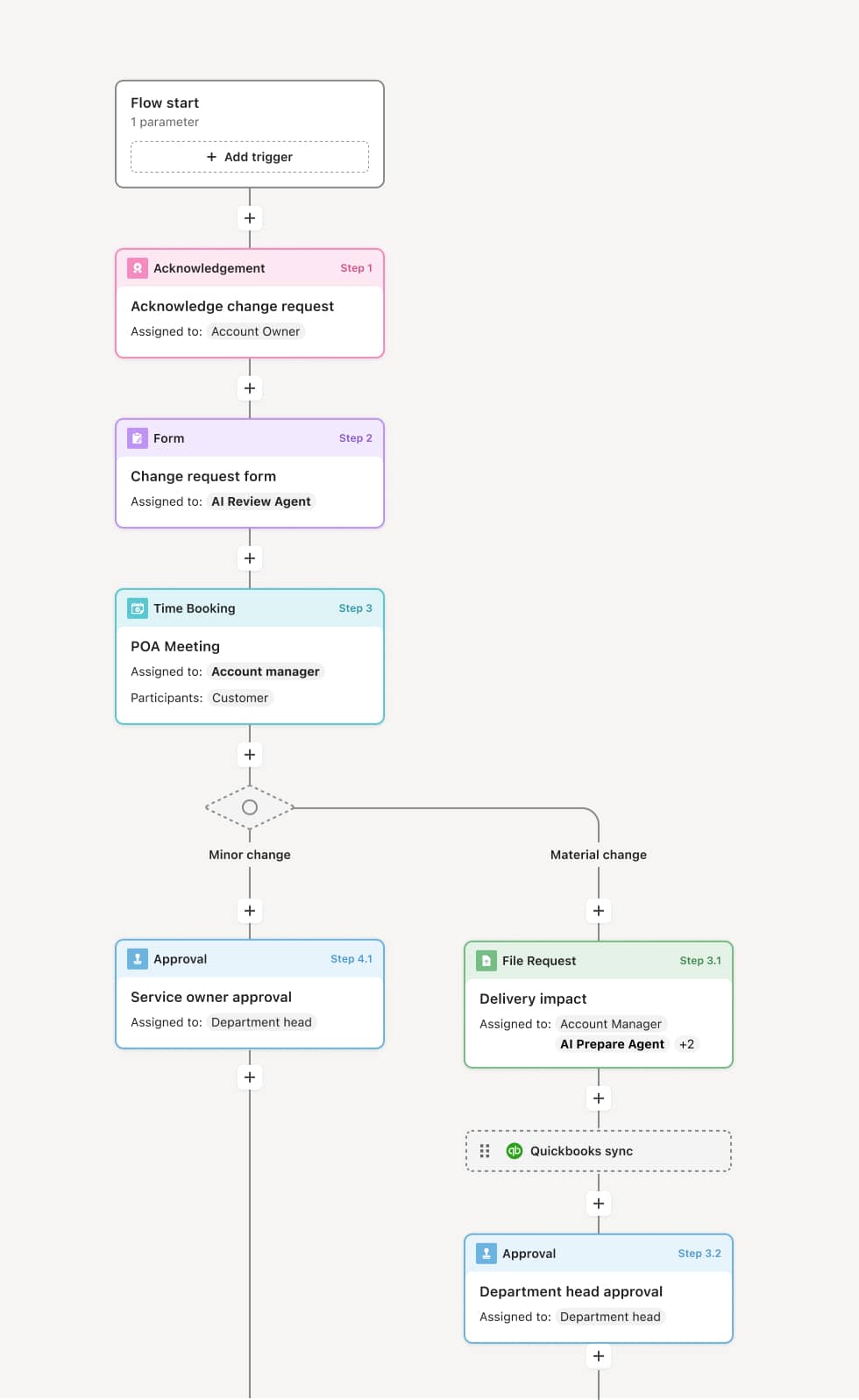
Your version of this process may vary based on roles, systems, data, and approval paths. Moxo’s flow builder can be configured with AI agents, conditional branching, dynamic data references, and sophisticated logic to match how your organization runs this workflow. The steps below illustrate one example.
Screening schedule and trigger identification
The process begins when an employee is due for periodic rescreening based on the organization’s screening calendar, or when a role change, promotion, or regulatory event triggers a new screening requirement. An AI Agent can assist by identifying employees due for rescreening based on their screening history, role classification, and the organization’s policy schedule.
Consent and notification
The employee is notified that rescreening will be conducted and, where required by law or policy, updated consent is obtained. The notification explains the screening components and the employee’s rights under applicable law.
Screening initiation and execution
HR submits the rescreening request to the vendor with the appropriate screening package, which may differ from the initial pre-employment package based on the employee’s current role. Screening components may include criminal history updates, license verification, sanctions screening, credit checks for fiduciary roles, or drug screening as applicable.
Results review and risk assessment
When results are received, HR and compliance review the findings. If results are clear, the screening record is updated and the employee’s status is confirmed. If adverse information is identified, compliance and the employee’s manager assess the finding against role requirements, regulatory obligations, and organizational policy. An AI Agent may flag findings that require individual assessment based on the role’s risk classification.
Employee notification and resolution
If adverse information is found, the employee is notified and given an opportunity to provide context or dispute the finding in accordance with FCRA and applicable state law. Based on the employee’s response and the risk assessment, the organization determines the appropriate action, which may range from no action to role reassignment, enhanced monitoring, or separation.
Documentation and compliance record
The rescreening record, including consent, results, assessment, and any actions taken, is documented and preserved. The employee’s screening history is updated to reflect the most recent screening date and outcomes.
This process commonly relies on inputs such as the employee’s screening history, role classification, regulatory screening requirements, updated consent, and vendor screening results. It may be triggered by the periodic screening calendar, a role change, a regulatory event, or continuous monitoring alerts. Connected systems often include HRIS platforms like Workday, ADP, or BambooHR, background screening vendors, compliance tracking systems, and continuous monitoring services.
Key decision points include which employees are due for rescreening based on the screening calendar or role change, which screening components are required for the employee’s current role, whether adverse findings are relevant to the employee’s role and require action, and what employment action is appropriate based on the finding, the employee’s response, and regulatory requirements.
Rescreening schedules not maintained, causing employees to go years without required periodic screening. Role-change screening not triggered when employees are promoted or transferred to positions with higher screening requirements. Adverse findings discovered but not assessed against the employee’s current role requirements, missing critical risk indicators. Employee notification and dispute rights not followed, creating legal exposure. Screening records not updated in the HRIS, leaving compliance unable to demonstrate the current screening status of the workforce.
Orchestrates ongoing employment screening from schedule management through results review and employee notification across HR, compliance, managers, and screening vendors.
AI Agents identify employees due for rescreening based on screening history, role classification, and policy schedules, preventing lapses in the screening program.
Triggers role-change screening automatically within the workflow when employee role changes are detected in the HRIS.
Routes adverse findings to compliance and the relevant manager with role-specific risk assessment context within the workflow.
Connects to HRIS, screening vendors, and compliance platforms like Workday, ADP, and continuous monitoring services so screening records and employee data are synchronized.
Preserves the complete ongoing screening record including consent, results, risk assessments, employee notifications, and employment actions for regulatory audit and examination readiness.