BSA/AML compliance officer
KYC analyst
Relationship manager
Compliance director
Onboarding specialist
Regulatory affairs manager

This process is used when a legal entity customer opens a new account, undergoes periodic KYC review, or experiences an ownership change that requires beneficial ownership information to be collected or updated. It applies when the organization must identify all individuals who own 25% or more of the entity or who exercise significant management control, verify their identities, and screen them against sanctions, PEP, and adverse media databases. It is common when relationship managers, KYC analysts, and compliance staff must coordinate with the entity customer to obtain and verify ownership information. Ideal for banks, broker-dealers, investment advisers, insurance companies, and any financial institution subject to the CDD Rule or Corporate Transparency Act requirements.
The beneficial ownership verification process typically involves relationship managers who collect ownership information from the entity customer, KYC analysts who verify the identities of beneficial owners, compliance officers who review the ownership structure for risk, the entity customer who provides ownership disclosures and supporting documentation, and senior compliance leadership who approve high-risk or complex ownership structures.
Identified beneficial owners for every legal entity customer, meeting the CDD Rule’s 25% ownership and significant management control thresholds. Verified identities for all beneficial owners through independent identity verification. Risk-screened ownership with all beneficial owners checked against sanctions, PEP, and adverse media databases. Maintained ownership records that are updated when changes occur and refreshed during periodic KYC reviews. Regulatory compliance with FinCEN CDD requirements and Corporate Transparency Act beneficial ownership reporting obligations.
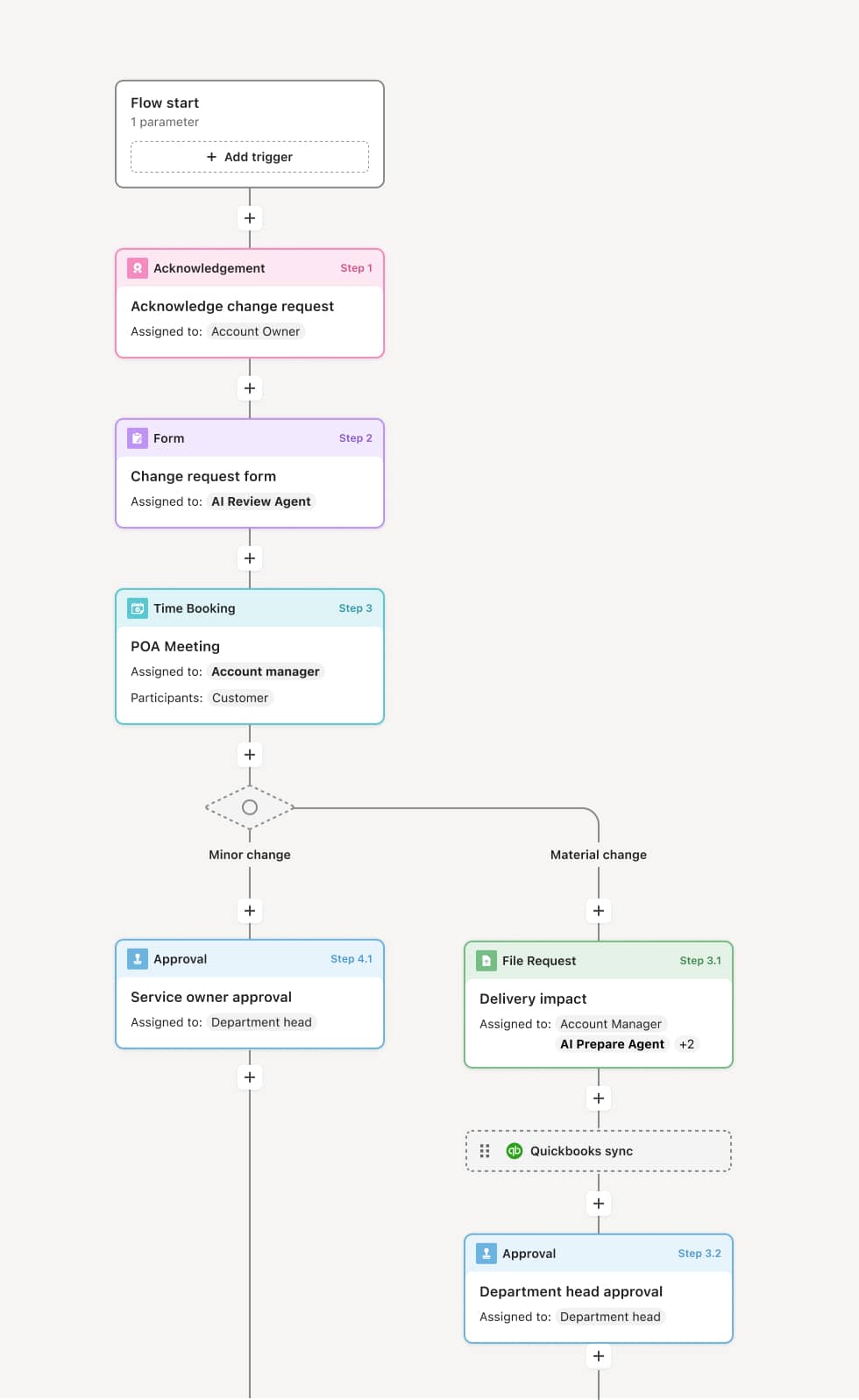
Your version of this process may vary based on roles, systems, data, and approval paths. Moxo’s flow builder can be configured with AI agents, conditional branching, dynamic data references, and sophisticated logic to match how your organization runs this workflow. The steps below illustrate one example.
Ownership information collection
The process begins when the organization onboards a new legal entity customer, conducts periodic KYC review, or is notified of an ownership change. The relationship manager provides the entity with the beneficial ownership certification form, requesting the identity of all individuals who own 25% or more of the entity and the individual exercising significant management control. An AI Agent can assist by pre-populating known entity data and flagging complex ownership structures that may require additional documentation.
Identity verification of beneficial owners
The KYC analyst verifies the identity of each disclosed beneficial owner using government-issued identification, independent data sources, and identity verification services. Verification includes name, date of birth, address, and identification number.
Screening and risk assessment
Each verified beneficial owner is screened against sanctions lists, PEP databases, adverse media, and law enforcement watchlists. The analyst evaluates any matches or alerts. If a beneficial owner triggers a screening hit or adverse finding, enhanced due diligence is conducted and compliance is alerted. An AI Agent may automate the initial screening and flag matches that require analyst review.
Ownership structure review
For entities with complex ownership structures — such as multiple layers of holding companies, trusts, or nominee arrangements — the compliance analyst maps the ownership chain to identify the ultimate beneficial owners. If the structure is opaque or the entity cannot disclose ownership to the required level, compliance evaluates whether to proceed with the relationship.
Certification and record maintenance
The beneficial ownership certification, identity verification results, and screening records are documented in the customer’s KYC file. The ownership record is maintained and updated when changes are reported or identified during periodic reviews.
Periodic review and recertification
At defined intervals or when triggered by a risk event, the entity’s beneficial ownership information is reviewed and recertified. The customer is contacted to confirm current ownership, and any changes are verified and screened through the standard process.
This process commonly relies on inputs such as the beneficial ownership certification form, government-issued identification for beneficial owners, corporate registration documents, entity organizational charts, and screening results. It may be triggered by new account opening, periodic KYC review, or an ownership change notification. Connected systems often include KYC/CDD platforms like Fenergo or Pega KYC, identity verification services, sanctions and PEP screening tools like Refinitiv or Dow Jones, and the organization’s core banking or CRM system.
Key decision points include whether the entity has disclosed all individuals meeting the 25% ownership and significant management control thresholds, whether the identities of all beneficial owners are verified through acceptable documentation, whether screening results reveal sanctions matches, PEP status, or adverse information requiring enhanced due diligence, and whether complex or opaque ownership structures are resolved to a sufficient level of transparency.
Beneficial owners not fully disclosed because the entity provides incomplete information or does not understand the disclosure requirements. Identity verification incomplete for one or more beneficial owners, leaving the record deficient for regulatory purposes. Screening not conducted on all beneficial owners, missing sanctions or PEP exposure. Complex ownership structures not investigated beyond the first layer, allowing ultimate beneficial owners to remain unidentified. Ownership records not refreshed during periodic KYC review or when ownership changes occur.
Orchestrates beneficial ownership verification from collection through screening and ongoing maintenance across relationship managers, KYC analysts, compliance, and the entity customer.
Engages entity customers within the workflow for ownership certification, document submission, and recertification, keeping all interactions tracked and secure.
AI Agents flag complex ownership structures and automate initial screening of beneficial owners against sanctions, PEP, and adverse media databases.
Manages periodic recertification by triggering ownership review workflows at defined intervals or when risk events occur.
Connects to KYC, identity verification, and screening platforms like Fenergo, Refinitiv, and Dow Jones so ownership data and screening results flow into the customer’s due diligence record.
Preserves the complete beneficial ownership record including certifications, identity verification, screening results, and ownership structure analysis for regulatory examination readiness.