Billing operations manager
Revenue operations lead
Finance controller
Accounts receivable supervisor
Customer success manager
Compliance officer

This process is used when a customer disputes a charge, when billing errors are discovered internally, or when contractual terms require retroactive adjustments. It is triggered when credits exceed predefined thresholds requiring management approval, when write-offs impact revenue recognition, or when refunds require coordination between billing, finance, and customer-facing teams. The process becomes essential when adjustment patterns need audit documentation, when approval authority varies by dollar amount, or when multiple departments must validate the business justification. Ideal for subscription businesses, professional services, telecommunications, utilities, healthcare billing, and any organization where billing accuracy and revenue integrity are critical.
This process typically involves billing specialists or customer service representatives who initiate adjustment requests, billing operations managers who review justification and supporting documentation, finance or accounting personnel who assess revenue impact and ensure proper coding, and senior managers or controllers who authorize adjustments above defined thresholds. In some cases, customer success or account management teams participate to provide context on customer relationships or contractual commitments.
Controlled adjustment authority with approvals routed based on dollar thresholds and adjustment type. Faster dispute resolution by eliminating email chains and manual handoffs between billing, finance, and customer teams. Complete audit trail documenting who requested, reviewed, and approved each adjustment with supporting rationale. Reduced revenue leakage through consistent review of credits and write-offs before they impact financials. Improved customer satisfaction from timely resolution of legitimate billing concerns without unnecessary delays.
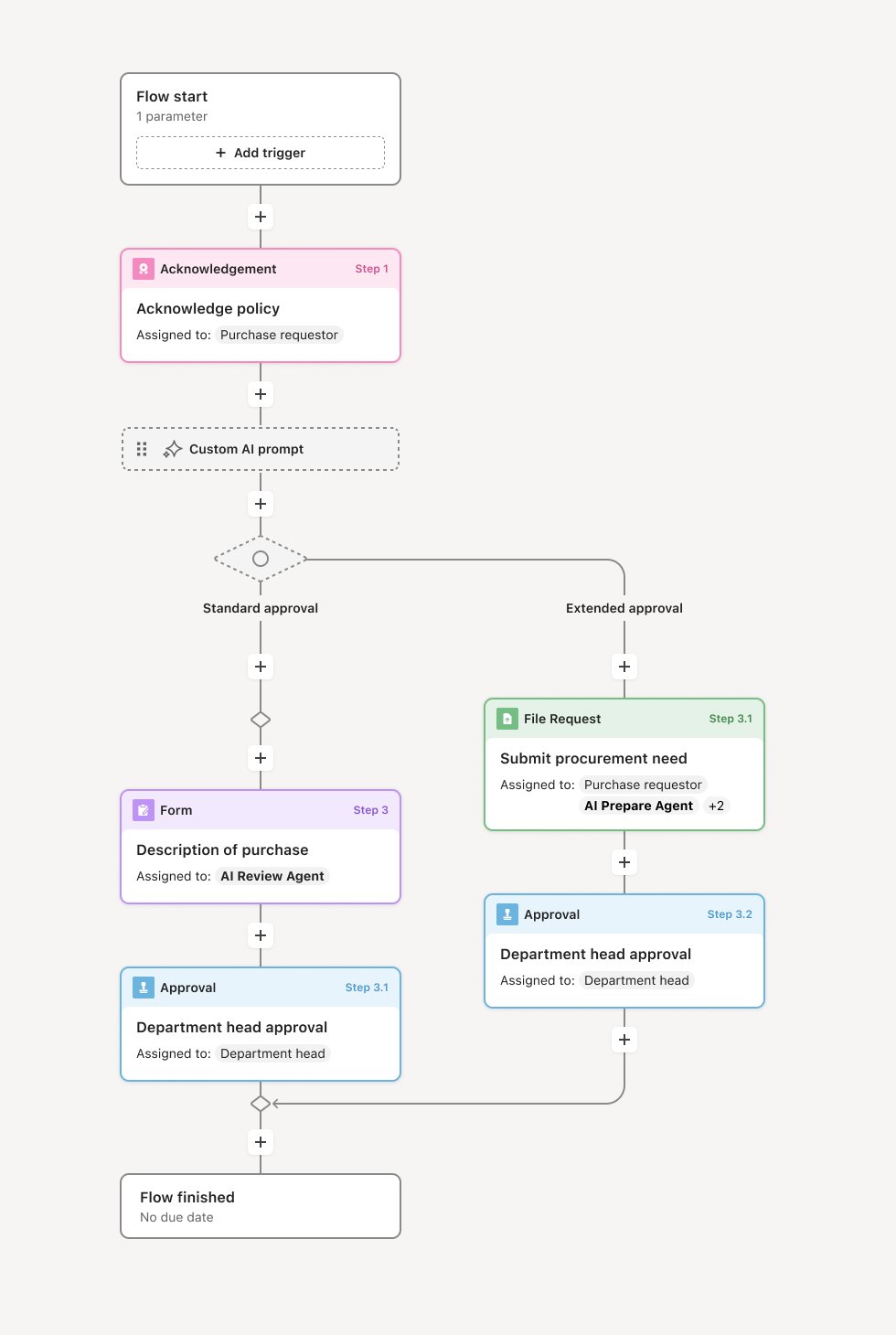
Your version of this process may vary based on roles, systems, data, and approval paths. Moxo's flow builder can be configured with AI agents, conditional branching, dynamic data references, and sophisticated logic to match how your organization runs this workflow. The steps below illustrate one example.
Adjustment request initiation
The process begins when a billing specialist, customer service representative, or account manager submits an adjustment request. This may be triggered by a customer dispute, an internal error discovery, or a contractual obligation such as a service credit. The request includes the customer account, invoice reference, adjustment amount, adjustment type (credit, write-off, refund, or correction), and a documented justification. An AI agent can assist by validating that required fields are complete, checking the adjustment against account history, and flagging requests that fall outside normal patterns.
Initial review and documentation verification
A billing operations reviewer examines the request for completeness and validity. This includes confirming the adjustment reason aligns with policy, verifying supporting documentation such as customer correspondence or service records, and ensuring the requested amount matches the underlying issue. If information is missing or the justification is unclear, the reviewer returns the request for clarification. Once validated, the request advances based on its characteristics—amount, type, or customer segment.
Threshold-based routing and approval
Adjustments are routed to appropriate approvers based on configurable rules. Lower-value adjustments may be approved by billing supervisors, while higher-value credits or write-offs require finance manager or controller authorization. Certain adjustment types, such as goodwill credits or revenue write-offs, may always require senior approval regardless of amount. The workflow branches dynamically based on these conditions, ensuring each request reaches the right decision-maker without unnecessary escalation for routine items.
Finance review and revenue impact assessment
For adjustments that affect recognized revenue, require specific GL coding, or trigger reporting implications, finance personnel review the request. This step ensures the adjustment is coded correctly for accounting purposes, aligns with revenue recognition policies, and is reflected appropriately in financial reporting. If the adjustment creates audit or compliance concerns, finance may request additional documentation or escalate to senior leadership before approving.
Final authorization and system update
Once all required approvals are obtained, the adjustment is authorized for processing. The approved adjustment is applied to the customer account in the billing system, and relevant parties are notified—including the customer if appropriate. The workflow records the complete approval chain, timestamps, and any comments or conditions attached to the authorization. If the adjustment was initiated due to a customer dispute, the resolution is communicated and the case is closed.
This process commonly relies on inputs such as customer account data, invoice details, adjustment request forms, supporting documentation (service tickets, customer emails, contract terms), and approval policies defining thresholds by role. It may be triggered by events like a customer service case escalation, a CRM flag, a billing system exception report, or a manual submission via form or start link. Common systems that integrate with this workflow include billing platforms like Zuora, Stripe Billing, or Oracle Revenue Management, CRM systems like Salesforce or HubSpot, ERP systems like NetSuite or SAP, and customer service platforms like Zendesk or ServiceNow.
Key decision points include determining whether the adjustment request is complete and justified, whether the amount and type require elevated approval authority, whether finance review is needed based on revenue impact or coding requirements, and whether exceptions to standard policy require senior management authorization. Each decision point may trigger conditional routing, parallel reviews, or return to the requestor for additional information.
Incomplete justification where requests lack sufficient documentation, causing repeated review cycles. Inconsistent threshold application where similar adjustments receive different levels of scrutiny depending on who processes them. Delayed approvals that extend customer dispute timelines and damage relationships. Missing audit documentation when approvals happen via email or verbal authorization without proper recording. Revenue impact surprises when finance discovers adjustment patterns too late to address in reporting periods.
Orchestrates the full approval chain from request initiation through billing operations, finance review, and final authorization in a single coordinated flow.
Routes adjustments dynamically based on dollar thresholds, adjustment types, and customer segments so the right approvers see the right requests.
AI agents validate request completeness at submission, flagging missing documentation and preparing account context summaries for reviewers.
Connects to billing, CRM, and ERP systems so account data flows in automatically and approved adjustments can trigger downstream updates.
Maintains complete approval records with timestamps, approver identities, supporting documents, and decision rationale for audit and compliance.
Automates reminders and escalations so pending approvals do not stall, keeping adjustment resolution times predictable.