Billing manager
Finance director
Accounts receivable lead
Project manager
Service delivery manager
Revenue operations analyst

This process is used when invoices require validation before release to customers, when billing amounts exceed standard thresholds, or when charges deviate from contracted terms. It is triggered at regular billing cycles for subscription or retainer clients, upon project milestone completion for deliverable-based work, or when manual invoices are created for non-standard engagements. The process becomes essential when billing complexity requires coordination between service delivery and finance, when contract terms require verification before invoicing, or when customer-specific pricing or discounts must be confirmed. Ideal for professional services, consulting, agencies, managed services, SaaS with usage-based components, and any organization where billing accuracy directly impacts cash flow and customer relationships.
This process typically involves billing specialists who prepare invoices, project or account managers who verify deliverables and time entries, billing supervisors who review for policy compliance and accuracy, and finance managers who authorize release for invoices above certain thresholds or with non-standard terms. In some organizations, client relationship managers may preview invoices before release to anticipate questions, and legal or contracts personnel may be consulted for complex billing arrangements.
Reduced billing errors through systematic review before invoices reach customers. Faster invoice release by streamlining approvals and eliminating manual routing delays. Improved cash flow predictability when invoices go out on schedule without last-minute holds. Clear approval accountability documenting who reviewed and authorized each invoice before release. Fewer customer disputes when billing is validated against contracts and deliverables before sending.
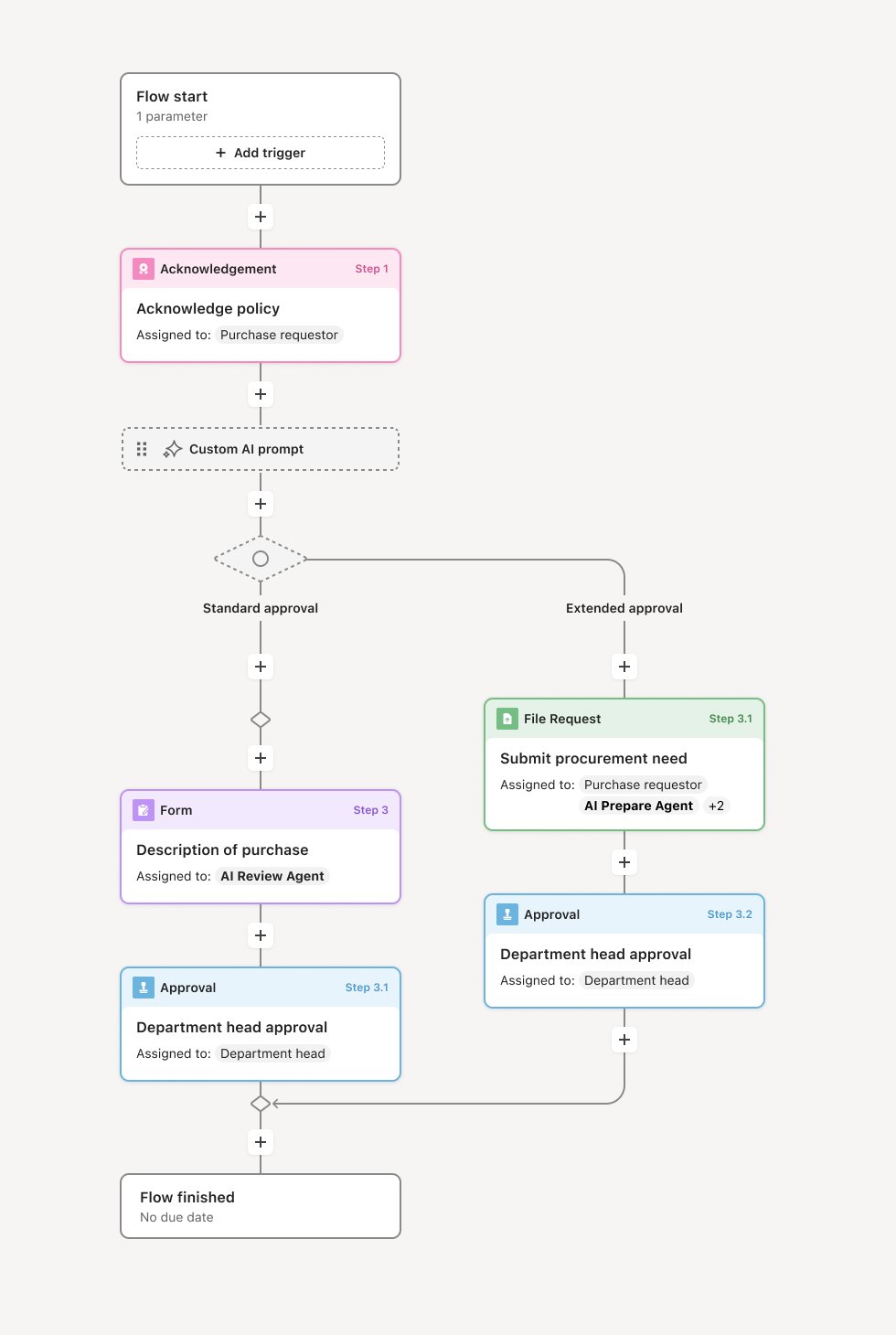
Your version of this process may vary based on roles, systems, data, and approval paths. Moxo's flow builder can be configured with AI agents, conditional branching, dynamic data references, and sophisticated logic to match how your organization runs this workflow. The steps below illustrate one example.
Invoice preparation and submission
The process begins when billing prepares an invoice for review. This may be triggered by a billing cycle date, a project milestone, a service completion, or a manual request. The draft invoice includes line items, quantities, rates, applicable discounts, and references to contracts or work orders. An AI agent can assist by validating that all required fields are populated, checking rates against contract terms, and flagging discrepancies between time entries or deliverables and billed amounts before the invoice enters the review queue.
Deliverable and time verification
For invoices tied to project work or time-based billing, a project manager or service delivery lead reviews the invoice against actual work performed. This includes verifying that time entries are accurate, deliverables have been accepted, and any scope changes are reflected correctly. If discrepancies exist between what was delivered and what is being billed, the reviewer may request corrections or provide justification for variances before advancing the invoice.
Billing operations review
A billing supervisor or operations manager reviews the invoice for compliance with billing policies, correct application of rates and discounts, proper tax treatment, and formatting standards. This step ensures consistency across all invoices and catches errors that may have passed earlier reviews. If the invoice requires corrections, it is returned to the preparer with specific feedback. Once satisfied, the billing reviewer advances the invoice toward final approval.
Threshold-based finance approval
Invoices that exceed defined dollar thresholds, involve non-standard terms, or represent new customer relationships may require finance manager or controller approval before release. This step provides an additional control for high-value or high-risk invoices. The finance reviewer assesses overall reasonableness, confirms alignment with revenue recognition requirements, and authorizes the invoice for release. Lower-value routine invoices may bypass this step based on configured rules.
Invoice release and customer delivery
Once all required approvals are obtained, the invoice is released and delivered to the customer through the appropriate channel—email, customer portal, or integrated billing system. The workflow records the approval chain, release timestamp, and delivery confirmation. If the organization tracks invoice aging or follows up on unpaid invoices, the released invoice enters the accounts receivable process with full context available for any future questions.
This process commonly relies on inputs such as draft invoices, time and expense entries, project deliverable records, contract terms, rate cards, and customer billing preferences. It may be triggered by events like a billing cycle date, a project status change, a CRM milestone, or a manual submission. Common systems that integrate with this workflow include billing platforms like Zuora or Chargebee, PSA tools like OpenAir or Mavenlink, time tracking systems like Harvest or Toggl, ERP systems like NetSuite or QuickBooks, and CRM systems like Salesforce where contract and customer data resides.
Key decision points include determining whether the invoice passes initial validation or requires correction, whether deliverables and time entries support the billed amounts, whether the invoice complies with billing policies and contract terms, and whether the invoice value or characteristics require elevated finance approval. Each decision point may trigger conditional routing, return to the preparer, or advancement to the next reviewer.
Misaligned time entries where billed hours do not match recorded work, triggering customer disputes. Contract rate errors when invoices use outdated or incorrect pricing not aligned with current agreements. Approval bottlenecks where invoices wait in queues while approvers are unavailable, delaying cash collection. Missing supporting documentation that forces customers to request backup and delays payment. Inconsistent review depth where some invoices receive thorough scrutiny while others pass with minimal validation.
Orchestrates the complete approval cycle from invoice preparation through service verification, billing review, and finance authorization in one coordinated flow.
Routes invoices conditionally based on dollar amount, customer type, or contract complexity so routine invoices move quickly while exceptions receive appropriate scrutiny.
AI agents validate invoice accuracy at submission, checking rates against contracts, flagging discrepancies, and preparing context summaries for reviewers.
Connects to PSA, billing, and ERP systems so time entries, project data, and customer information flow in automatically and approved invoices can trigger downstream delivery.
Maintains approval records with timestamps, reviewer identities, and decision rationale for audit trails and dispute resolution.
Automates deadline-based reminders so billing cycles stay on track and approvers are prompted before invoices risk missing release windows.