Billing operations director
Revenue operations manager
Finance controller
Billing systems administrator
Accounts receivable manager
IT operations lead

This process is used when organizations execute periodic billing runs that generate invoices for large customer populations simultaneously. It is triggered at monthly, quarterly, or annual billing cycle close, when subscription renewals are processed in batch, or when usage-based charges are calculated and invoiced collectively. The process becomes essential when billing errors at scale could impact thousands of customers, when revenue recognition depends on accurate batch processing, or when billing system changes require validation before full release. Ideal for subscription businesses, utilities, telecommunications, insurance, membership organizations, and any operation where high-volume billing cycles require coordinated validation and approval before customer impact.
This process typically involves billing system administrators who prepare and execute the billing run, billing operations managers who review exception reports and validate batch results, finance controllers who authorize the revenue and cash flow implications of the batch, and IT operations personnel who monitor system performance and data integrity during processing. In some organizations, revenue accounting teams review billing runs for revenue recognition compliance, and customer service leads are notified to prepare for potential customer inquiries post-release.
Prevented mass billing errors through systematic validation before invoices reach thousands of customers. Controlled batch release with documented authorization before high-volume invoice distribution. Faster exception resolution by identifying and addressing anomalies before batch finalization. Audit-ready documentation of who validated and approved each billing run with supporting metrics. Reduced customer service burden when billing accuracy is verified before release rather than corrected after complaints.
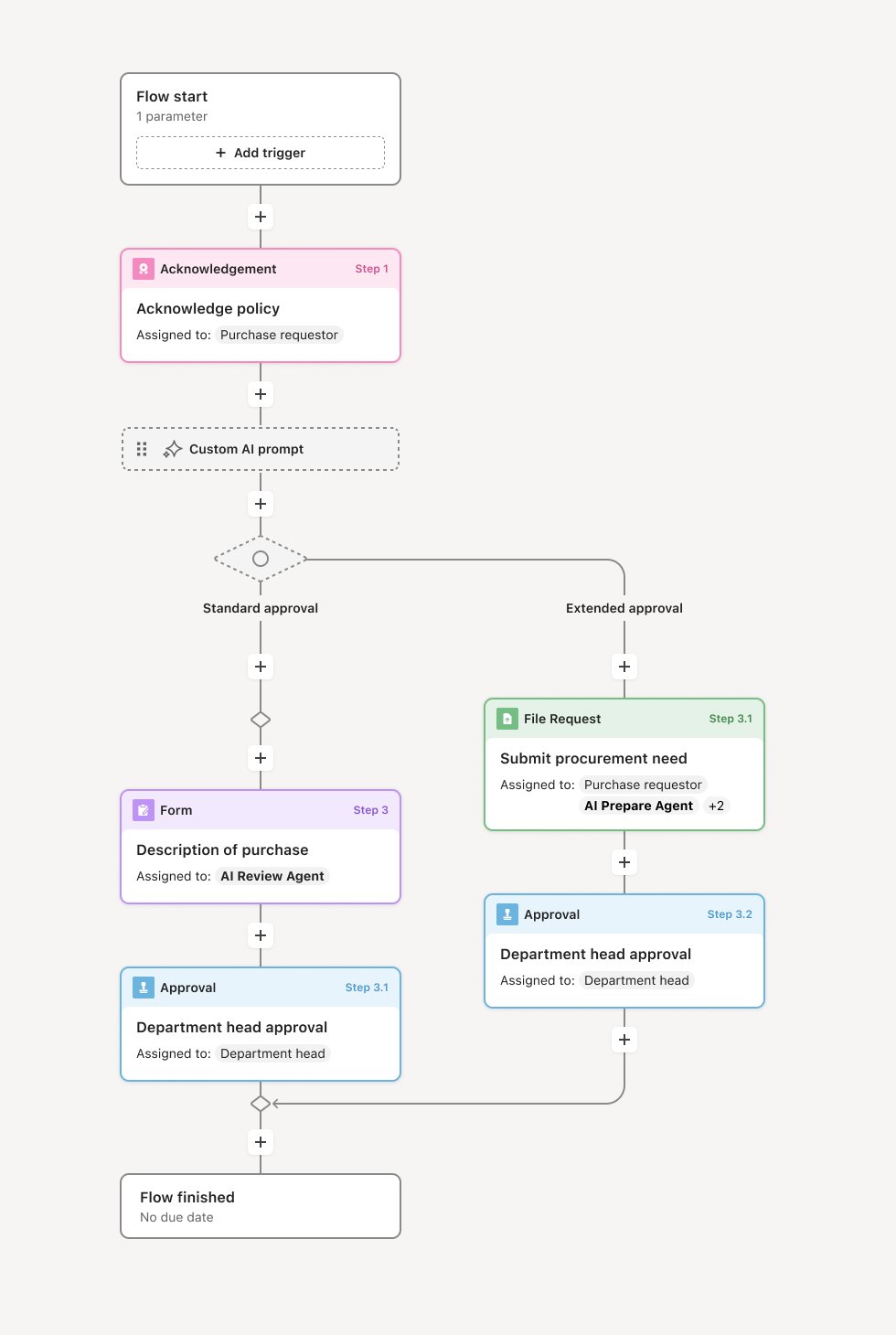
Your version of this process may vary based on roles, systems, data, and approval paths. Moxo's flow builder can be configured with AI agents, conditional branching, dynamic data references, and sophisticated logic to match how your organization runs this workflow. The steps below illustrate one example.
Billing run preparation and execution
The process begins when the billing system administrator prepares for the scheduled billing cycle. This includes confirming that all prerequisite data—usage records, subscription statuses, rate changes, and customer account updates—has been processed. The billing run is executed in the billing system, generating draft invoices for the target customer population. The system produces summary statistics and exception reports that feed into the approval workflow.
Exception identification and analysis
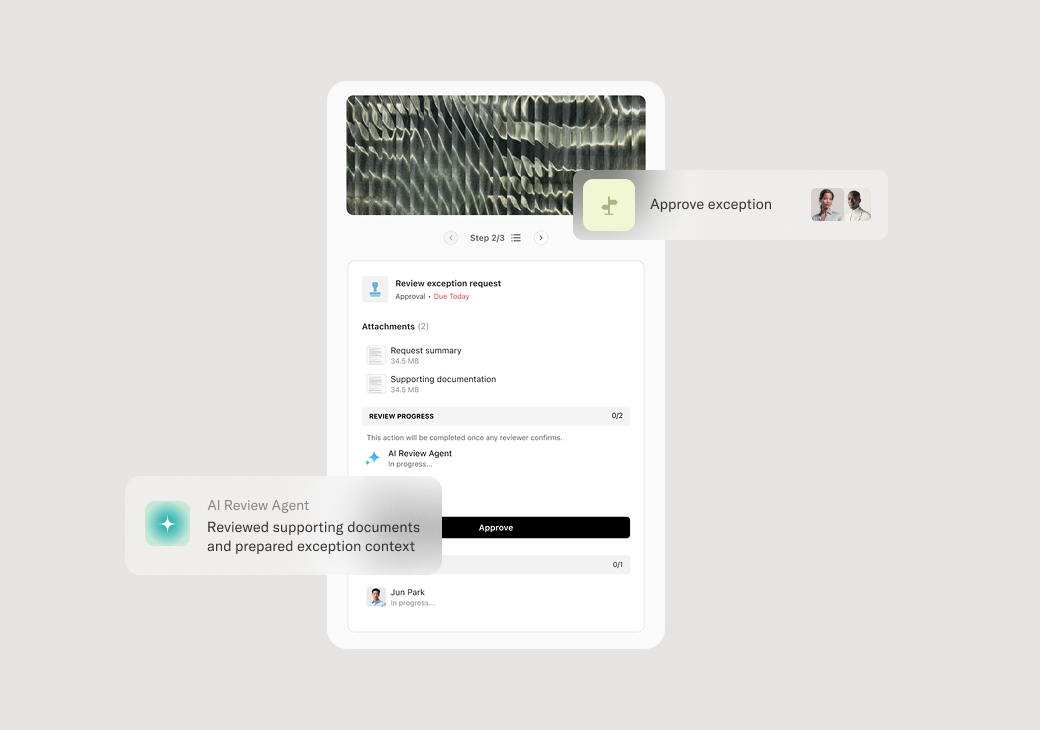
Once the billing run completes, an AI agent can assist by analyzing the results against historical patterns. This includes identifying invoices with unusual amounts, customers with significant period-over-period variances, failed invoice generation, and records that triggered system exceptions. The analysis produces an exception summary that highlights items requiring human review before the batch can be approved. Billing operations personnel review flagged items and determine whether they represent valid changes, system errors, or data issues requiring correction.
Billing operations validation
A billing operations manager reviews the overall billing run results, including total invoice count, aggregate billing amount, comparison to prior periods, and resolution status of identified exceptions. This step confirms that the batch reflects expected business activity and that no systemic errors have occurred. If significant discrepancies exist between expected and actual results, the manager may request investigation or partial reruns before advancing to finance approval. Sample invoices may be reviewed in detail to validate accuracy.
Finance review and revenue validation
The finance controller or revenue accounting lead reviews the billing run from a financial perspective. This includes confirming alignment with revenue forecasts, validating that billing aligns with revenue recognition requirements, and ensuring that any material variances are understood and documented. For billing runs that significantly exceed or fall short of expectations, finance may require additional explanation before authorizing release. This step serves as a financial control gate before customer-facing distribution.
Batch authorization and release
Once billing operations and finance approvals are obtained, the billing run is authorized for release. The system distributes invoices to customers through configured channels, and the workflow records the complete approval chain with timestamps and approver identities. Post-release, relevant teams are notified that the billing cycle is complete, and the process concludes with a documented record available for audit, reconciliation, and any subsequent customer inquiries.
This process commonly relies on inputs such as billing run output files, exception reports, period-over-period comparison data, revenue forecasts, and batch processing logs. It may be triggered by events like a scheduled billing cycle date, completion of a billing system batch job, or a manual submission when ad-hoc runs are required. Common systems that integrate with this workflow include billing platforms like Zuora, Aria, or Oracle BRM, ERP systems like SAP or NetSuite, revenue management systems, and data warehouses where historical billing patterns are analyzed.
Key decision points include determining whether exceptions identified in the billing run require correction or are acceptable variances, whether the batch totals align with expected volumes and amounts, whether revenue recognition requirements are satisfied, and whether the batch is approved for full release or requires partial holds. Each decision point may trigger conditional routing, escalation to senior leadership, or return to billing operations for remediation.
Undetected data issues where upstream errors in usage or account data propagate into thousands of incorrect invoices. Rushed approvals where cycle deadlines pressure reviewers to authorize batches without adequate validation. Exception fatigue when recurring false positives cause reviewers to overlook legitimate anomalies. Missing variance explanations that leave auditors or leadership unable to understand why billing deviated from expectations. Post-release corrections that require costly credit memos, customer outreach, and reputational damage after errors are discovered.
Orchestrates the batch validation cycle from billing run completion through exception review, operations validation, and finance authorization in a coordinated flow.
Routes approvals based on batch characteristics so routine cycles move efficiently while unusual runs receive additional scrutiny.
AI agents analyze exceptions and anomalies surfacing items that require human attention and preparing context summaries to accelerate review.
Connects to billing and ERP systems so batch results, exception reports, and comparison data flow into the approval workflow automatically.
Maintains complete batch approval records with timestamps, approver identities, exception resolutions, and authorization documentation for audit.
Enforces cycle deadlines with automated reminders that keep billing runs on schedule while ensuring required reviews are completed.