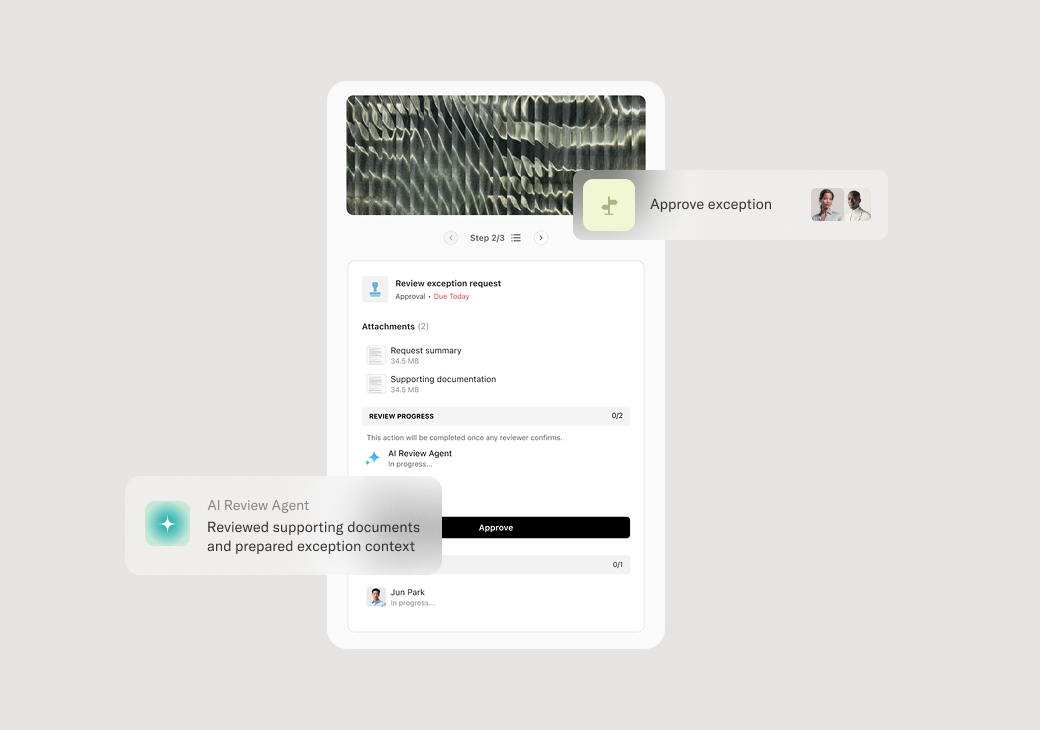
Corporate secretary
General counsel
Chief executive officer
Chief financial officer
Board chair
Governance officer
Executive assistant to the board

This process is used when corporate actions require formal board authorization as mandated by bylaws, regulations, or governance policies. It is triggered for major transactions such as mergers, acquisitions, or significant investments, for executive compensation decisions, for equity issuances or capital structure changes, for approval of annual budgets or strategic plans, and for policy adoptions that require board oversight. The process becomes essential when decisions must be documented with proper corporate formalities, when fiduciary duties require informed consent, or when regulatory compliance demands board-level authorization. Ideal for corporations, nonprofits, investment funds, partnerships with governance boards, and any organization where board approval creates legal authority for significant actions.
This process typically involves the corporate secretary who coordinates the approval process and maintains corporate records, executives who prepare materials and present recommendations to the board, legal counsel who advises on governance requirements and reviews resolutions, board members or directors who review materials and render decisions, and the board chair who may facilitate deliberation and confirm quorum. In some organizations, committee chairs handle initial review for matters within their purview before full board consideration.
Documented governance authority with properly executed resolutions that establish legal authorization for corporate actions.
Streamlined board coordination reducing the administrative burden of distributing materials, collecting responses, and tracking approvals across directors.
Clear audit trail showing what information was provided to directors, when they reviewed it, and how they voted.
Reduced governance risk through systematic confirmation of quorum, proper notice, and informed consent requirements.
Faster decision cycles when routine approvals can be handled via written consent without scheduling full board meetings.
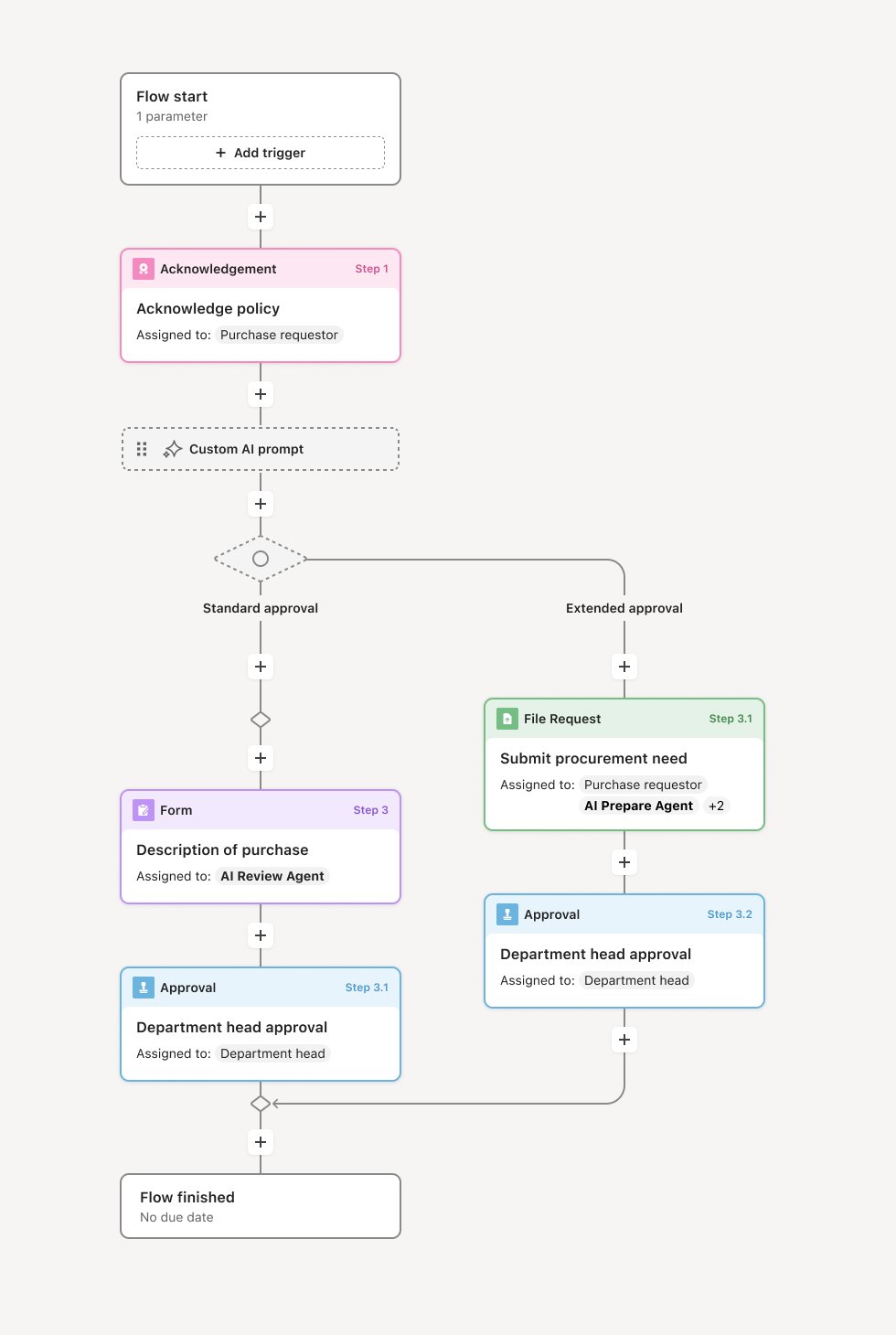
Your version of this process may vary based on roles, systems, data, and approval paths. Moxo's flow builder can be configured with AI agents, conditional branching, dynamic data references, and sophisticated logic to match how your organization runs this workflow. The steps below illustrate one example.
Request initiation and material preparation
The process begins when an executive or department head identifies a matter requiring board approval. The requestor prepares a summary of the action requested, the business rationale, relevant financial analysis, and any risk considerations. Legal counsel may be engaged to draft or review proposed resolutions. An AI agent can assist by validating that required documentation is complete, checking that similar past approvals followed proper procedures, and preparing a package summary for the corporate secretary to review before distribution to directors.
Legal and governance review
Before materials reach the board, legal counsel and the corporate secretary review the request for governance compliance. This includes confirming that the matter appropriately requires board approval under bylaws or policy, that proposed resolutions are properly drafted, that any conflicts of interest are identified, and that notice requirements will be satisfied. If the matter requires committee review first—such as audit committee approval for financial matters or compensation committee review for executive pay—the workflow routes to the appropriate committee before full board consideration.
Board material distribution and review period
The corporate secretary distributes board materials to all directors through a secure channel. Directors receive the complete package including the executive summary, supporting documentation, proposed resolutions, and any legal opinions. A review period allows directors to examine materials, request additional information, or raise questions before the approval is sought. For written consent actions, directors review materials asynchronously. For meeting-based approvals, materials are distributed in advance of the scheduled session.
Director deliberation and questions
Directors may request clarification, additional analysis, or meetings with management to discuss the proposed action. Questions and responses are captured within the workflow, maintaining a record of the information provided to support informed decision-making. If significant concerns arise, the matter may be revised, deferred, or withdrawn based on director feedback. This phase ensures that directors fulfill their fiduciary duty to make informed decisions.
Approval collection and quorum confirmation
For written consent actions, each director indicates their approval, abstention, or objection to the proposed resolution. The workflow tracks responses and confirms when the required threshold—typically a majority or unanimous consent depending on bylaws and action type—has been reached. For meeting-based approvals, the workflow records attendance to confirm quorum and captures the vote outcome. If approval thresholds are not met, the matter may be revised and resubmitted or escalated for further discussion.
Resolution execution and record retention
Once approval is obtained, the corporate secretary finalizes the resolution with execution dates and signatures as required. The approved resolution and complete record of the approval process—including materials provided, director responses, and vote outcomes—are retained as part of corporate records. Relevant parties are notified that authorization has been granted, and the approved action can proceed. The workflow concludes with documentation suitable for regulatory filings, third-party reliance, or future audit.
This process commonly relies on inputs such as board material packages, proposed resolutions, financial analyses, legal opinions, conflict of interest disclosures, and director contact information. It may be triggered by events like a scheduled board meeting, an executive request for written consent, a transaction milestone requiring authorization, or a regulatory deadline. Common systems that integrate with this workflow include board portal software like Diligent or BoardEffect, document management systems, e-signature platforms like DocuSign, and calendar systems for meeting coordination.
Key decision points include determining whether the matter requires full board approval or can be delegated, whether committee review is required before full board consideration, whether materials are complete and appropriate for distribution, whether quorum requirements are satisfied, and whether the approval threshold has been reached. Each decision point may trigger conditional routing to committees, requests for additional information, or escalation when concerns arise.
Incomplete board packages where missing information forces directors to delay decisions or request additional materials. Quorum failures when insufficient director participation prevents valid action. Unclear resolution language that creates ambiguity about what was actually authorized. Lost documentation when approvals obtained via email or informal channels lack proper records. Missed notice requirements that could invalidate approvals under bylaws or regulations. Delayed responses from directors that hold up time-sensitive transactions.
Orchestrates the full governance cycle from material preparation through legal review, director distribution, deliberation, and formal approval in a single coordinated flow.
Routes matters conditionally to appropriate committees or approval paths based on action type, dollar thresholds, or governance requirements.
AI agents validate package completeness at submission, checking that required documents are attached and preparing summaries to support efficient director review.
Provides secure director access so board members can review materials, ask questions, and submit approvals from any device without compromising confidentiality.
Tracks quorum and approval status in real time, confirming when thresholds are met and alerting the corporate secretary to outstanding responses.
Maintains governance records with complete documentation of materials provided, director interactions, votes, and executed resolutions for audit and regulatory purposes.