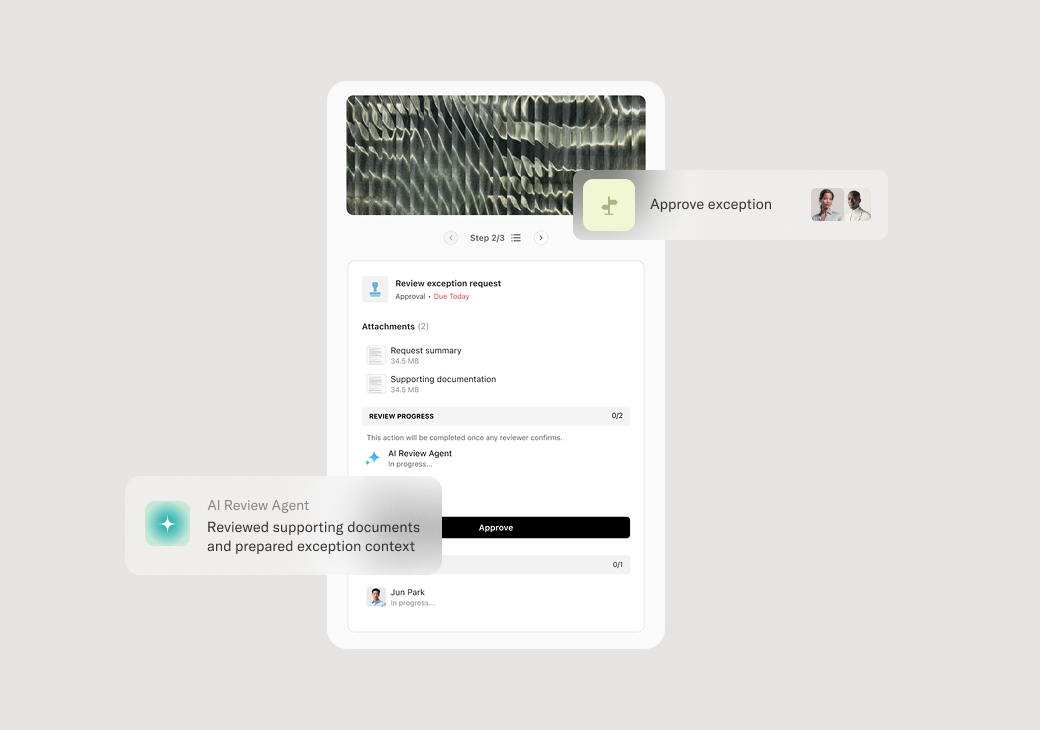
Compensation manager
HR business partner
Finance controller
Department head
Chief people officer
Payroll administrator

This process is used when organizations distribute performance bonuses, spot bonuses, retention incentives, or other discretionary compensation. It is triggered at annual or quarterly bonus cycles when performance-based payouts are calculated, when managers request one-time recognition bonuses, when retention offers require approval, or when commission overrides or special incentives fall outside standard plans. The process becomes essential when bonus amounts exceed manager authority levels, when budget constraints require finance validation, or when equity and consistency across departments must be ensured. Ideal for professional services, technology companies, financial services, sales organizations, and any business where variable compensation is a significant component of total rewards.
This process typically involves managers who initiate bonus recommendations based on performance assessments, HR business partners who review recommendations for policy compliance and internal equity, compensation specialists who validate calculations and eligibility, finance personnel who confirm budget availability and accounting treatment, and senior leaders or executives who authorize bonuses above defined thresholds. In some organizations, compensation committees review aggregate bonus pools or high-value individual awards before final approval.
Consistent compensation decisions with standardized review ensuring similar performance receives comparable recognition across departments. Budget-controlled payouts with finance validation before commitments exceed allocated bonus pools. Faster bonus processing by eliminating manual routing and reducing approval cycle times from weeks to days. Complete approval documentation tracking who recommended, reviewed, and authorized each bonus for audit and employee questions. Reduced compliance risk through systematic verification of eligibility criteria and policy adherence before payout.
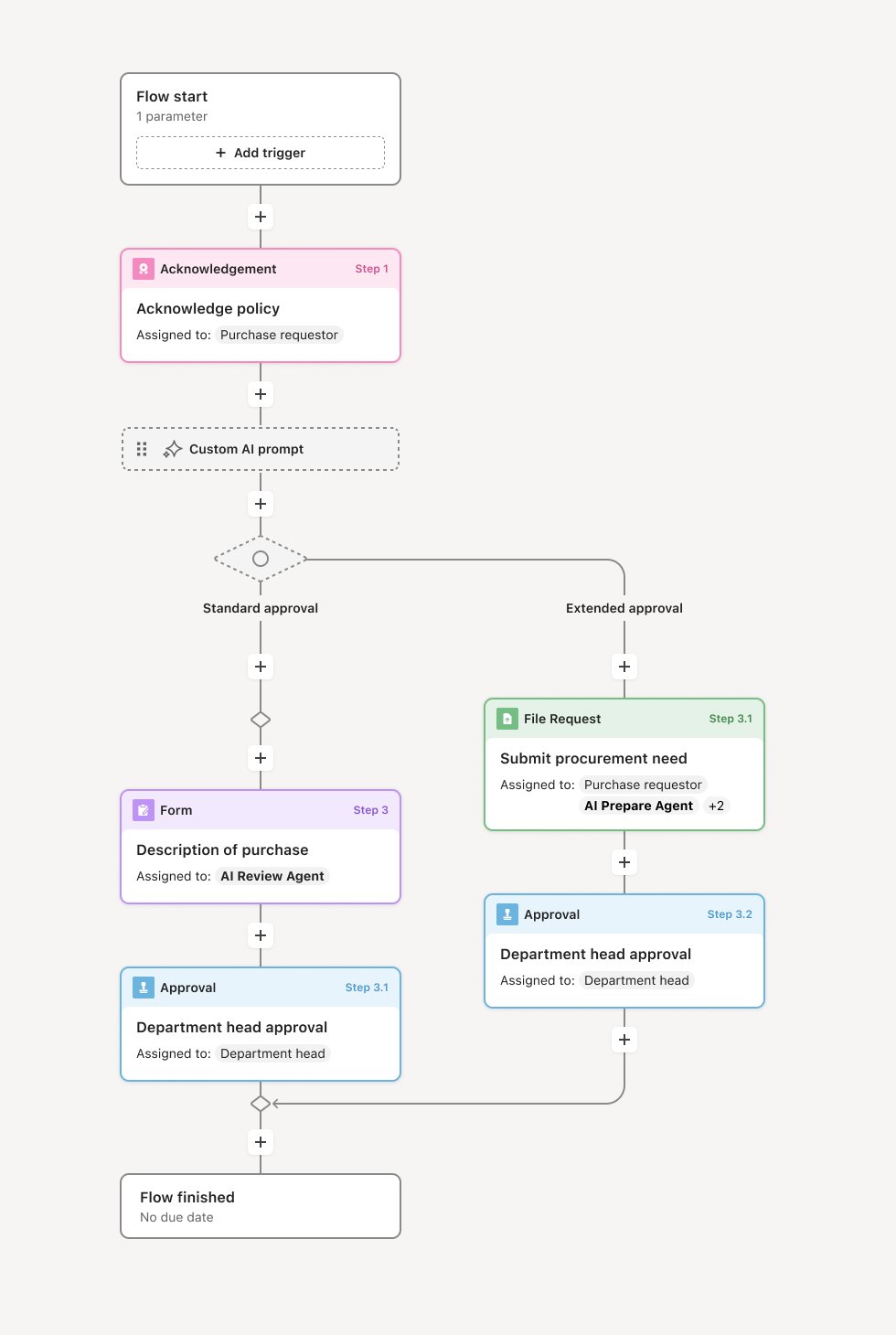
Your version of this process may vary based on roles, systems, data, and approval paths. Moxo's flow builder can be configured with AI agents, conditional branching, dynamic data references, and sophisticated logic to match how your organization runs this workflow. The steps below illustrate one example.
Bonus recommendation submission
The process begins when a manager submits a bonus recommendation for one or more employees. For cyclical bonuses, this may be triggered by the performance review cycle closing. For spot bonuses, it may be initiated at any time through a request form. The submission includes the employee name, bonus type, recommended amount, performance justification, and any supporting documentation such as performance ratings or project outcomes. An AI agent can assist by validating that the employee meets eligibility criteria, checking that the recommendation falls within policy guidelines, and flagging requests that exceed typical ranges for similar roles.
HR review and equity assessment
An HR business partner or compensation specialist reviews the recommendation for policy compliance and internal equity. This includes confirming the employee is eligible for the bonus type, verifying that the recommended amount aligns with performance ratings and comparable awards, and identifying any potential concerns such as recent disciplinary actions or pending separations. If the recommendation appears inconsistent with peer awards or policy parameters, HR may request justification or suggest adjustments before advancing the request.
Budget validation and finance review
Finance reviews the bonus request against available budget allocations. For individual requests, this may involve confirming the department has remaining discretionary budget. For cyclical bonus runs, finance validates that aggregate recommendations fall within the approved bonus pool. If requests exceed available budget, the workflow may route to senior leadership for additional approval or return to the recommending manager to adjust amounts. Finance also confirms proper cost center coding and accounting treatment for the payout.
Threshold-based escalation and executive approval
Bonus requests are routed to appropriate approvers based on amount and type. Lower-value spot bonuses may be approved by department heads, while larger awards or executive bonuses require senior leadership or compensation committee authorization. The workflow branches dynamically based on configured thresholds, ensuring routine awards move quickly while significant payouts receive appropriate oversight. Approvers see the complete context including performance justification, equity analysis, and budget impact before rendering decisions.
Final authorization and payroll processing
Once all required approvals are obtained, the bonus is authorized for processing. The approved amount and effective date are transmitted to payroll for inclusion in the appropriate pay cycle. The employee's manager is notified that the bonus has been approved, and the workflow records the complete approval chain. The process concludes with documentation available for compensation audits, tax reporting, and any future employee inquiries about their bonus history.
This process commonly relies on inputs such as employee records, performance ratings, bonus policy parameters, budget allocations, and manager recommendations with supporting justification. It may be triggered by events like a performance cycle close, a manager request submission, a retention situation requiring immediate action, or a scheduled bonus processing date. Common systems that integrate with this workflow include HRIS platforms like Workday, SAP SuccessFactors, or BambooHR, payroll systems like ADP or Paychex, compensation management tools, and financial planning systems where bonus budgets are maintained.
Key decision points include determining whether the employee meets eligibility requirements, whether the recommended amount aligns with performance and internal equity, whether budget is available to fund the request, and whether the bonus amount requires escalation to senior leadership. Each decision point may trigger conditional routing, requests for additional justification, budget reallocation requests, or advancement to the next approver in the chain.
Inconsistent recommendations where similar performance receives different bonus amounts across managers or departments. Budget overruns when approved bonuses exceed allocated pools due to inadequate tracking during the approval cycle. Delayed processing that causes bonuses to miss payroll deadlines and frustrates employees expecting timely recognition. Missing documentation when approvals happen verbally or via email without proper records for audit purposes. Eligibility errors where bonuses are approved for employees who do not meet program criteria, creating compliance issues.
Orchestrates the complete approval cycle from manager recommendation through HR review, finance validation, and executive authorization in a single coordinated flow.
Routes bonuses dynamically based on amount thresholds, bonus type, and employee level so routine awards process quickly while significant payouts receive appropriate scrutiny.
AI agents validate eligibility and policy compliance at submission, flagging potential issues and preparing context summaries for reviewers.
Connects to HRIS, payroll, and financial systems so employee data, performance ratings, and budget information flow in automatically and approved bonuses can trigger downstream processing.
Maintains complete compensation records with timestamps, approver identities, justifications, and decision rationale for audit and employee transparency.
Tracks budget consumption in real time so finance and HR can monitor bonus pool utilization as approvals progress through the cycle.