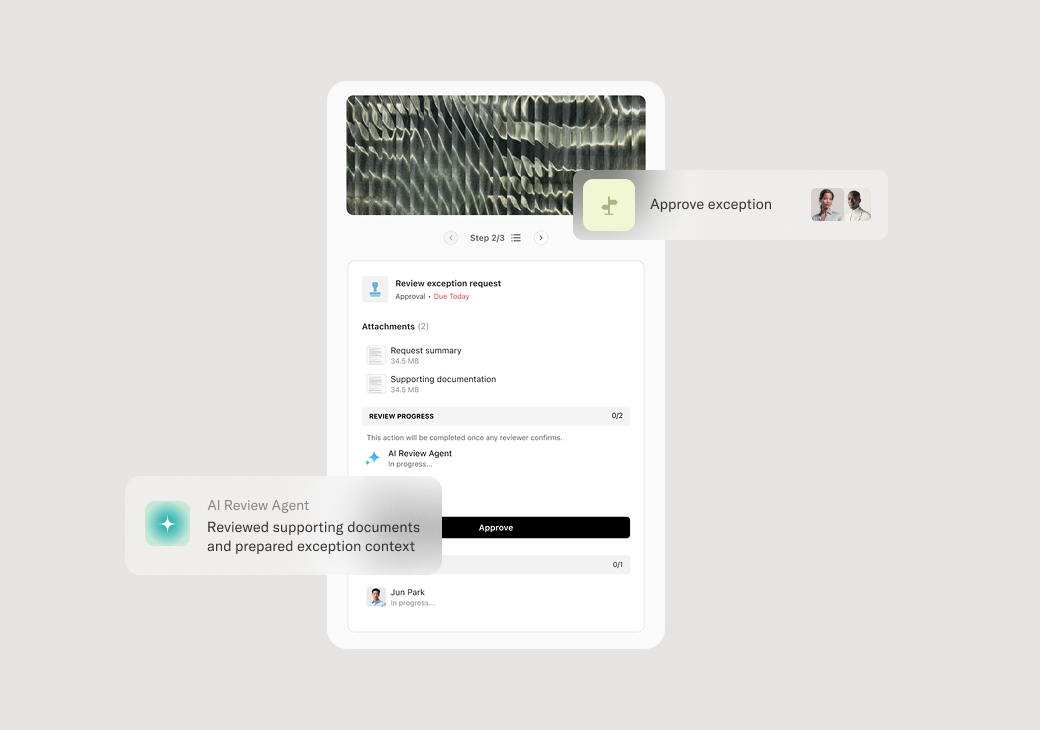

Brand manager
Marketing director
Creative director
Communications lead
Product marketing manager
Legal counsel

This process is used when marketing materials, creative assets, or branded communications require validation before external release. It is triggered when advertising campaigns are finalized for launch, when sales collateral is produced for customer distribution, when social media content references brand elements, or when product packaging is prepared for production. The process becomes essential when multiple teams or agencies create branded content, when regional variations must align with global standards, or when high-visibility assets carry significant brand risk if executed incorrectly. Ideal for consumer brands, enterprise marketing organizations, franchises, multi-location businesses, and any company where brand consistency directly impacts market perception and customer trust.
This process typically involves creative teams or agencies who produce assets for review, marketing managers who initiate approval requests and provide campaign context, brand managers or stewards who evaluate alignment with brand guidelines, legal or compliance reviewers who assess claims, disclosures, and intellectual property concerns, and senior marketing leadership who authorize high-profile or high-risk assets. In some organizations, regional marketing leads participate to ensure local market appropriateness while maintaining global brand standards.
Consistent brand presentation across all channels and touchpoints through systematic review before publication. Faster creative cycles by streamlining approvals and eliminating email chains between creative teams and stakeholders. Reduced compliance risk through integrated legal review of claims, disclosures, and trademark usage before assets go live. Clear revision tracking documenting feedback, changes, and final approvals for each version of creative assets. Protected brand equity by catching guideline violations before they reach customers and erode brand perception.
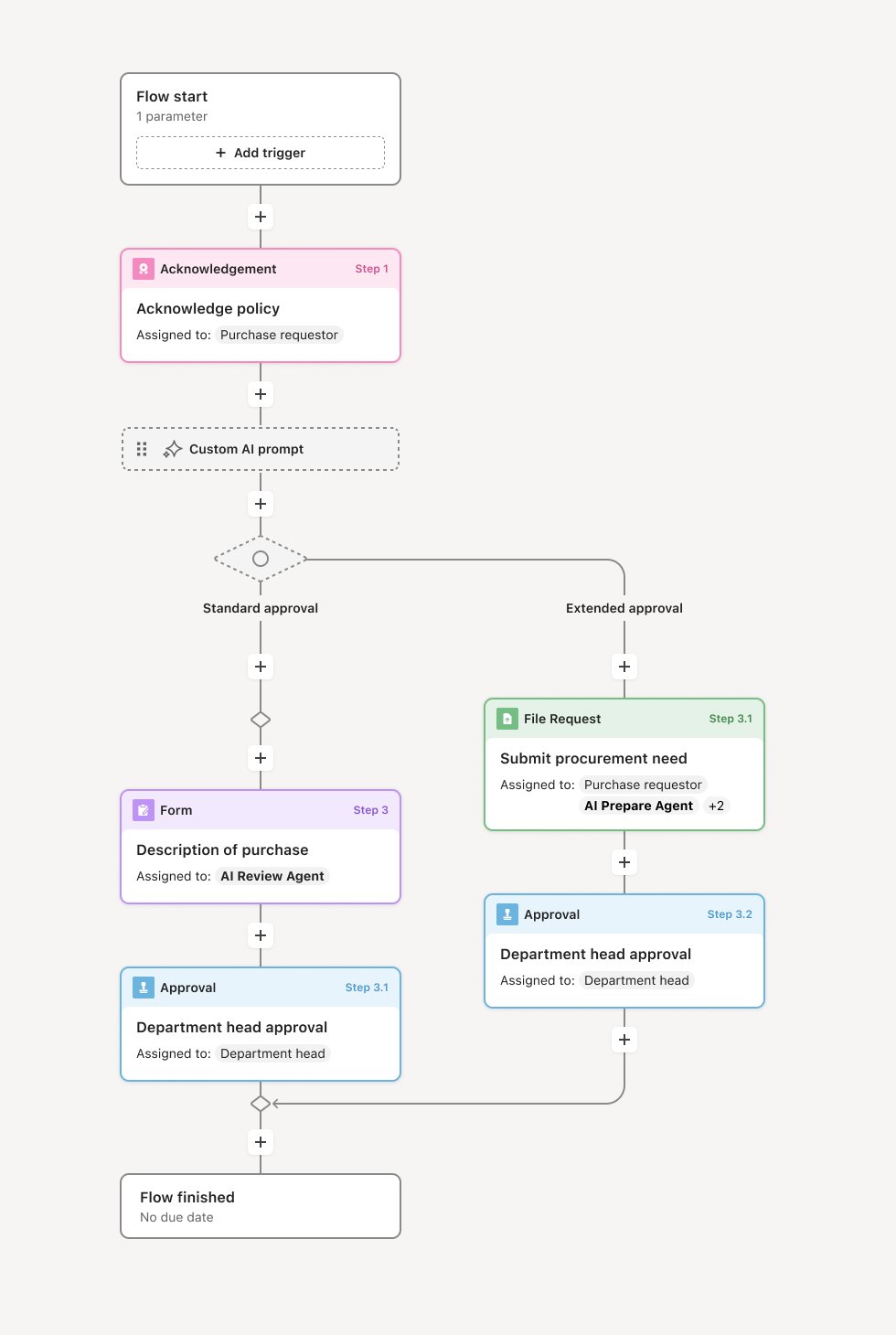
Your version of this process may vary based on roles, systems, data, and approval paths. Moxo's flow builder can be configured with AI agents, conditional branching, dynamic data references, and sophisticated logic to match how your organization runs this workflow. The steps below illustrate one example.
Asset submission and context documentation
The process begins when a marketing manager or creative team submits assets for brand review. The submission includes the creative files, intended use case, target audience, distribution channels, and campaign context. For complex campaigns, this may include multiple asset types across different formats and channels. An AI agent can assist by validating that required files are attached, checking basic brand elements like logo placement and color usage against guidelines, and flagging obvious deviations before human review begins.
Brand compliance review
A brand manager or steward reviews the submitted assets against brand guidelines. This includes evaluating visual identity elements such as logo usage, typography, color palette, and imagery style. It also covers messaging alignment including tone of voice, tagline usage, and positioning consistency. If assets do not meet brand standards, the reviewer provides specific feedback identifying required changes and returns the submission for revision. Once satisfied, the brand reviewer advances assets toward additional reviews or final approval.
Legal and compliance assessment
For assets containing claims, offers, disclaimers, or third-party intellectual property, legal review assesses compliance requirements. This includes validating that product claims are substantiated, promotional terms include required disclosures, competitive references are defensible, and trademark usage is appropriate. If assets contain music, images, or other licensed content, legal confirms proper rights are secured. Assets requiring legal changes are returned with specific guidance, while compliant assets advance to final authorization.
Stakeholder review and feedback consolidation
Depending on the asset type and visibility, additional stakeholders may review before final approval. This could include product teams validating feature accuracy, regional leads confirming local market appropriateness, or executive sponsors reviewing high-profile campaigns. Feedback from multiple reviewers is consolidated within the workflow, and if revisions are required, the creative team receives consolidated direction rather than conflicting individual comments. This phase ensures all perspectives are captured before final sign-off.
Final approval and release authorization
Once all required reviews are complete and any revisions have been incorporated, the assets receive final approval. A brand manager or marketing director authorizes the assets for their intended use, and the approved versions are released for publication or production. The workflow records the complete approval chain, version history, and any conditions attached to the authorization. Approved assets may be tagged for the digital asset library, and stakeholders are notified that the creative is cleared for use.
This process commonly relies on inputs such as creative files in various formats, brand guidelines documentation, campaign briefs, legal disclaimers, and licensing agreements for third-party content. It may be triggered by events like a campaign milestone, an agency delivery, a product launch deadline, or a manual submission when new materials are ready for review. Common systems that integrate with this workflow include digital asset management platforms like Bynder or Brandfolder, creative tools like Adobe Creative Cloud, project management systems like Asana or Monday.com, and marketing platforms where approved assets are ultimately deployed.
Key decision points include determining whether assets meet visual identity standards, whether messaging aligns with brand voice and positioning, whether legal claims and disclosures are compliant, and whether stakeholder feedback has been adequately addressed. Each decision point may trigger revision requests, conditional routing to additional reviewers, or advancement toward final authorization based on asset type and risk level.
Inconsistent guideline application where different reviewers interpret brand standards differently, creating unpredictable outcomes. Revision loops where vague feedback forces multiple rounds of changes without clear direction. Missed legal requirements when assets bypass compliance review and launch with inadequate disclosures or uncleared claims. Version confusion when outdated files are approved or published due to poor tracking of revisions. Deadline pressure bypasses where urgent launches skip brand review and create downstream brand inconsistencies.
Orchestrates the complete review cycle from asset submission through brand review, legal assessment, stakeholder feedback, and final authorization in a single coordinated flow.
Routes assets conditionally based on asset type, channel, risk level, or campaign visibility so routine materials move quickly while high-stakes assets receive appropriate scrutiny.
AI agents check basic brand compliance at submission, flagging obvious guideline deviations and preparing context summaries for human reviewers.
Connects to DAM and creative systems so assets flow in automatically and approved files can be tagged and distributed to deployment platforms.
Consolidates reviewer feedback so creative teams receive unified direction rather than conflicting comments from multiple stakeholders.
Maintains version history and approval records with timestamps, reviewer identities, and decision rationale for audit trails and future reference.