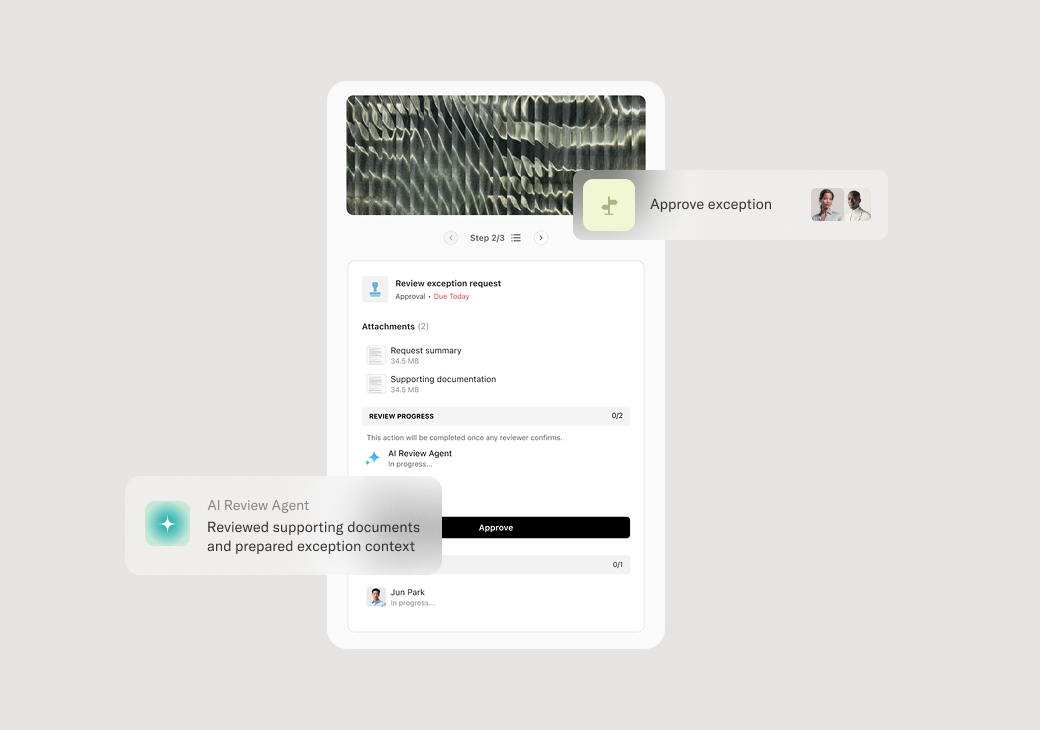
Brand director
Creative director
Chief marketing officer
Marketing operations manager
Legal counsel
Design systems lead

This process is used when brand guidelines require updates, expansions, or revisions that will affect how the organization and its partners represent the brand. It is triggered when visual identity elements are refreshed or evolved, when new brand extensions require additional guidance, when messaging frameworks are updated to reflect strategic shifts, or when usage policies need clarification based on recurring issues. The process becomes essential when guideline changes affect multiple teams or external partners, when legal or trademark implications must be considered, or when executive sign-off is required for significant brand evolution. Ideal for organizations undergoing rebrands, scaling brand systems, managing multiple sub-brands, or maintaining complex guideline documentation across global teams.
This process typically involves brand managers or designers who propose guideline updates, creative directors who evaluate design system implications and creative rationale, legal counsel who assess trademark and intellectual property considerations, marketing operations personnel who manage guideline distribution and training, and executive leadership such as CMOs who authorize significant changes to brand standards. In some organizations, regional brand leads or partner-facing teams provide input on how changes will affect their stakeholders before finalization.
Controlled brand evolution with documented authorization for every change to official brand standards. Reduced guideline confusion by ensuring only approved versions are published and legacy versions are clearly superseded. Cross-functional alignment when updates incorporate input from legal, operations, and stakeholder-facing teams before finalization. Clear change documentation tracking what changed, why, and who approved it for historical reference and onboarding. Consistent rollout with coordinated communication ensuring all teams receive and adopt updated guidelines simultaneously.
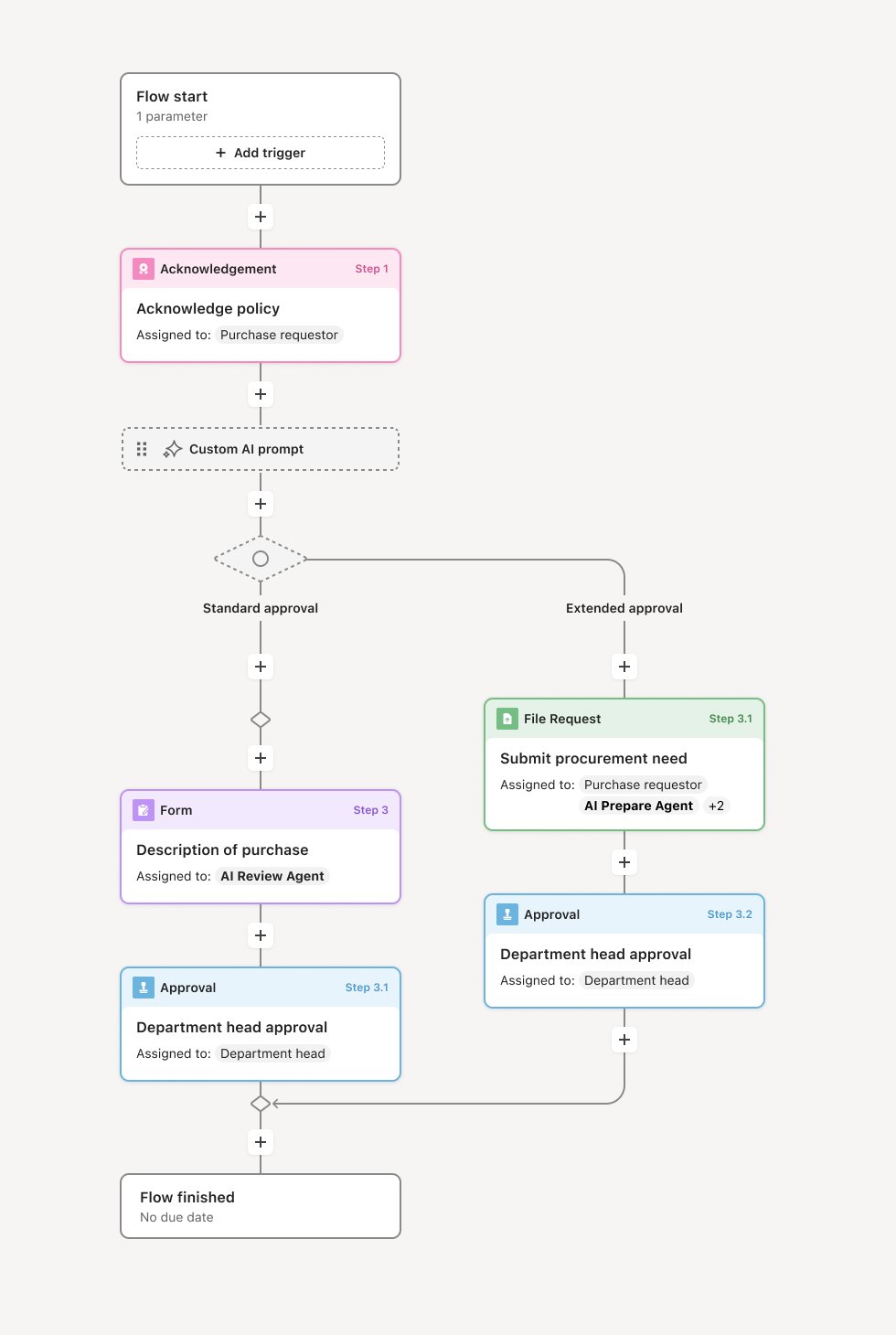
Your version of this process may vary based on roles, systems, data, and approval paths. Moxo's flow builder can be configured with AI agents, conditional branching, dynamic data references, and sophisticated logic to match how your organization runs this workflow. The steps below illustrate one example.
Change proposal and rationale documentation
The process begins when a brand manager or creative team member proposes a guideline update. The proposal includes the specific sections or elements to be changed, the proposed new content or standards, the rationale for the change (market evolution, brand refresh, usability feedback, legal requirement), and any supporting materials such as design explorations or competitive analysis. An AI agent can assist by comparing proposed changes against current guidelines, identifying all sections that reference the affected elements, and flagging potential inconsistencies that the update might create.
Creative leadership review
A creative director or design systems lead evaluates the proposed changes from an aesthetic and systematic perspective. This includes assessing whether the changes maintain design coherence, whether the rationale supports the evolution, and whether implementation is practical across all brand touchpoints. If the proposed changes create inconsistencies with other guideline sections or require broader updates, the reviewer may request revisions or expanded scope before advancing. Creative leadership confirms that the changes represent sound brand stewardship.
Legal and trademark assessment
For changes that affect trademarked elements, co-branding policies, or usage restrictions, legal counsel reviews the proposed updates. This includes confirming that new guidance does not conflict with trademark registrations, that usage policies adequately protect intellectual property, and that any changes to partner or third-party guidance align with existing agreements. If legal concerns arise, the proposal may require modification before proceeding. Legal sign-off confirms that guidelines protect the organization's brand assets appropriately.
Stakeholder input and impact assessment
Depending on the scope of changes, input may be gathered from teams who will be affected by the updates. This could include regional marketing leads who implement guidelines locally, partner teams who manage external brand usage, or production teams who execute brand materials. Feedback is consolidated to identify practical concerns or adoption challenges before finalization. If significant objections arise, the proposal may be revised to address implementation realities while maintaining brand integrity.
Executive authorization and version control
For significant guideline changes—such as visual identity updates, major policy revisions, or changes affecting external partners—executive leadership provides final authorization. The CMO or brand director confirms that the changes align with brand strategy and authorizes publication. Once approved, the updated guidelines are versioned, dated, and published as the new official standard. The workflow records the complete approval chain and change summary for future reference.
Publication and change communication
Upon approval, the updated guidelines are published to all relevant platforms—brand portals, digital asset management systems, internal documentation sites. A change summary communicates what was updated and why, helping teams understand the evolution. If training or adoption support is needed, those activities are triggered. Legacy versions are archived with clear indication that they have been superseded. The process concludes with documentation confirming successful rollout and stakeholder notification.
This process commonly relies on inputs such as current brand guideline documents, proposed revisions with marked changes, design rationale documentation, trademark registrations, and stakeholder feedback. It may be triggered by events like a brand refresh initiative, recurring guideline interpretation issues, a product launch requiring new brand extensions, or a scheduled periodic review cycle. Common systems that integrate with this workflow include brand management platforms like Frontify or Bynder, document collaboration tools, digital asset management systems where guidelines are published, and communication platforms for rollout announcements.
Key decision points include determining whether the proposed changes maintain design system coherence, whether legal and trademark protections remain adequate, whether stakeholder concerns have been adequately addressed, and whether the scope of changes requires executive authorization. Each decision point may trigger requests for revision, expanded scope to address related sections, escalation to senior leadership, or conditional approval with implementation requirements.
Fragmented guideline versions when updates are published inconsistently across platforms, creating confusion about current standards. Uncoordinated changes where updates to one section create conflicts with other guideline areas that were not revised. Missing stakeholder input that results in guidelines that are impractical to implement in certain regions or channels. Inadequate change communication where teams continue using outdated standards because they were not informed of updates. Lost change history that makes it difficult to understand why guidelines evolved or to onboard new team members on brand rationale.
Orchestrates the complete revision cycle from change proposal through creative review, legal assessment, stakeholder input, and executive authorization in a single coordinated flow.
Routes changes conditionally based on scope and impact so minor clarifications move quickly while significant updates receive appropriate scrutiny.
AI agents track affected sections comparing proposed changes against current guidelines and identifying related areas that may need updates.
Connects to brand management and DAM systems so current guidelines flow into the review process and approved updates can trigger publication automatically.
Maintains complete version history with timestamps, approver identities, change rationale, and superseded versions for audit and reference.
Coordinates rollout communication notifying affected teams when guidelines are updated and tracking acknowledgment of changes.