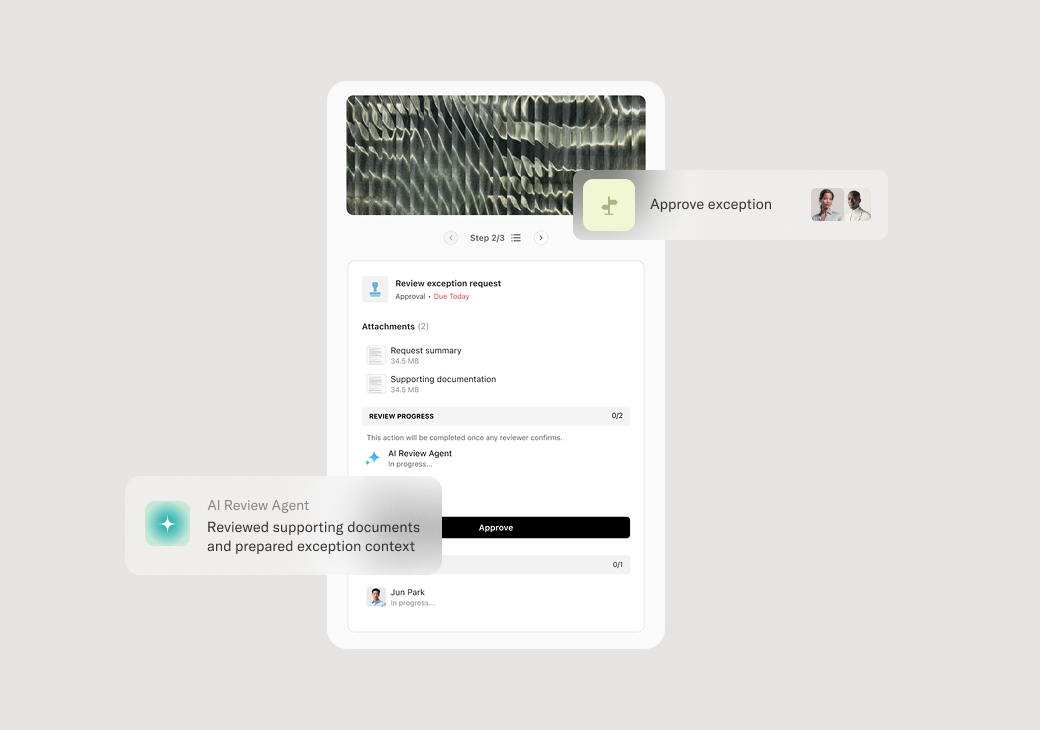
Finance director
Controller
Chief financial officer
Operations director
Facilities manager
IT director

This process is used when organizations make capital investments that will be depreciated over time rather than expensed immediately. It is triggered when purchasing equipment, machinery, or vehicles, when investing in facilities improvements or expansions, when acquiring technology infrastructure such as servers or major software platforms, or when making other investments that meet capitalization thresholds. The process becomes essential when investments require board or executive approval based on dollar value, when financial analysis must justify the return on investment, when capital budgets must be tracked separately from operating expenses, or when compliance requirements demand documented authorization for asset acquisitions. Ideal for manufacturing, healthcare, technology, real estate, and any organization with significant ongoing capital investment requirements.
This process typically involves department heads or project managers who identify capital needs and prepare requests, financial analysts who review business cases and validate financial projections, procurement teams who assess vendor options and pricing, functional leadership who sponsors the investment and validates operational necessity, finance directors or controllers who evaluate financial merit and budget impact, and CFOs or executive committees who authorize investments above defined thresholds. In some organizations, board finance committees approve major capital expenditures that exceed executive authority.
Financially justified investments with documented business cases demonstrating expected returns and strategic value. Controlled capital deployment ensuring expenditures align with approved capital budgets and strategic priorities. Appropriate authorization levels with investment size determining approval authority through defined thresholds. Complete asset documentation supporting proper capitalization, depreciation, and financial reporting. Reduced investment risk through systematic evaluation of alternatives, vendor options, and financial assumptions.
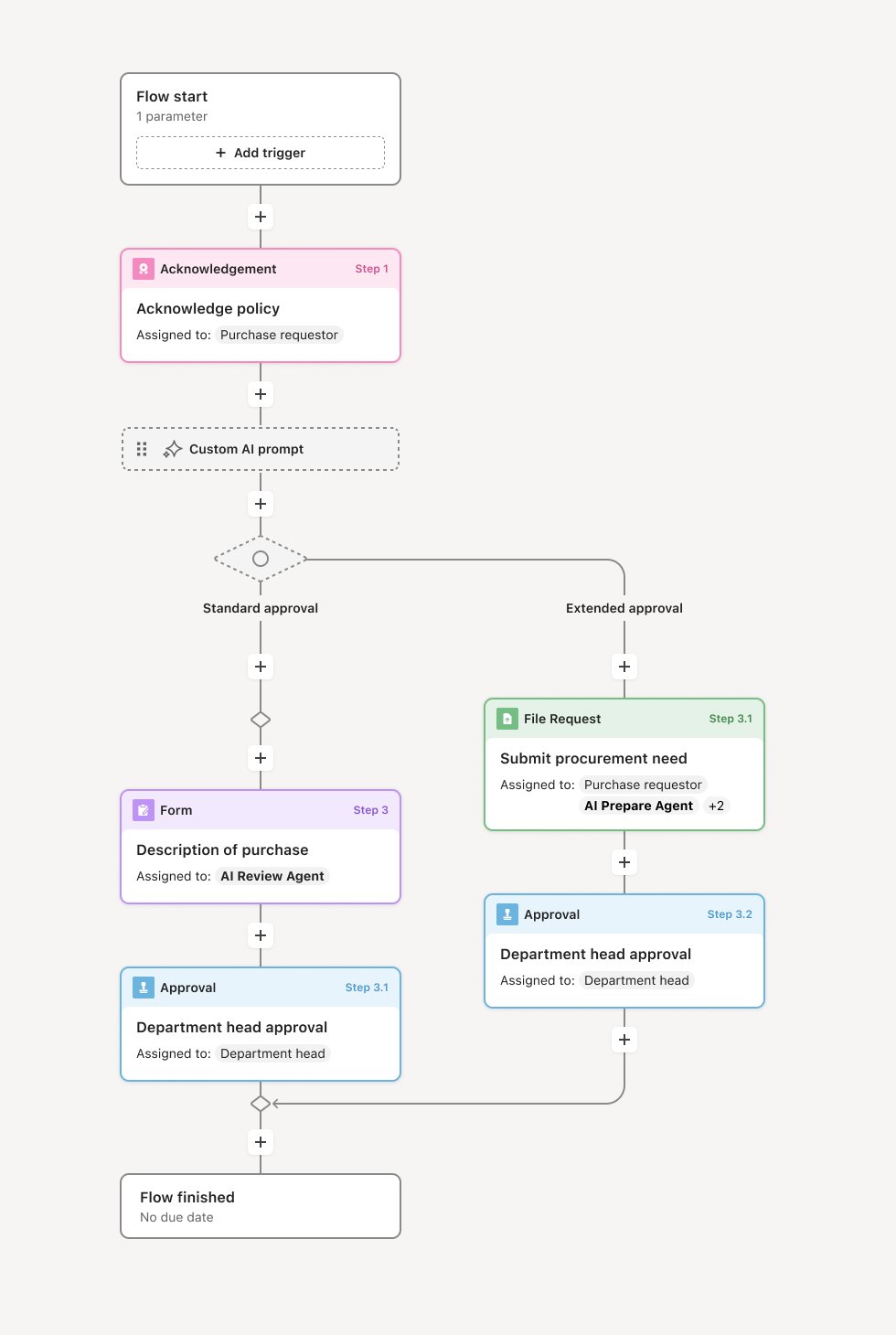
Your version of this process may vary based on roles, systems, data, and approval paths. Moxo's flow builder can be configured with AI agents, conditional branching, dynamic data references, and sophisticated logic to match how your organization runs this workflow. The steps below illustrate one example.
Capital request submission
The process begins when a department head or project manager submits a capital expenditure request. The submission includes a description of the asset or investment, business justification explaining operational necessity, expected benefits or cost savings, estimated cost with supporting quotes, proposed timing, and useful life for depreciation purposes. For significant investments, a formal business case with ROI analysis, payback period, and NPV calculations may be required. An AI agent can assist by validating that required information is complete, checking the request against capitalization policies, and flagging if similar assets were recently acquired.
Financial analysis and validation
Financial analysts review the business case and financial projections. This includes validating that cost estimates are reasonable and supported by vendor quotes, that benefit assumptions are credible, that financial calculations are accurate, and that the investment meets required return thresholds. Analysts may request additional documentation, challenge assumptions, or require alternative analysis before accepting the financial case. If the investment does not meet financial criteria, the request may be returned for revision or rejected with explanation.
Budget and strategic alignment review
Finance and departmental leadership review the request against approved capital budgets and strategic priorities. This includes confirming that the investment was planned in the capital budget or identifying funding sources for unplanned requests, validating that the investment supports strategic objectives, and assessing timing relative to other capital commitments. If the request exceeds available capital budget, it may require reallocation from other projects, deferral to a future period, or escalation for additional budget authorization.
Threshold-based approval routing
Capital requests are routed to appropriate approvers based on dollar value and investment type. Smaller investments may be approved by department heads or directors. Larger investments require VP, CFO, or CEO approval. Major capital expenditures above executive authority thresholds may require board approval. The workflow routes dynamically based on configured thresholds, ensuring appropriate oversight without unnecessary escalation for routine acquisitions. Approvers see the complete analysis including financial projections, strategic fit, and budget impact.
Authorization and procurement initiation
Once all required approvals are obtained, the capital expenditure is authorized. The approved request is recorded as a committed capital investment, and procurement can proceed with vendor engagement and purchase execution. The workflow records the complete approval chain, financial analysis, and any conditions attached to the authorization. Upon asset acquisition, the documentation supports proper capitalization and depreciation setup in financial systems. Post-implementation reviews may be scheduled for significant investments to validate that projected benefits are being realized.
This process commonly relies on inputs such as capital expenditure request forms, business case documents with financial analysis, vendor quotes or proposals, approved capital budget data, asset registers for comparison to existing assets, and company capitalization policies. It may be triggered by events like an equipment failure requiring replacement, a capacity expansion need, a technology upgrade requirement, or annual capital planning cycles. Common systems that integrate with this workflow include ERP platforms like SAP or Oracle, fixed asset management systems, procurement systems like Coupa or Ariba, and financial planning tools where capital budgets are maintained.
Key decision points include determining whether the investment meets financial return thresholds, whether capital budget is available or requires reallocation, whether the investment aligns with strategic priorities, and which approval authority level is required based on investment size. Each decision point may trigger requests for additional analysis, alternative evaluation, budget reallocation discussions, escalation to senior leadership, or return to the requestor for revision.
Inadequate business cases where financial projections lack rigor or supporting assumptions are not documented. Budget overcommitment when approved capital exceeds actual budget availability due to poor tracking. Delayed approvals that cause organizations to miss favorable pricing windows or delay critical operational needs. Inconsistent capitalization where similar items are treated differently for accounting purposes due to inadequate review. Missing post-implementation review where projected benefits are never validated against actual results.
Orchestrates the complete investment cycle from request submission through financial analysis, budget validation, and tiered approval in a single coordinated flow.
Routes requests by investment size so routine acquisitions move quickly while significant investments receive appropriate executive or board oversight.
AI agents validate documentation and calculations at submission, checking for complete information and flagging potential issues before financial review.
Connects to ERP and asset management systems so capital budget data flows in automatically and approved investments can initiate procurement workflows.
Maintains complete investment records with business cases, financial analysis, approver identities, and authorization documentation for audit and asset management.
Tracks capital budget utilization providing visibility into committed and remaining capital capacity as approvals are granted throughout the fiscal period.