Customer support manager
Service operations director
Technical support lead
Customer success manager
IT service desk manager
Operations director

This process is used when cases cannot be resolved through standard support channels and require additional expertise, authority, or urgency. It is triggered when SLA deadlines are at risk, when technical complexity exceeds frontline capabilities, when customer dissatisfaction requires management attention, when cross-functional coordination is needed for resolution, or when policy exceptions require authorization. The process becomes essential when organizations need to protect service levels during high-volume periods, when high-value customer relationships are at stake, or when systemic issues require visibility beyond frontline teams. Ideal for customer service organizations, IT help desks, professional services firms, healthcare providers, and any operation where timely issue resolution directly impacts customer satisfaction and retention.
This process typically involves frontline support agents who identify escalation need and initiate the process, tier-two or specialist teams who provide advanced technical or domain expertise, support managers who handle customer relationship escalations and authorize exceptions, cross-functional liaisons from product, engineering, or operations who address systemic issues, and executive sponsors who engage on critical accounts or severe service failures. In some organizations, dedicated escalation managers triage and route escalations, while customer success managers may be engaged for strategic account escalations.
Faster resolution for complex issues by routing cases to appropriate expertise rather than letting them stall with frontline teams. Protected SLA performance through proactive escalation before deadlines are breached. Appropriate management visibility ensuring leadership awareness of significant customer issues or systemic problems. Preserved customer relationships when high-touch intervention prevents dissatisfaction from becoming churn. Clear escalation accountability documenting who escalated, why, and how the issue was ultimately resolved.
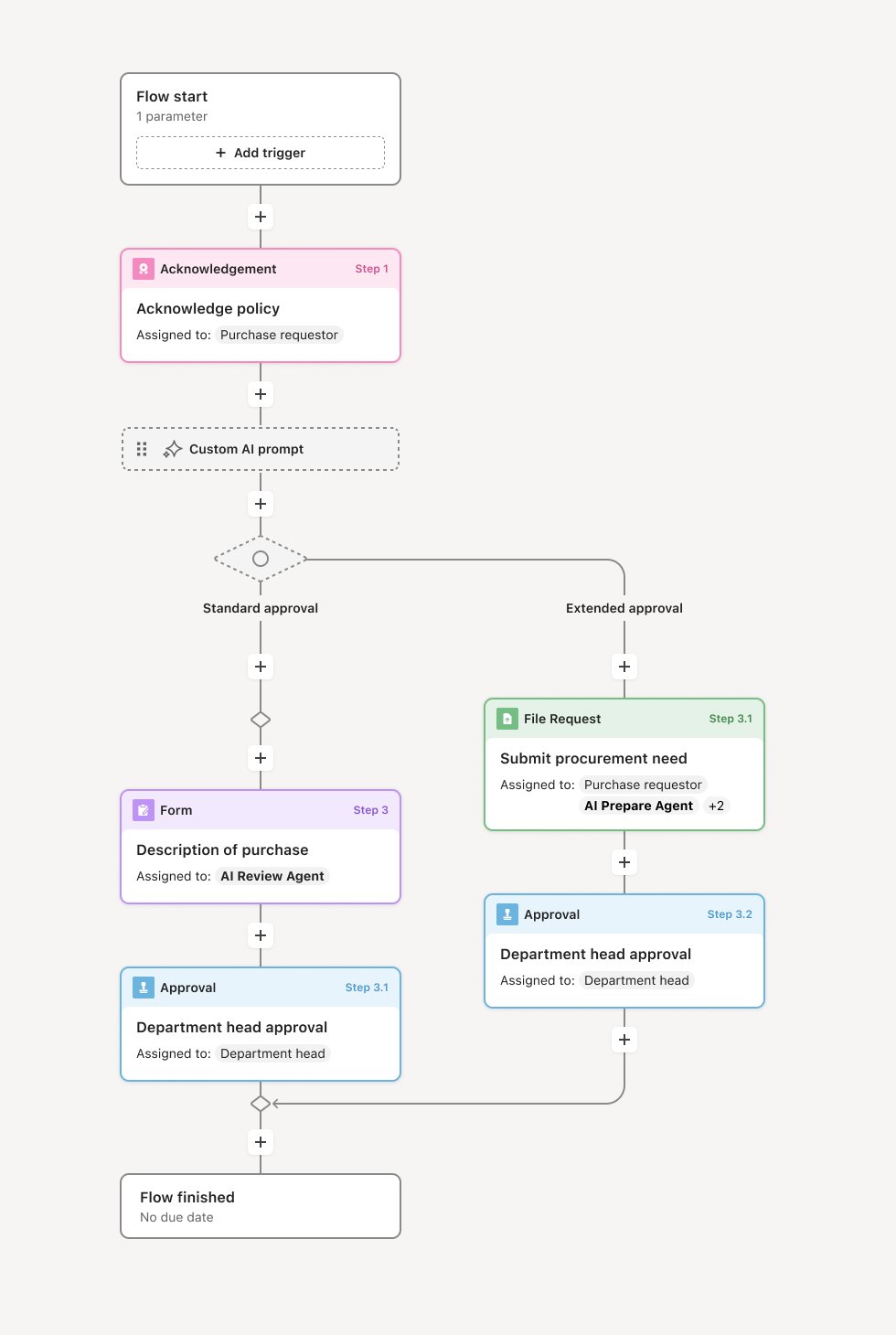
Your version of this process may vary based on roles, systems, data, and approval paths. Moxo's flow builder can be configured with AI agents, conditional branching, dynamic data references, and sophisticated logic to match how your organization runs this workflow. The steps below illustrate one example.
Escalation trigger identification
The process begins when an escalation need is identified, either automatically or manually. Automatic triggers may include approaching SLA deadlines, repeated contact on the same issue, high-value customer flags, or negative sentiment detection. Manual triggers occur when frontline agents recognize that a case exceeds their capability or authority. The triggering event captures the original case context, customer information, resolution attempts to date, and reason for escalation. An AI agent can assist by monitoring case activity, identifying escalation triggers, and automatically initiating the process when criteria are met.
Escalation routing and assignment
Based on escalation type and case characteristics, the workflow routes to the appropriate escalation path. Technical escalations route to specialist teams with relevant expertise. Customer relationship escalations route to managers or customer success. Policy exceptions route to authorized decision-makers. Complex issues requiring multiple functions may trigger parallel engagement. The assigned escalation owner receives the complete case history, customer context, and specific escalation reason so they can act immediately without requiring additional research.
Escalation owner engagement
The escalation owner reviews the case and takes action. This may involve direct customer contact to acknowledge the escalation and set expectations, technical investigation requiring specialized tools or access, coordination with other teams to address root causes, or authorization of exceptions to resolve customer concerns. The escalation owner becomes accountable for driving the case to resolution, even if they engage others for assistance. Progress updates are captured within the workflow to maintain visibility for all stakeholders.
Cross-functional coordination
For escalations requiring action from multiple teams, the workflow coordinates cross-functional engagement. This may include bringing in product teams for bug fixes, engineering for infrastructure issues, operations for process changes, or finance for billing disputes. Each engaged party sees the case context relevant to their involvement and can provide updates or actions within the workflow. The escalation owner maintains overall accountability while coordinating contributions from specialists across the organization.
Resolution and case closure
Once the issue is resolved, the escalation owner confirms resolution with the customer if appropriate and documents the outcome. Resolution documentation includes what was done, why it was necessary, and any follow-up commitments. If the escalation revealed systemic issues, those are flagged for root cause analysis separate from case closure. The original case is updated with escalation details, and the escalation workflow concludes with a complete record of the escalation path, actions taken, and resolution achieved. Metrics are captured to inform escalation process improvement.
This process commonly relies on inputs such as original case records, customer account information, SLA status and deadlines, case history and prior resolution attempts, and escalation criteria defining triggers and routing rules. It may be triggered by SLA threshold breaches, manual agent requests, customer sentiment indicators, repeat contact patterns, or high-value account flags. Common systems that integrate with this workflow include CRM platforms like Salesforce Service Cloud, ticketing systems like Zendesk or ServiceNow, customer success platforms like Gainsight, and communication tools where customer interactions occur.
Key decision points include determining which escalation path is appropriate based on issue type, whether the escalation owner has authority and capability to resolve or needs to engage others, whether policy exceptions should be granted to satisfy the customer, and whether the issue reveals systemic problems requiring broader action. Each decision point may trigger re-routing to different specialists, further escalation to higher management, engagement of additional functions, or flagging for root cause analysis.
Late escalation where cases languish with frontline teams past the point where timely intervention could help. Insufficient context transfer forcing escalation owners to repeat discovery the frontline agent already completed. Unclear ownership where escalated cases fall between teams without anyone driving to resolution. Over-escalation where cases are pushed to management or specialists unnecessarily, creating bottlenecks. Missing closure loop where escalated issues are addressed but customers are not informed of resolution.
Orchestrates escalation end-to-end from trigger identification through routing, cross-functional coordination, and resolution in a single coordinated flow.
Routes escalations intelligently based on issue type, customer value, and severity so cases reach the right expertise without manual triage.
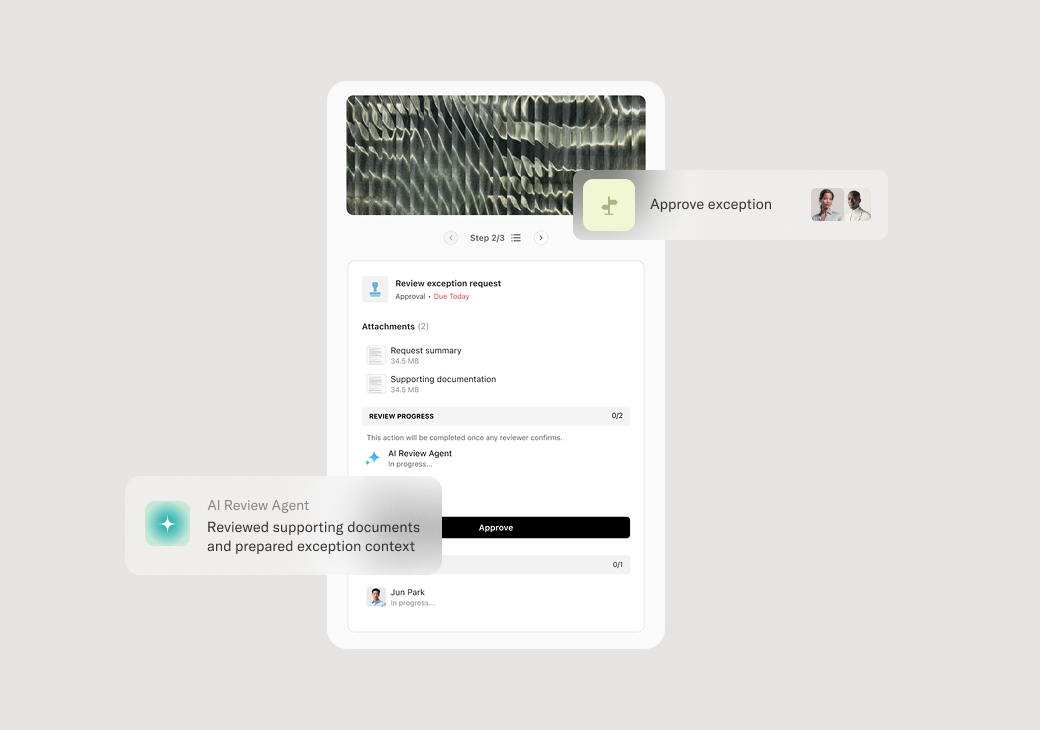
AI agents monitor escalation triggers automatically initiating escalation when criteria are met and preparing context summaries for escalation owners.
Connects to CRM and ticketing systems so case history flows in automatically and escalation actions update source records.
Coordinates cross-functional teams bringing specialists from multiple departments into the workflow while maintaining clear escalation ownership.
Maintains escalation records with timestamps, routing decisions, actions taken, and resolution documentation for analysis and continuous improvement.