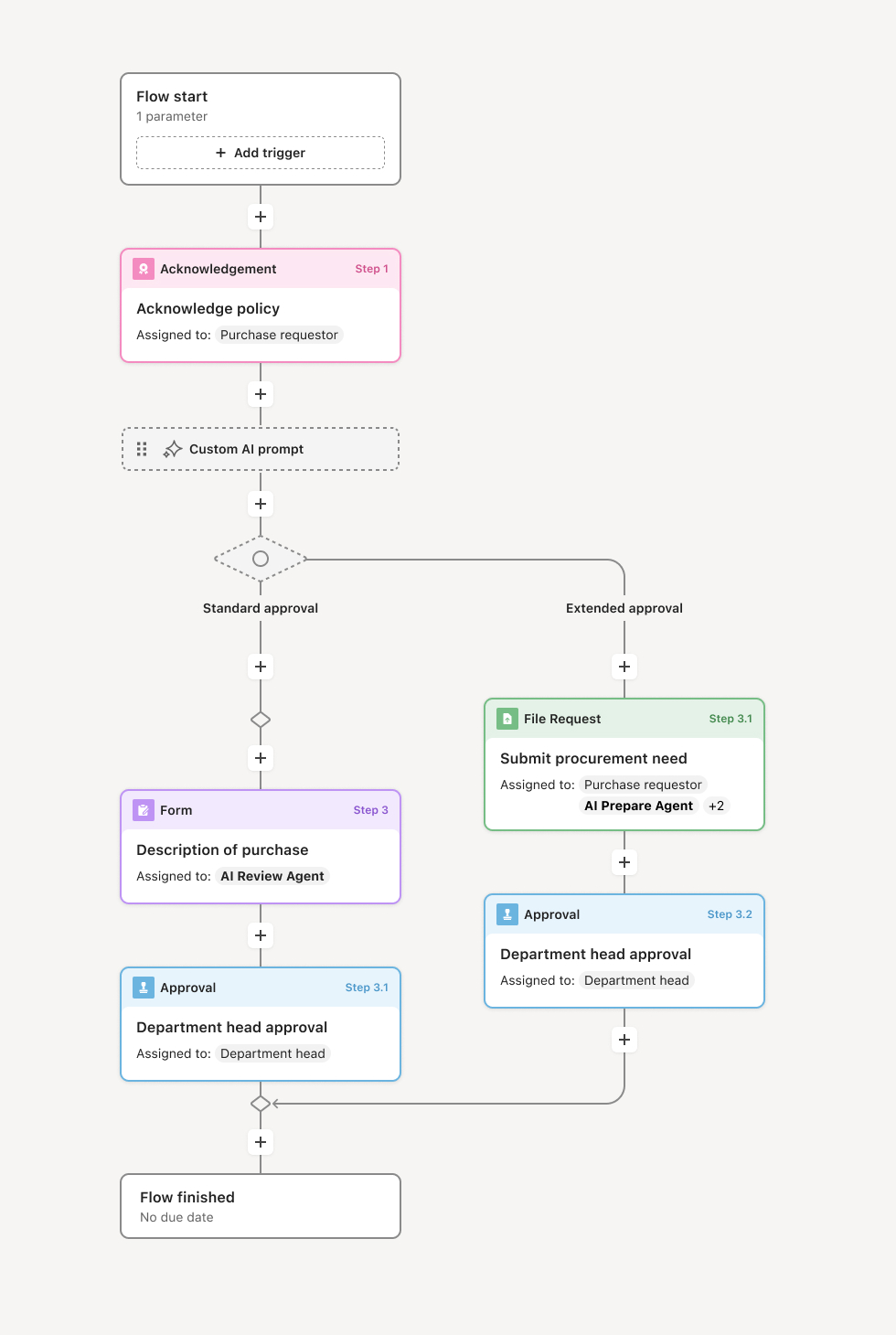
Certification approval is triggered when individuals, organizations, or products require formal validation against established standards or regulatory requirements. This process becomes critical when multiple review criteria must be evaluated, when compliance documentation requires validation across departments, and when certification decisions carry legal or operational risk. The process is essential for organizations managing professional certifications, product approvals, vendor qualifications, or regulatory compliance certifications across industries like healthcare, finance, manufacturing, and professional services.
The process typically involves certification program managers who coordinate the overall review, subject matter experts who evaluate technical or professional qualifications, compliance officers who ensure regulatory alignment, and senior approvers who make final certification decisions. External stakeholders such as applicants, third-party auditors, or regulatory bodies may also participate in providing documentation or validation.
Faster certification cycles as applications move through reviewers without manual coordination delays. Reduced incomplete submissions caught early through validation before formal review begins. Consistent application of certification standards across all applicants and review teams. Clear audit trail documenting all evaluation criteria and approval decisions. Fewer certification disputes from transparent review processes and documented rationale. Improved compliance confidence through systematic validation of all required criteria.

Your version of this process may vary based on roles, systems, data, and approval paths. Moxo's flow builder can be configured with AI agents, conditional branching, dynamic data references, and sophisticated logic to match how your organization runs this workflow. The steps below illustrate one example.
Application Submission and Initial Review
The certification process begins when an applicant submits required documentation, credentials, and supporting materials through a structured intake. AI agents immediately validate submission completeness, flag missing documents, and route applications to appropriate review queues based on certification type or complexity. Initial screening ensures all prerequisite requirements are met before formal evaluation begins.
Technical and Compliance Evaluation
Subject matter experts conduct detailed reviews of qualifications, experience, and technical competencies while compliance officers verify regulatory alignment and documentation authenticity. AI agents assist by extracting key information from submitted documents, cross-referencing credentials against databases, and flagging potential discrepancies for human review. If additional verification is required, the process branches to request supplementary documentation or third-party validation.
Risk Assessment and Exception Handling
Risk management teams evaluate any identified gaps, exceptions, or non-standard qualifications that may affect certification eligibility. If standard criteria are not fully met, the process routes to specialized review panels who determine whether alternative qualifications or conditional approval paths are appropriate. AI agents help prepare risk summaries and flag cases requiring escalated review based on predefined thresholds.
Final Approval and Certification Issuance
Senior certification authorities review complete evaluation packages and make final approval decisions based on all assessment inputs. Upon approval, the system generates official certification documents, updates certification databases, and notifies relevant stakeholders. If certification is denied, detailed feedback is provided explaining the decision rationale and potential remediation paths.
This process commonly relies on inputs such as application forms, credential documentation, supporting evidence, and verification data from connected systems. It may be triggered by events like application submission, renewal deadlines, or compliance audit requirements. Integration with systems like HRIS platforms, credential verification services, and regulatory databases helps validate submitted information and maintain certification records.
Key decision points include determining whether submitted credentials meet minimum qualification thresholds, whether exceptions or alternative qualifications warrant special consideration, and whether risk factors require additional oversight or conditional approval. The process also branches based on certification type, applicant category, and regulatory requirements that may trigger different evaluation paths.
Incomplete applications stalling review cycles when missing documentation isn't identified upfront. Inconsistent evaluation standards applied across different reviewers or certification types. Delayed verification of external credentials causing bottlenecks in approval timelines. Unclear exception handling creating confusion over non-standard qualification pathways. Poor communication leaving applicants uncertain about status or next steps. Inadequate documentation of approval rationale complicating audit or appeal processes.
AI agents validate application completeness and extract key qualification data before human reviewers engage, reducing back-and-forth over missing documentation.
Parallel review coordination allows technical evaluation and compliance verification to proceed simultaneously, accelerating overall certification timelines.
Conditional logic routes applications to appropriate review panels based on certification type, risk level, and qualification complexity.
External applicant participation enables document submission and status tracking directly within the flow without email coordination.
Escalation triggers surface stalled applications before they impact certification deadlines or regulatory compliance.
Integration with credential verification systems automates validation of external qualifications and maintains updated certification databases.