Change manager
IT operations lead
Business stakeholder
Risk and compliance officer
Technical reviewer
Executive sponsor
Vendor or external implementer

Change approval processes are triggered when proposed modifications to systems, processes, or operations require formal authorization before implementation. This includes technology changes, process updates, policy revisions, vendor implementations, and operational adjustments that could impact business continuity, security, or compliance. The process becomes essential when changes cross departmental boundaries, involve external parties, or carry significant risk, cost, or regulatory implications. Organizations across industries rely on structured change approval to balance innovation with operational stability.
Change approval typically involves change managers who coordinate the review process, technical reviewers who assess feasibility and impact, business stakeholders who evaluate operational implications, and approval authorities who provide final authorization. Risk and compliance teams participate when changes affect regulatory requirements or security posture. External parties such as vendors, consultants, or regulatory bodies may also contribute to the review process depending on the nature and scope of the proposed change.
Faster change authorization as review activities proceed in parallel rather than sequential handoffs. Reduced implementation delays from incomplete change requests caught during initial validation. Consistent risk assessment applied across all change types and business units. Clear accountability for change decisions with full traceability of approvals and conditions. Improved stakeholder alignment through coordinated review and feedback collection. Better change success rates from thorough impact analysis and proper resource allocation.
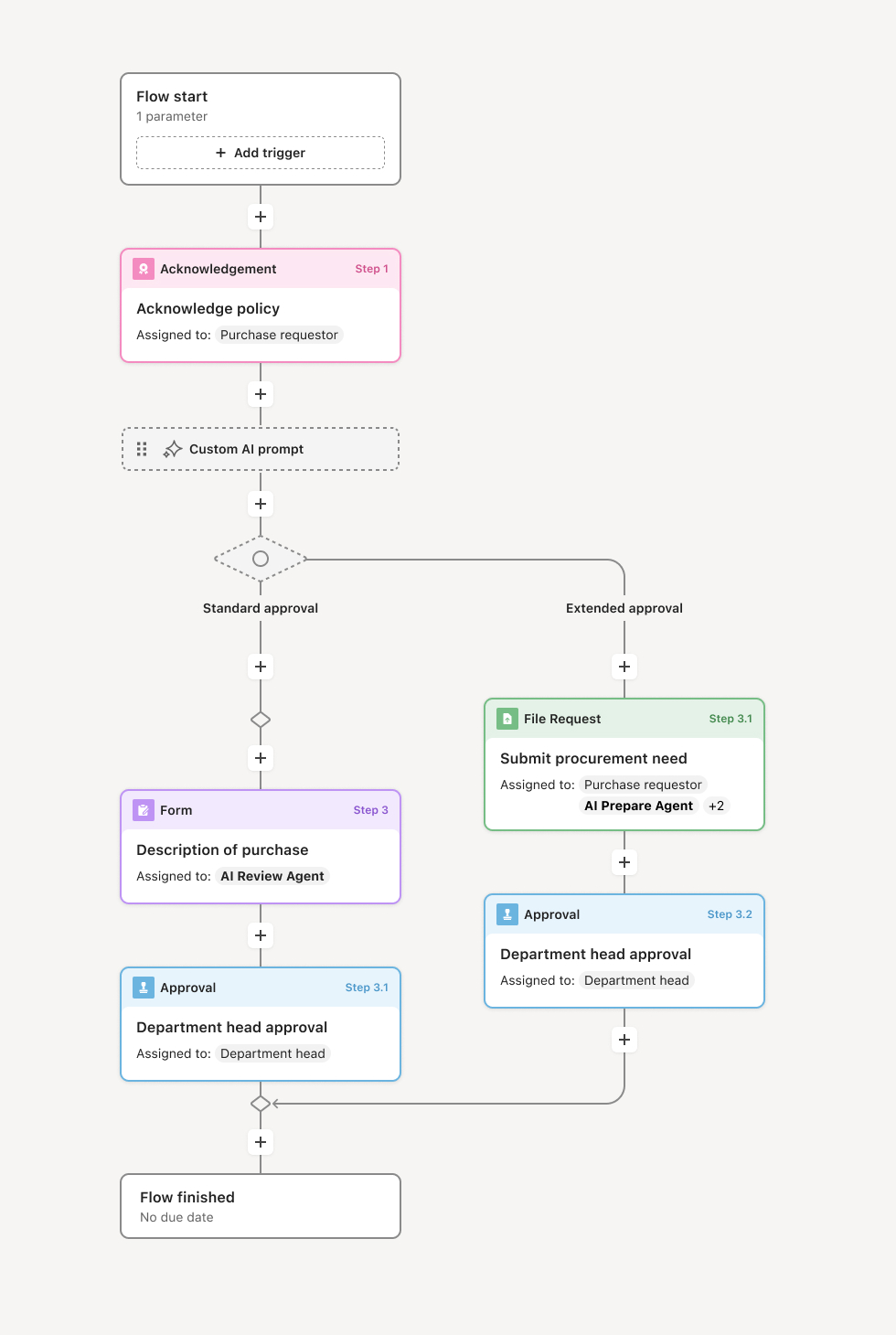
Your version of this process may vary based on roles, systems, data, and approval paths. Moxo's flow builder can be configured with AI agents, conditional branching, dynamic data references, and sophisticated logic to match how your organization runs this workflow. The steps below illustrate one example.
Change request initiation
The process begins when a change requestor submits a formal change proposal through the designated intake mechanism. This submission includes change description, business justification, impact assessment, timeline requirements, and resource needs. AI agents immediately validate the completeness of the submission and flag any missing critical information before routing to the change management team. The system automatically assigns a unique change identifier and establishes the review timeline based on change classification and urgency.
Initial review and classification
Change managers conduct preliminary review to classify the change by type, risk level, and complexity. This classification determines the appropriate approval path, required reviewers, and timeline constraints. AI agents assist by analyzing similar historical changes and suggesting risk categories based on system components, business processes, or operational areas affected. If the change requires emergency processing, it follows an expedited path with compressed review cycles and escalated approval authority.
Impact assessment and technical review
Technical reviewers and subject matter experts evaluate the proposed change for feasibility, resource requirements, and potential impacts on existing systems or processes. This phase often involves parallel review streams where different teams assess security implications, operational impact, compliance requirements, and technical dependencies. AI agents prepare context summaries for each reviewer based on their area of expertise and flag potential conflicts with other pending changes or scheduled maintenance activities.
Stakeholder consultation and feedback
Business stakeholders and affected parties provide input on operational implications, timing constraints, and business readiness. This consultation may involve external parties such as vendors, customers, or regulatory bodies depending on the change scope. The process accommodates iterative feedback cycles where reviewers can request modifications or additional information. AI agents track feedback themes and highlight areas where stakeholder concerns align or conflict.
Risk evaluation and approval routing
Risk and compliance teams assess the change against organizational policies, regulatory requirements, and risk tolerance. Based on this evaluation, the change is routed to the appropriate approval authority. High-risk changes may require executive approval or board oversight, while routine changes follow standard management approval paths. If additional risk mitigation is required, the process loops back to incorporate necessary safeguards or rollback procedures.
Final authorization and implementation planning
Approval authorities review the complete change package including impact assessment, stakeholder feedback, and risk evaluation to make the final authorization decision. Approved changes trigger implementation planning activities including resource allocation, scheduling, and communication to affected parties. Rejected changes are returned with specific feedback for revision or closure. The system maintains complete records of all review activities, decisions, and conditions for audit and future reference.
This process typically integrates with ITSM platforms (ServiceNow, Remedy, Jira Service Management) for change tracking, project management systems for resource planning, and configuration management databases for impact analysis. Common triggers include change request forms, incident escalations requiring process modifications, or scheduled review cycles for policy updates. Key inputs include change specifications, impact assessments, resource estimates, implementation timelines, rollback procedures, and stakeholder contact information.
Critical decision points include determining change classification and risk level, which drives the approval path and review requirements. If the change exceeds defined risk thresholds, additional approval layers or risk mitigation measures are required. If stakeholder feedback indicates significant concerns, the change may require revision or extended consultation. If technical review reveals dependencies or conflicts, implementation timing may need adjustment or the change may require redesign.
Incomplete change requests that lack sufficient detail for proper impact assessment, causing delays and multiple revision cycles. Stakeholder review bottlenecks where key reviewers are unavailable or unresponsive, stalling the entire approval process. Inadequate impact analysis that misses critical dependencies or downstream effects, leading to implementation problems. Approval authority confusion where it's unclear who has final decision-making power for specific change types. Poor change coordination that allows conflicting changes to proceed simultaneously, creating operational conflicts.
AI agents validate change requests upon submission and flag incomplete or inconsistent information before review begins, reducing back-and-forth cycles.
Parallel review coordination allows technical, business, and compliance teams to evaluate changes simultaneously while maintaining visibility into each other's progress.
Dynamic approval routing automatically directs changes to appropriate authorities based on risk classification, change type, and organizational policies.
External stakeholder engagement enables vendors, consultants, and regulatory bodies to participate directly in the review process without compromising security or visibility.
Conditional logic handles exceptions by automatically escalating high-risk changes or routing emergency changes through expedited approval paths.
Integration with ITSM systems maintains synchronization with existing change management tools while providing enhanced orchestration capabilities.