Special investigations unit manager
Claims fraud analyst
Chief claims officer
Compliance director
Legal counsel
Anti-fraud program director

This process is used when an insurance claim is identified as potentially fraudulent through predictive analytics, rules-based detection, adjuster referral, anonymous tip, or law enforcement notification. It applies when the claim must be investigated to determine whether fraud indicators are substantiated, the claim should be denied or adjusted, and whether the matter warrants referral to state fraud bureaus or law enforcement. It is common when special investigations, claims, legal, and external investigators must coordinate on complex cases. Ideal for property and casualty insurers, health insurers, workers’ compensation carriers, and any insurance organization operating an anti-fraud program.
The claims fraud investigation process typically involves SIU analysts and investigators who conduct the investigation, claims adjusters who referred the claim and provide claims data, legal counsel who advise on denial, recovery, and referral decisions, external investigators or surveillance firms engaged for field work, and compliance staff who ensure state fraud reporting obligations are met.
Substantiated fraud determinations based on thorough investigation and documented evidence rather than suspicion alone. Appropriate claim resolution through denial, adjustment, or recovery when fraud is confirmed, with defensible documentation. Regulatory compliance with state fraud reporting requirements through timely submission of fraud referrals. Deterrence effect from a visible and consistent anti-fraud investigation program. Recovered claim payments through subrogation, restitution, or legal action when fraudulent payments have been made.
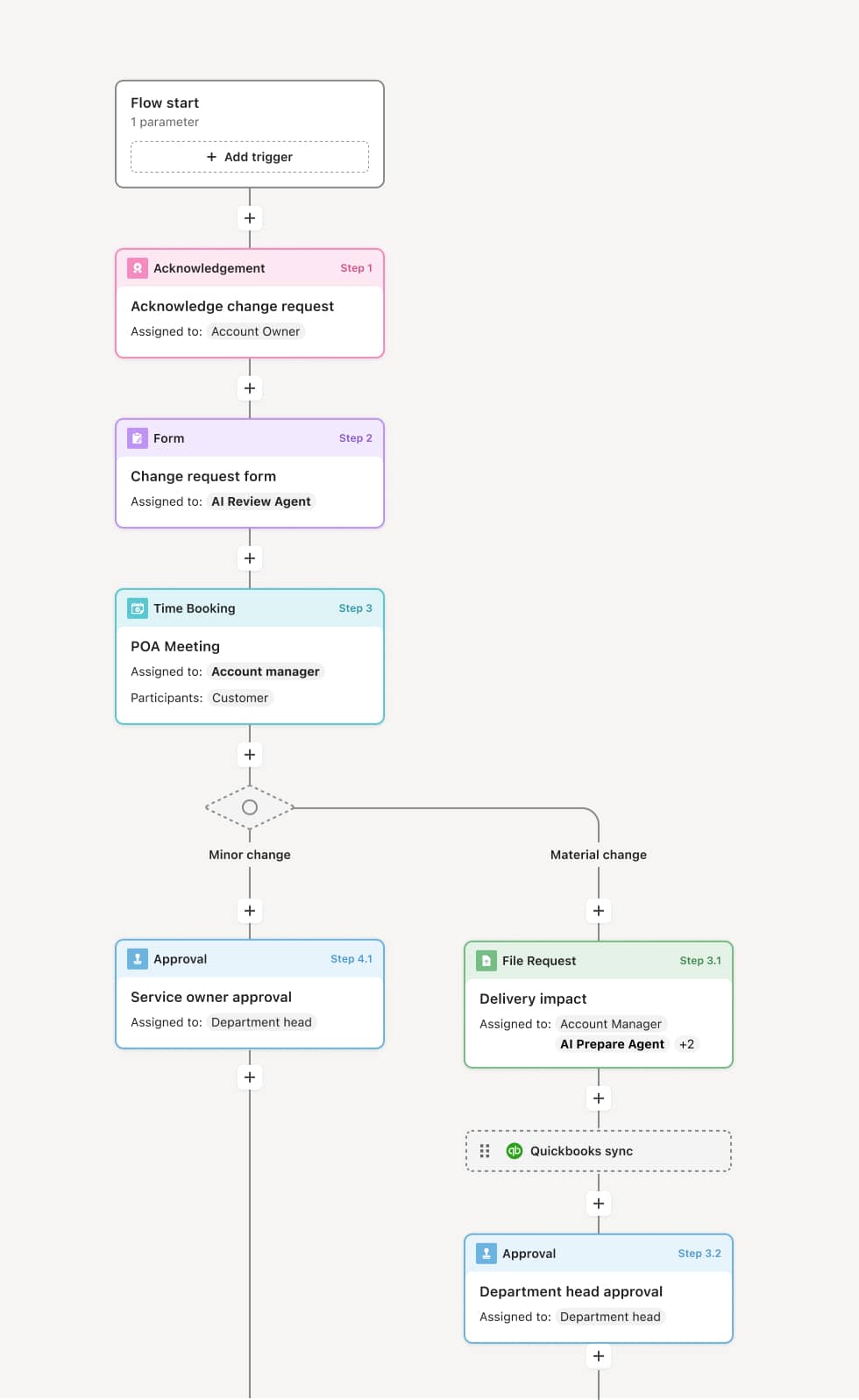
Your version of this process may vary based on roles, systems, data, and approval paths. Moxo’s flow builder can be configured with AI agents, conditional branching, dynamic data references, and sophisticated logic to match how your organization runs this workflow. The steps below illustrate one example.
Fraud referral and case opening
The process begins when a claim is flagged for investigation through automated fraud scoring, an adjuster referral, an anonymous tip, or an external notification. The SIU analyst reviews the referral, assesses the fraud indicators, and determines whether to open a formal investigation. An AI Agent can assist by compiling the claim data, claimant history, prior claims, and known fraud indicators into an investigation package.
Investigation planning and data gathering
The investigator develops an investigation plan based on the type of suspected fraud — such as staged accident, inflated damages, fabricated loss, or provider billing fraud. Data gathering may include claims records, policy information, claimant statements, witness interviews, medical records, financial records, and public records research.
Field investigation and surveillance
For cases requiring field work, the investigator or an external investigation firm conducts activities such as recorded statements, scene inspections, surveillance, and canvassing. Evidence is documented with photographs, video, and written reports. An AI Agent may track investigation activity completion and flag cases requiring additional evidence before resolution.
Evidence analysis and determination
The investigator analyzes all gathered evidence to determine whether fraud is substantiated, partially substantiated, or unsubstantiated. The analysis documents the specific fraud indicators, the evidence supporting or contradicting fraud, and the investigator’s conclusion. Legal counsel reviews the findings for cases involving denial, recovery, or referral.
Claim resolution and recovery
Based on the investigation findings, the claim is denied, adjusted, or paid as appropriate. If fraudulent payments have already been made, recovery efforts are initiated through demand letters, subrogation, or legal action. The claims adjuster implements the resolution in the claims system.
Regulatory reporting and case closure
If the investigation confirms fraud, the organization files the required fraud referral with the state fraud bureau within the mandated timeframe. The complete investigation record is preserved, and the case is closed with documented findings, resolution, and reporting.
This process commonly relies on inputs such as the fraud referral, claims data, policy information, claimant statements, medical records, surveillance reports, and public records. It may be triggered by fraud detection analytics, adjuster referral, tip line reports, or law enforcement inquiries. Connected systems often include claims management platforms, SIU case management systems like Shift Technology or FRISS, fraud analytics tools, and state fraud bureau reporting portals.
Key decision points include whether the fraud indicators in the referral warrant a formal investigation, what type of investigation activities are needed based on the suspected fraud scheme, whether the evidence substantiates fraud sufficient to support claim denial or recovery, and whether the case meets the threshold for state fraud bureau referral or law enforcement notification.
Referrals not triaged promptly, allowing statute of limitations or evidence preservation windows to narrow. Investigation scope too narrow, missing related claims or connected parties that are part of a broader fraud ring. Evidence documentation insufficient to support the claim denial in litigation or regulatory review. Recovery efforts not initiated after fraudulent payments are identified, leaving the organization with unrecovered losses. State fraud reporting deadlines missed because the investigation timeline was not tracked against reporting requirements.
Orchestrates claims fraud investigation from referral through resolution and regulatory reporting across SIU, claims, legal, and external investigators in a single coordinated flow.
AI Agents compile investigation packages at case opening with claim data, claimant history, prior claims, and fraud indicators to accelerate the initial assessment.
Tracks investigation activities and evidence collection within the workflow, ensuring field work, statements, and analysis are completed and documented.
Routes cases for legal review when denial, recovery, or referral decisions require counsel involvement.
Connects to claims management and SIU platforms like Shift Technology and FRISS so investigation data, claim resolution, and fraud reporting are managed in context.
Preserves the complete investigation record including referral, evidence, analysis, resolution, recovery actions, and regulatory filings for litigation defense and examination readiness.