HR manager
Compensation analyst
People operations lead
Finance business partner
Department head
VP of human resources

This process is used when compensation decisions require formal approval before communication to employees or candidates. It applies during hiring when offer packages need validation, during performance cycles when raises or bonuses are proposed, when promotions involve compensation changes, or when retention offers are being considered. Compensation approval is common in organizations with structured pay bands, budget controls, or compliance requirements around pay equity.
Participants typically include the hiring manager or department head who proposes the compensation, the HR business partner or compensation analyst who validates against policy and internal equity, the finance partner who confirms budget availability, and senior leadership who provides final authorization for significant decisions. In some cases, legal or compliance may review offers involving equity or executive compensation.
Policy-compliant decisions with verification that proposed compensation aligns with pay bands and organizational guidelines. Budget alignment by confirming financial capacity before commitments are made. Internal equity protection through structured review that considers comparable roles and existing team compensation. Faster offer turnaround by streamlining approval workflows and reducing manual coordination. Clear audit trails documenting approval rationale for compliance and future reference.
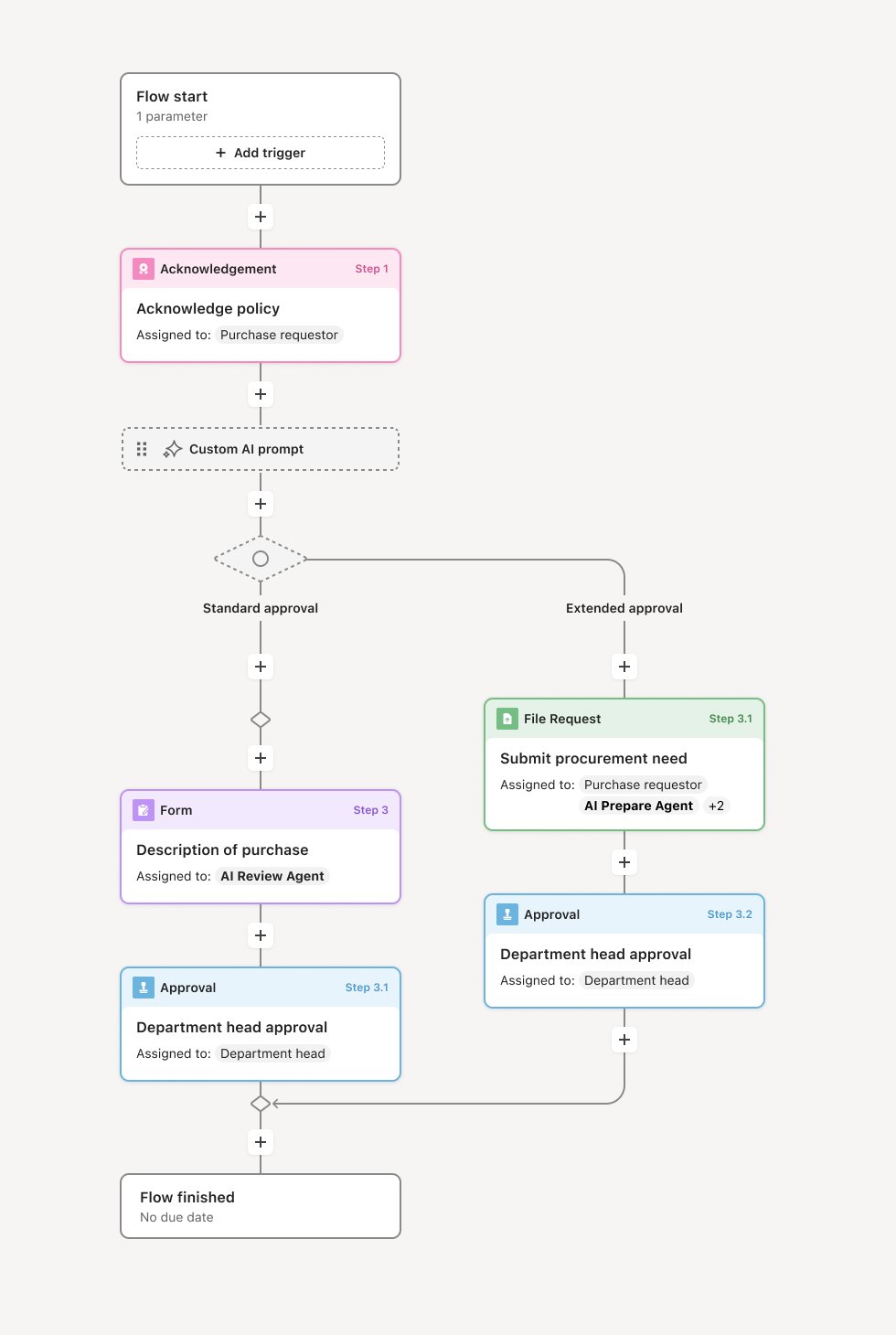
Your version of this process may vary based on roles, systems, data, and approval paths. Moxo's flow builder can be configured with AI agents, conditional branching, dynamic data references, and sophisticated logic to match how your organization runs this workflow. The steps below illustrate one example.
Proposal submission
The process begins when a manager or HR team member submits a compensation proposal, which may involve a new hire offer, salary adjustment, bonus, or promotion-related change. The submission includes the proposed amount, justification, and any relevant context such as market data, performance history, or retention considerations. An AI agent may assist by pre-populating comparable salary data or flagging submissions that fall outside standard ranges.
Policy and equity review
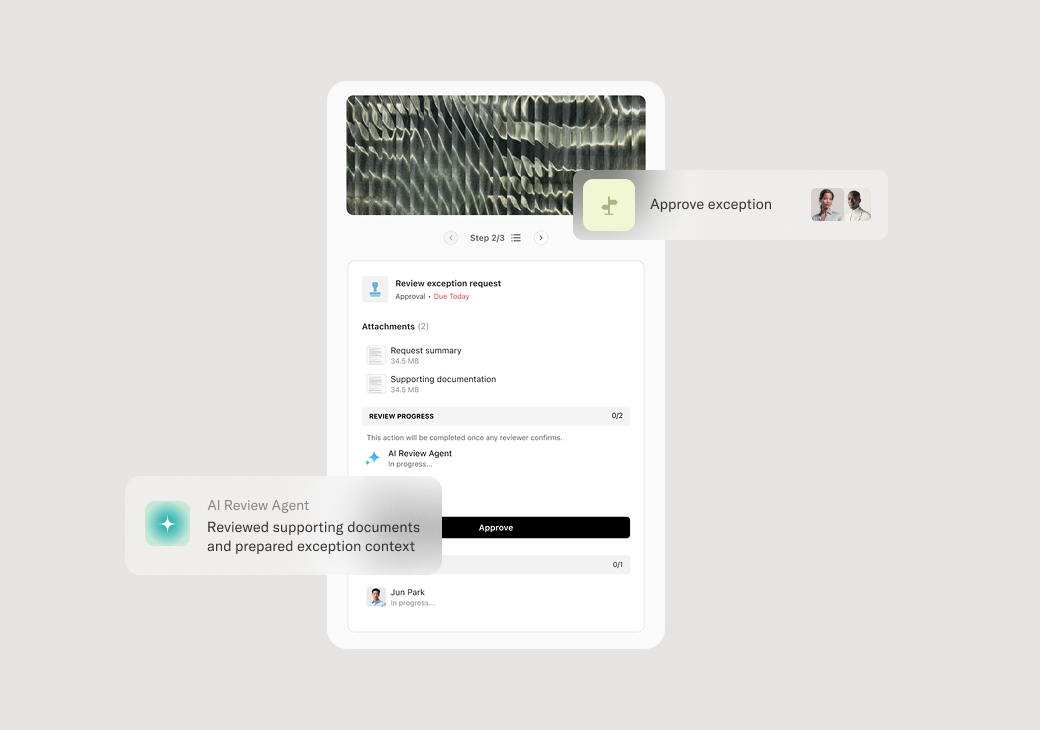
The proposal is routed to HR or the compensation team for policy validation. Reviewers verify that the proposed compensation falls within established pay bands, aligns with internal equity standards, and complies with any regulatory requirements. If the proposal deviates from policy, the reviewer documents the exception and rationale.
Budget validation
Finance reviews the proposal to confirm budget availability and alignment with headcount or compensation plans. This step ensures that approved compensation does not exceed departmental or organizational budget constraints. If budget concerns exist, finance flags them for resolution before approval proceeds.
Leadership approval
For proposals above defined thresholds or involving exceptions, the workflow routes to senior leadership for final authorization. The approver reviews the validated proposal, exception notes, and budget confirmation before making a decision. If multiple approvers are required, the workflow manages sequencing based on organizational hierarchy.
Confirmation and communication
Upon approval, the compensation decision is recorded with timestamps, approver identities, and supporting documentation. HR is notified to proceed with offer communication or salary adjustment processing. The approved compensation feeds into HR systems for record-keeping and payroll execution.
This process commonly relies on inputs such as compensation proposals, market salary data, pay band documentation, budget reports, and employee performance records. It may be triggered by events like a new requisition in an ATS like Greenhouse or Lever, a promotion request in an HRIS like Workday or BambooHR, or a manual submission from a hiring manager. Supporting systems might include HRIS platforms, compensation benchmarking tools, and financial planning systems.
Key decision points include determining whether the proposed compensation falls within policy guidelines, whether internal equity concerns exist, whether budget can accommodate the request, and whether exceptions require senior approval. If the proposal exceeds pay bands or budget, the workflow branches to exception handling or negotiation paths.
Policy violations when proposals outside pay bands are approved without proper exception documentation. Internal equity issues when comparable roles are not considered, leading to pay disparities. Budget overruns when compensation is approved without finance validation. Approval delays that slow hiring or retention decisions, risking candidate or employee loss.
Structures compensation proposals so reviewers see all relevant context, justification, and comparables in one view.
Routes approvals based on thresholds ensuring appropriate oversight for high-value or exception decisions.
AI agents validate against policy by checking pay bands, flagging outliers, and surfacing internal equity data.
Captures exception rationale so deviations from policy are documented for compliance and audit.
Orchestrates multi-stakeholder review across HR, finance, and leadership with clear handoffs.
Integrates with HRIS and ATS platforms to pull employee data and push approved compensation to HR systems.