Total rewards director
Compensation manager
Chief people officer
CFO
Sales operations leader
General counsel

This process is used when organizations need to modify existing compensation structures, introduce new incentive programs, adjust commission plans, or change benefits offerings. It applies during annual compensation planning cycles, when market conditions require competitive adjustments, when business strategy shifts necessitate incentive realignment, or when regulatory changes mandate policy updates. Compensation plan change approval is common in organizations undergoing growth, restructuring, or responding to competitive talent pressures.
Participants typically include the total rewards or compensation leader who designs and proposes the change, HR business partners who assess workforce impact, finance leaders who model cost implications, legal or compliance teams who review regulatory considerations, and executive leadership who authorize significant plan modifications. In publicly traded companies, compensation committees may have formal approval authority over certain changes.
Controlled plan evolution with structured review before compensation structures are modified. Cross-functional alignment by ensuring HR, finance, legal, and leadership agree on plan changes before implementation. Accurate cost modeling with financial impact analysis completed before commitments are made. Compliance confidence through legal review of regulatory implications and contractual considerations. Clear implementation path with documented decisions that guide rollout and communication.
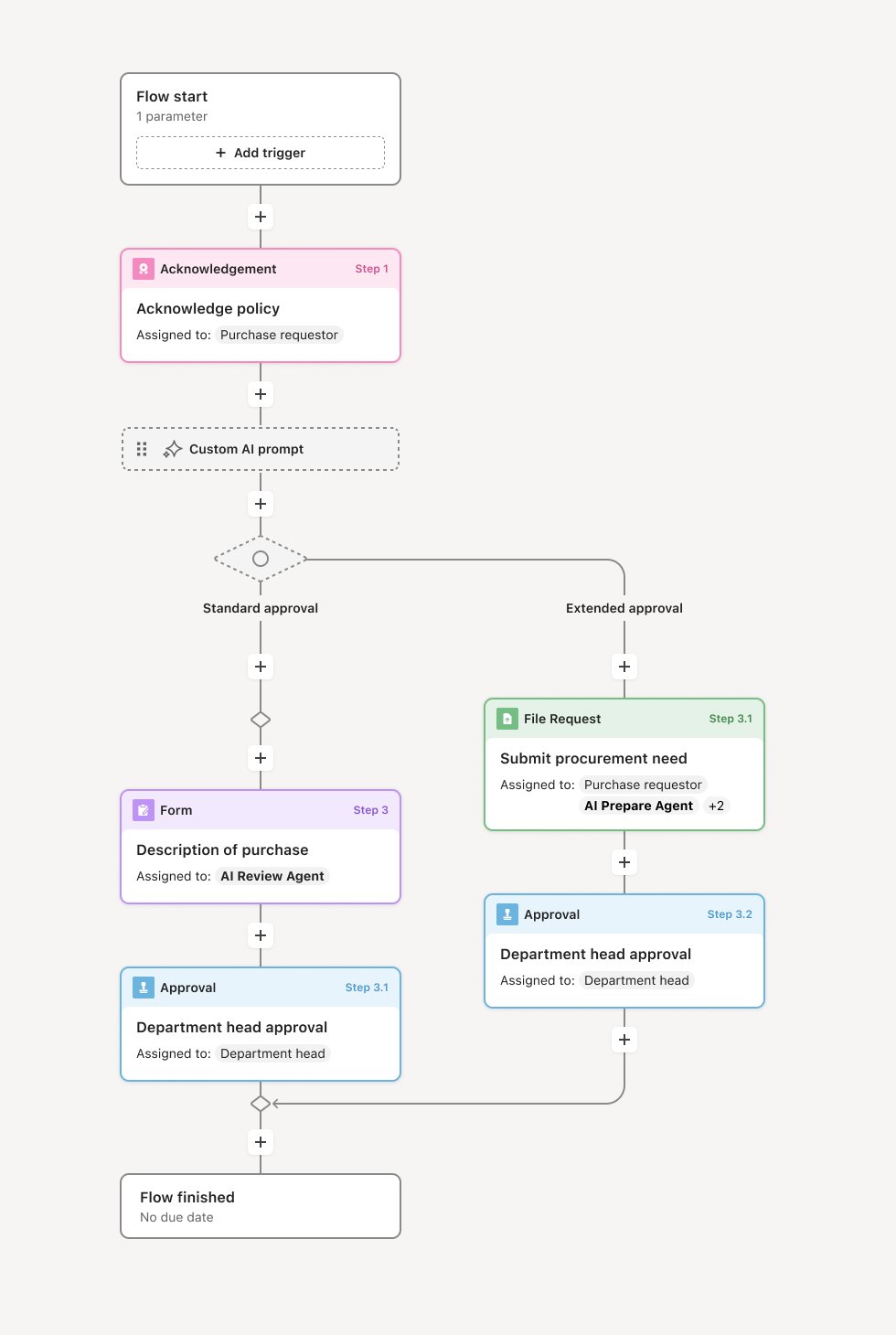
Your version of this process may vary based on roles, systems, data, and approval paths. Moxo's flow builder can be configured with AI agents, conditional branching, dynamic data references, and sophisticated logic to match how your organization runs this workflow. The steps below illustrate one example.
Change proposal and rationale
The process begins when the compensation or total rewards team develops a proposal for plan modification. This includes the specific changes proposed, business rationale, competitive analysis, and expected outcomes. An AI agent may assist by compiling market benchmark data, summarizing current plan structures, or identifying affected employee populations.
Financial impact analysis
Finance models the cost implications of the proposed changes, including direct compensation costs, benefits expenses, tax implications, and budget impact across affected departments. The analysis considers various scenarios and identifies any budget constraints that may require plan adjustments.
Legal and compliance review
Legal reviews the proposed changes for regulatory compliance, contractual implications, and risk considerations. This includes assessing impact on existing employment agreements, compliance with wage and hour laws, and any disclosure requirements. If concerns are identified, they are documented with recommended modifications.
HR and workforce impact assessment
HR evaluates how the proposed changes will affect different employee segments, identifies communication requirements, and assesses implementation complexity. This includes considering internal equity implications, manager training needs, and timeline for rollout.
Executive approval and authorization
The complete proposal, including financial analysis, legal review, and HR assessment, is presented to executive leadership for approval. Depending on the significance of the changes, this may involve the CEO, CFO, CHRO, or compensation committee. Approvers review the full package and either authorize implementation or request modifications.
Documentation and implementation planning
Upon approval, the plan changes are documented with effective dates, affected populations, and implementation requirements. The workflow triggers downstream activities including system configuration, manager communication, employee notification, and any required filings or disclosures.
This process commonly relies on inputs such as current plan documentation, market compensation surveys, financial models, headcount data, and regulatory guidance. It may be triggered by events like annual planning cycles, board directives, competitive intelligence findings, or regulatory updates. Supporting systems might include compensation management platforms, HRIS systems like Workday or SAP SuccessFactors, financial planning tools, and document management systems.
Key decision points include determining whether the proposed changes align with business strategy and talent philosophy, whether financial impact is acceptable and budgeted, whether legal and compliance risks are adequately addressed, and whether the organization is prepared to implement and communicate the changes. If significant concerns arise, the workflow branches to revision or further analysis before proceeding.
Incomplete impact analysis when cost implications or affected populations are not fully understood before approval. Siloed review when HR, finance, and legal do not coordinate, leading to gaps or conflicting guidance. Implementation disconnects when approved changes are not clearly communicated to system administrators and managers. Inadequate documentation when plan changes are not properly recorded, creating confusion about current policies.
Structures multi-stakeholder review so HR, finance, legal, and leadership evaluate proposals in coordinated sequence.
Centralizes plan documentation and analysis with all supporting materials accessible in one workflow.
AI agents assist with impact assessment by compiling affected populations, summarizing current plans, and flagging potential issues.
Routes approvals to appropriate authority based on change significance and organizational governance requirements.
Maintains complete decision records documenting rationale, reviews, and approvals for compliance and future reference.
Triggers implementation workflows connecting approved changes to system updates, communications, and rollout activities.