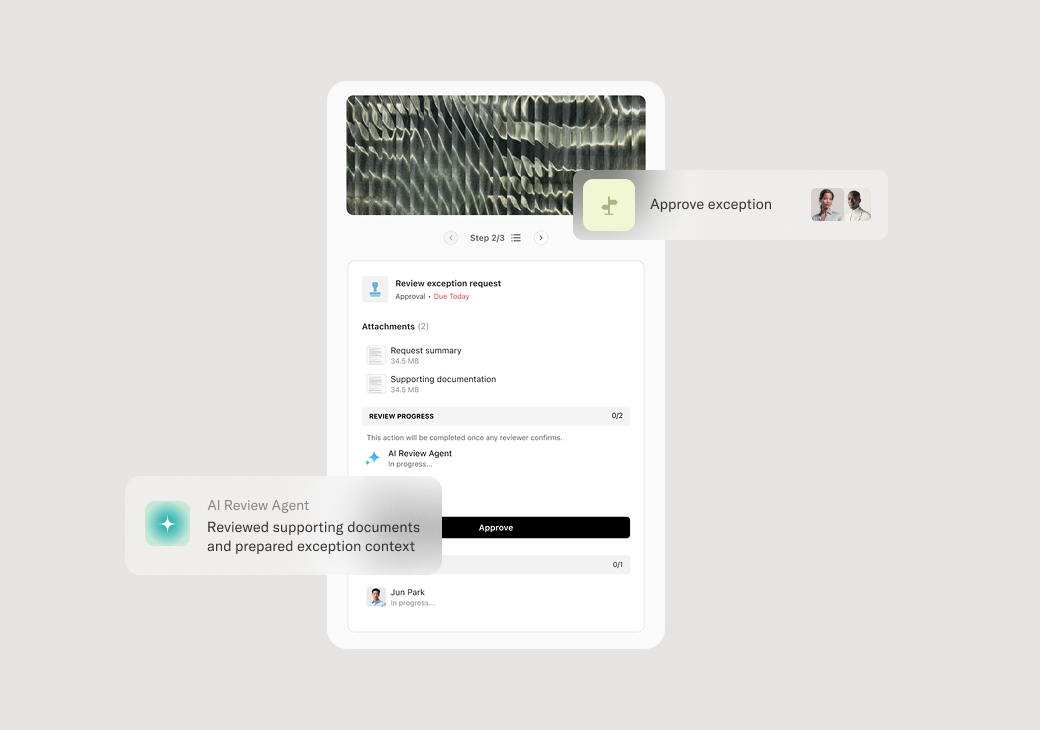
Contract manager
Legal counsel
Procurement manager
Sales operations lead
Finance manager
VP of operations

This process is used when contracts require review and authorization before signature. It applies to customer agreements, vendor contracts, partnership arrangements, licensing deals, service agreements, NDAs, or any document that creates legal obligations for the organization. Contract approval is common across all industries and functions where formal agreements govern business relationships, with complexity varying based on contract value, risk, and organizational policies.
Participants typically include the business owner who initiates the contract and provides commercial context, legal counsel who reviews terms and risk exposure, finance who assesses financial implications, and authorized signatories who execute the agreement. Depending on contract type and value, additional stakeholders such as procurement, compliance, or executive leadership may be required approvers.
Risk-appropriate commitments with legal review ensuring terms align with organizational risk tolerance. Policy compliance by verifying contracts meet approval thresholds and required terms. Clear accountability with documented approvals showing who authorized the commitment. Faster contract execution by streamlining review workflows and reducing negotiation cycles. Protected organizational interests through structured review that catches problematic terms before execution.
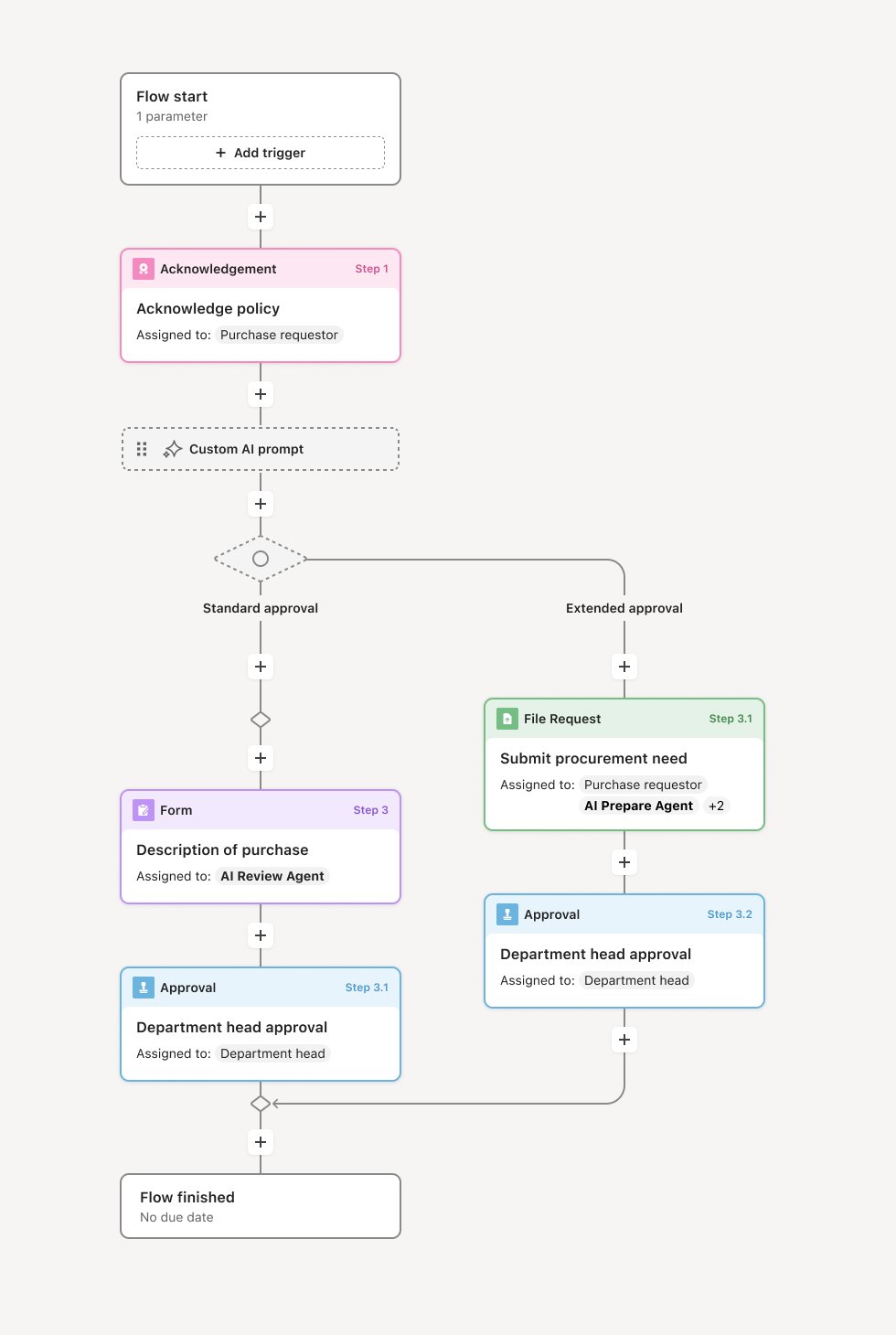
Your version of this process may vary based on roles, systems, data, and approval paths. Moxo's flow builder can be configured with AI agents, conditional branching, dynamic data references, and sophisticated logic to match how your organization runs this workflow. The steps below illustrate one example.
Contract submission and classification
The process begins when a business owner submits a contract for review, including the agreement document, business context, counterparty information, and any relevant background. An AI agent may assist by classifying the contract type, identifying applicable approval requirements based on value or risk, and extracting key terms for reviewer summary.
Legal review and risk assessment
Legal counsel reviews the contract terms, assessing risk exposure, liability provisions, intellectual property implications, and compliance with organizational standards. Material deviations from standard terms are flagged, and recommendations for negotiation or revision are documented. For high-risk provisions, legal may escalate to senior counsel or recommend rejection.
Financial and commercial review
Finance reviews payment terms, pricing structures, financial commitments, and budget implications. The business owner validates that commercial terms align with deal expectations and organizational guidelines. Any discrepancies between submitted terms and approved deal parameters are identified and addressed.
Negotiation and revision
If reviews identify concerns requiring counterparty agreement, negotiation occurs to address material issues. Revised terms are documented, and updated agreements are re-routed through applicable review steps. AI agents may assist by tracking redline changes or comparing versions to highlight modifications.
Approval and authorization
Once reviews are complete and terms are acceptable, the contract is routed to authorized approvers based on value thresholds, risk level, or contract type. Approvers review the complete package including reviewer recommendations and any negotiated changes. Multiple approvers may be required in sequence based on organizational delegation of authority.
Execution and record management
Upon approval, the contract is cleared for signature. The executed agreement is recorded in the contract management system with key dates, obligations, and renewal terms tracked. Stakeholders responsible for contract performance are notified of relevant commitments and deadlines.
This process commonly relies on inputs such as draft agreements, deal summaries, counterparty information, pricing documentation, and approval threshold policies. It may be triggered by events like deal progression in a CRM, procurement requests, partnership discussions, or vendor onboarding. Supporting systems might include contract lifecycle management platforms like DocuSign CLM or Ironclad, CRM systems, e-signature tools, and document repositories.
Key decision points include determining whether contract terms are acceptable given risk exposure, whether financial commitments align with budget and deal parameters, whether required approvals have been obtained based on value and type, and whether the organization should proceed with execution. If unacceptable terms cannot be negotiated, the workflow branches to rejection or escalation.
Incomplete submissions when contracts are submitted without business context, slowing review. Bypassed reviews when contracts are executed without required legal or financial approval. Extended negotiation cycles when multiple rounds of revision delay execution and frustrate counterparties. Poor obligation tracking when executed contracts are not properly recorded and commitments are missed.
Structures contract submissions so reviewers receive complete context including agreement, deal summary, and counterparty details.
Routes reviews based on value and risk ensuring appropriate legal, financial, and executive oversight.
AI agents assist with term extraction by summarizing key provisions, identifying deviations from standards, and flagging risk areas.
Orchestrates multi-stakeholder approval with clear sequencing based on delegation of authority.
Tracks negotiation and revision maintaining version history and change documentation.
Integrates with CLM and signature platforms to streamline execution and ensure proper record management.