Contract manager
Legal counsel
Sales director
Procurement director
General counsel
VP of sales

This process is triggered when contract negotiations reach an impasse, when counterparty demands exceed standard approval authority, when risk exposure requires senior review, when deal timelines are at risk due to unresolved terms, or when strategic importance warrants executive involvement. It also applies when internal stakeholders disagree on acceptable terms or when precedent-setting provisions require leadership guidance. Contract escalation is common in enterprise sales, strategic partnerships, major procurement, and any high-value agreement where standard processes cannot accommodate the situation.
Participants typically include the contract owner or deal lead who initiates the escalation, legal counsel who provides risk assessment and recommendations, the escalation authority who has decision-making power over the disputed terms, and potentially executive leadership for strategically significant agreements. Finance may be involved when financial terms are at issue, and business unit leaders may participate when operational commitments are being negotiated.
Faster resolution of stalled negotiations by routing disputes to decision-makers with authority to approve exceptions or concessions. Preserved deal momentum through timely escalation before counterparty patience or competitive windows expire. Complete context for decision-makers with negotiation history, risk assessment, and business rationale in one view. Clear precedent documentation recording why exceptions were approved for future reference. Reduced cycle time on complex deals by avoiding prolonged back-and-forth when standard authority is insufficient.
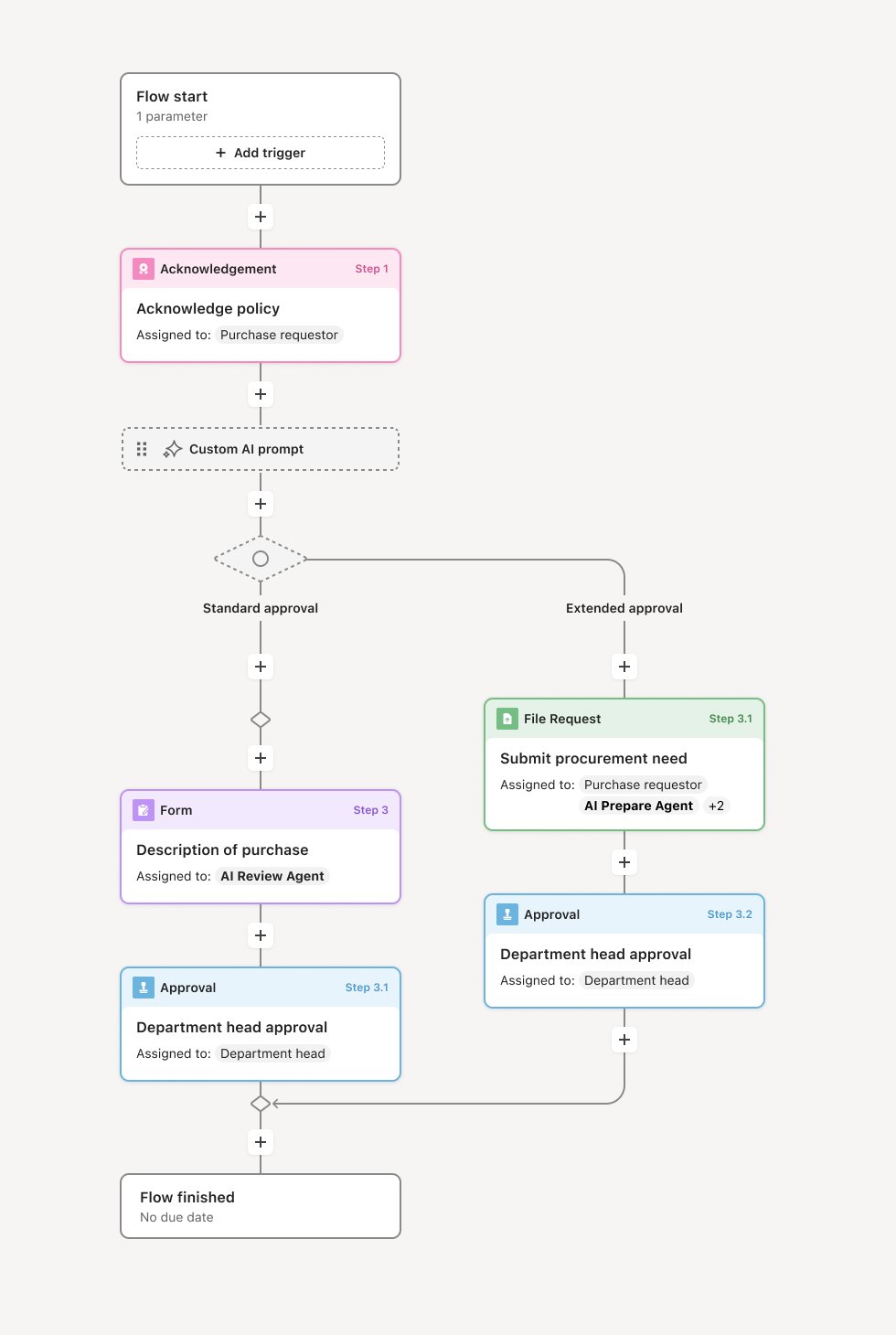
Your version of this process may vary based on roles, systems, data, and approval paths. Moxo's flow builder can be configured with AI agents, conditional branching, dynamic data references, and sophisticated logic to match how your organization runs this workflow. The steps below illustrate one example.
Escalation trigger and submission
The process begins when a contract owner determines that negotiation cannot proceed without higher authority. This may occur when counterparty terms exceed approval limits, when internal stakeholders cannot agree, or when risk exposure requires senior review. The escalation submission includes the contract, negotiation history, specific terms at issue, counterparty position, and business context. An AI agent may assist by summarizing the negotiation timeline, extracting key disputed provisions, or comparing proposed terms against organizational standards.
Context assembly and risk assessment
Legal and relevant stakeholders compile a complete picture of the escalation, including risk analysis of disputed terms, potential business impact of various outcomes, and recommendations for resolution. If financial terms are involved, finance provides impact assessment. The goal is to equip the escalation authority with everything needed to make an informed decision.
Escalation review and decision
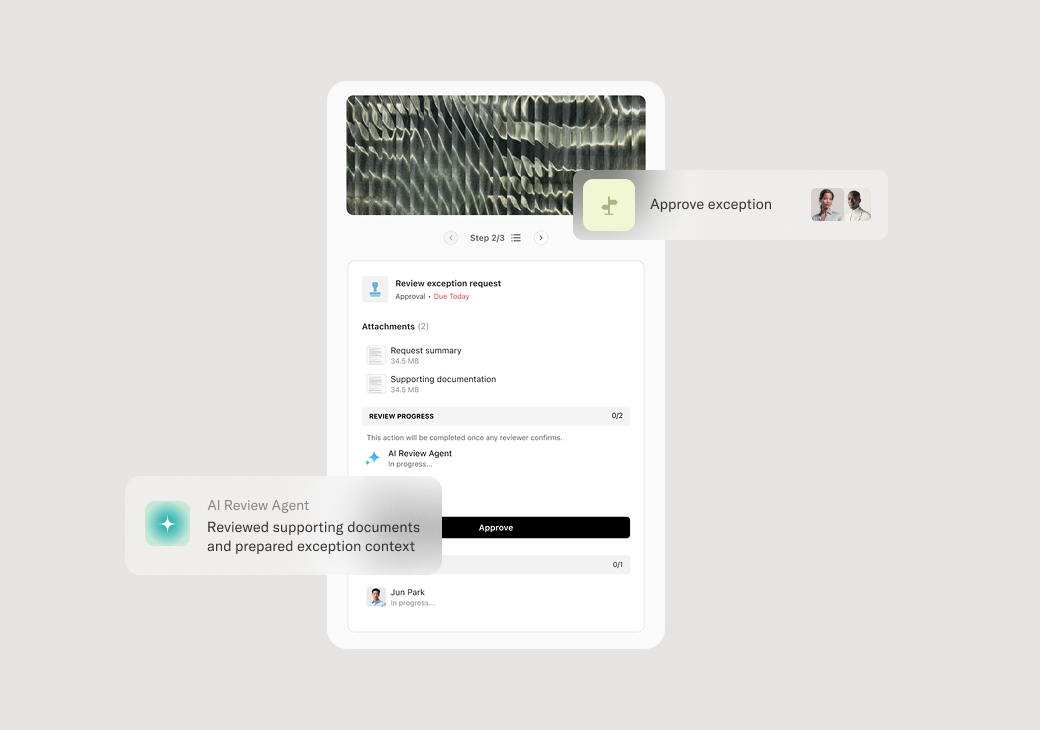
The escalation authority reviews the complete package, including disputed terms, risk assessment, business rationale, and stakeholder recommendations. The authority may approve the counterparty position, reject and provide alternative terms, request additional negotiation with specific guidance, or escalate further if the matter exceeds their authority. AI agents may assist by surfacing similar past escalations or highlighting organizational precedents.
Decision communication and implementation
Once a decision is made, the resolution is documented and communicated to the contract owner and relevant stakeholders. If the decision authorizes concessions, the contract owner proceeds with negotiation accordingly. If the decision rejects counterparty terms, alternative positions are provided for continued negotiation or deal termination.
Resolution and record
The escalation outcome is recorded with full documentation of the decision rationale, approved exceptions, and any conditions. This creates a precedent record for future similar situations and provides audit trail for the contract approval. The contract workflow resumes with the escalation decision incorporated.
This process commonly relies on inputs such as draft agreements, redline versions, negotiation correspondence, risk assessments, and deal summaries. It may be triggered by events like negotiation deadlines, counterparty ultimatums, or contract owner requests. Supporting systems might include contract lifecycle management platforms like DocuSign CLM or Ironclad, CRM systems that track deal status, and communication tools that capture negotiation history.
Key decision points include determining whether the escalation warrants the requested authority level, whether counterparty terms are acceptable given business value and risk, what concessions or alternatives are authorized, and whether the deal should proceed if terms cannot be resolved. If the escalation authority cannot resolve the matter, further escalation to executive leadership may be triggered.
Late escalation when issues are raised only after counterparty patience has expired or deal windows have closed. Incomplete context forcing escalation authorities to request additional information and delaying decisions. Unclear authority levels causing confusion about who can approve which exceptions. Undocumented decisions when escalation outcomes are not recorded, losing precedent value and audit trail.
Structures escalation submissions so decision-makers receive complete context including contract, negotiation history, and risk assessment.
Routes escalations to appropriate authority based on term type, deal value, or risk level.
AI agents assist with context assembly by summarizing negotiations, extracting disputed terms, and surfacing relevant precedents.
Tracks escalation status and deadlines ensuring timely decisions that preserve deal momentum.
Documents decisions and rationale creating precedent records for future reference and audit compliance.
Integrates with CLM and CRM systems to maintain contract continuity and deal visibility throughout escalation.