Chief risk officer
Credit risk manager
Portfolio manager
Commercial banking officer
Treasury director
Finance risk analyst

When transactions create significant credit exposure requiring risk assessment. When customer creditworthiness has changed and existing exposure needs review. When new business relationships involve counterparty risk. Ideal for financial institutions, commodity traders, leasing companies, and organizations with significant trade receivables.
Business development teams propose transactions or relationships. Credit risk analysts evaluate exposure and risk factors. Risk managers review assessments and recommend decisions. Senior risk officers or committees authorize significant exposures. Portfolio managers monitor ongoing risk levels.
Informed risk acceptance with thorough evaluation before committing to exposure Consistent risk framework applied across all transactions and relationships Appropriate risk pricing when terms can be adjusted based on risk assessment Documented risk rationale supporting audit, regulatory, and portfolio management needs
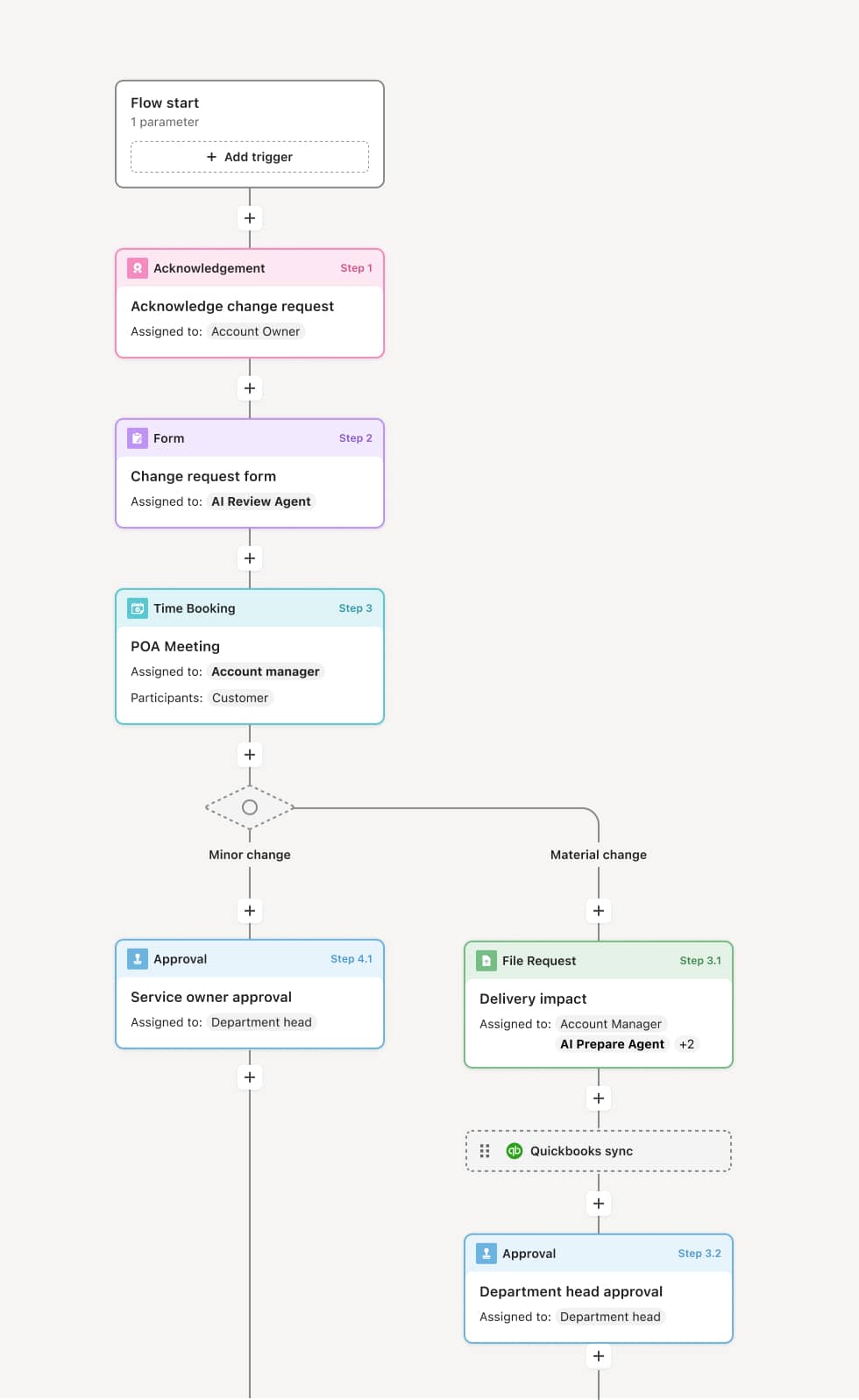
Your version of this process may vary based on roles, systems, data, and approval paths. Moxo's flow builder can be configured with AI agents, conditional branching, dynamic data references, and sophisticated logic to match how your organization runs this workflow. The steps below illustrate one example.
Exposure identification
The process begins when a transaction or relationship creates potential credit exposure. Business teams submit details including counterparty information, exposure amount, tenor, and business rationale. AI agents may pull existing exposure data and counterparty information from connected systems.
Risk assessment
Credit risk analysts evaluate the counterparty's financial strength, industry conditions, historical performance, and any collateral or guarantees. The analyst documents risk factors, calculates key metrics, and assigns a risk rating. AI agents may flag inconsistencies or highlight concerns.
Portfolio impact analysis
The proposed exposure is evaluated in the context of the overall portfolio. Concentration limits, industry exposure, and aggregate counterparty exposure are checked against policy limits. If limits would be exceeded, the request is flagged for exception review.
Risk approval decision
Based on the risk assessment and portfolio analysis, a risk officer reviews the request. Significant exposures may require committee approval. The decision includes any conditions, collateral requirements, or monitoring provisions. Rejection includes documented rationale.
Implementation and monitoring
Approved exposures are recorded in risk management systems. Conditions such as collateral requirements are tracked for completion. The workflow may schedule periodic reviews or trigger alerts if risk indicators change.
This process relies on counterparty financial data, transaction details, portfolio data, and risk policy parameters. Triggers include new transaction proposals, periodic reviews, or risk indicator alerts. Integration with risk management platforms, credit bureaus, and portfolio management systems like Bloomberg or Moody's Analytics supports comprehensive evaluation.
Key decision points include determining the counterparty's risk rating, whether the exposure exceeds concentration or policy limits, what conditions or collateral should be required, and whether the risk-return tradeoff is acceptable.
Exposures approved without current financial data. Portfolio limits exceeded because aggregate exposure was not calculated. Approved conditions not tracked for completion. Risk rating changes not triggering exposure review.
Orchestrates risk evaluation across business teams and risk officers with structured handoffs
AI agents surface relevant counterparty data and flag risk concerns for attention
Routes approvals based on exposure size and risk rating to appropriate authority levels
Maintains complete risk documentation for regulatory compliance and portfolio management