Project manager
Account manager
Client services director
Professional services lead
Creative director
Delivery manager

When project deliverables require customer acceptance before proceeding. When proposals or statements of work need customer sign-off. When scope changes require customer authorization. Ideal for professional services, agencies, consulting firms, and project-based businesses.
Delivery teams prepare materials for customer review. Account managers facilitate customer communication and address questions. Customer stakeholders review and provide approval or feedback. Project managers track approval status and manage timelines. Operations teams record approvals and trigger next phases.
Clear customer sign-off documented before proceeding with work or invoicing Reduced disputes by ensuring customers formally accept deliverables Faster approval cycles through structured review and easy approval actions Complete approval records supporting billing, contracts, and relationship management
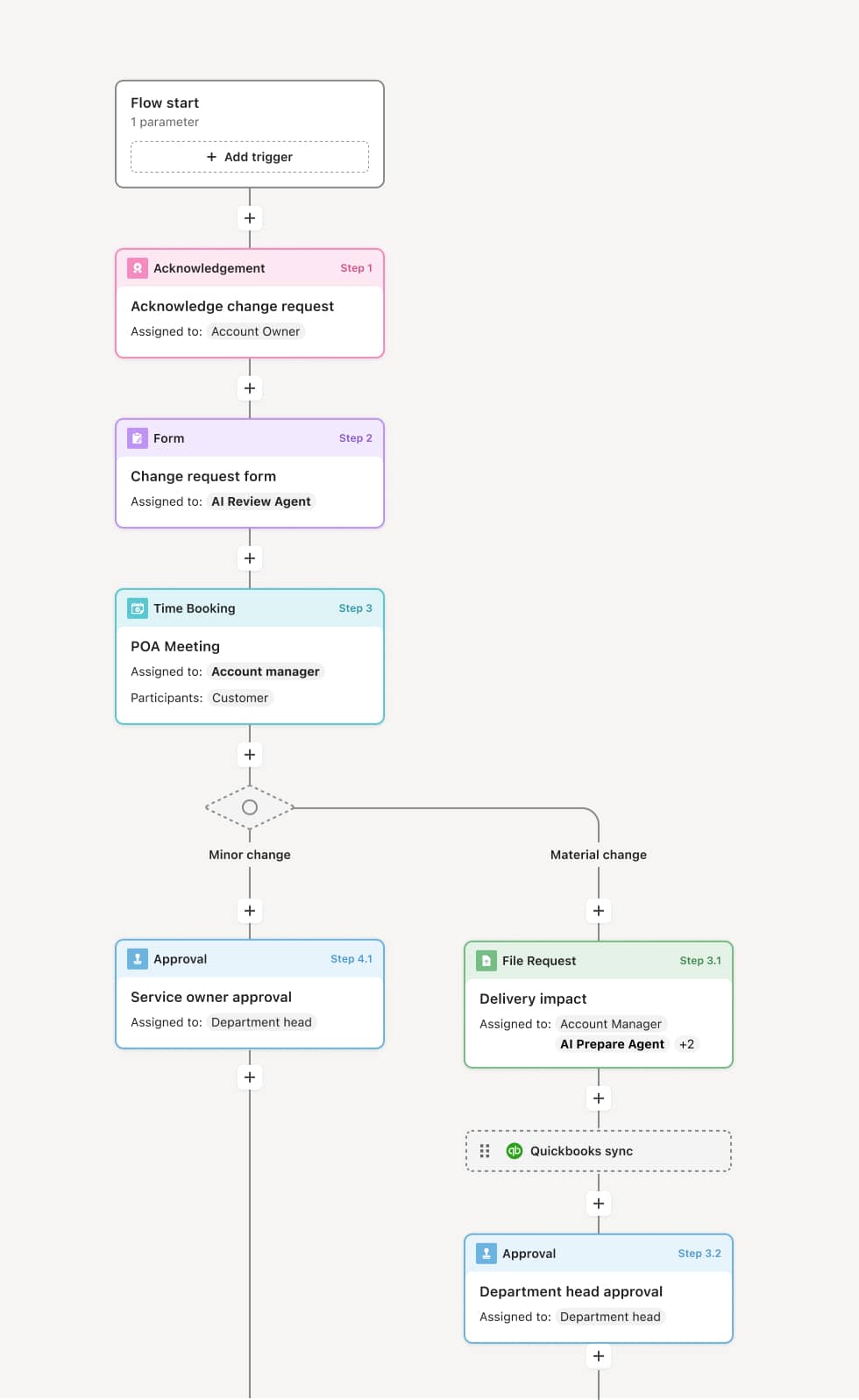
Your version of this process may vary based on roles, systems, data, and approval paths. Moxo's flow builder can be configured with AI agents, conditional branching, dynamic data references, and sophisticated logic to match how your organization runs this workflow. The steps below illustrate one example.
Approval request preparation
The process begins when materials requiring customer approval are prepared. Delivery teams compile deliverables, proposals, or change documentation with clear descriptions of what requires approval. AI agents may format materials and validate completeness before customer submission.
Customer submission
Materials are submitted to the customer through a clear, professional interface. The customer receives notification with context about what requires their review and any deadline. Supporting documentation and communication history are accessible within the approval request.
Customer review
The customer reviews submitted materials at their convenience. They can ask questions or request clarification directly within the process. Internal teams respond to inquiries and provide additional context as needed.
Approval or revision decision
The customer formally approves, requests changes, or rejects the submission. If changes are requested, specific feedback is captured and the workflow returns materials to the delivery team for revision. If rejected, the rationale is documented for follow-up.
Confirmation and next steps
Approved items are confirmed with timestamps and customer acknowledgment recorded. The approval triggers next phases such as production, invoicing, or delivery. All approval records are preserved for contract and billing purposes.
This process relies on deliverable files, proposals, scope documents, and customer contact information. Triggers include project milestone completions, proposal submissions, or change request submissions. Integration with project management tools like Monday.com or Asana, CRM platforms, and document management systems ensures seamless handoffs.
Key decision points include determining whether materials are ready for customer submission, whether to approve as-is or request revisions, and whether to proceed despite delays in customer response.
Approvals requested without clear documentation of what requires sign-off. Customer questions unanswered causing delays in review. Verbal approvals not captured formally, creating disputes later. Approval status unknown due to lack of tracking visibility.
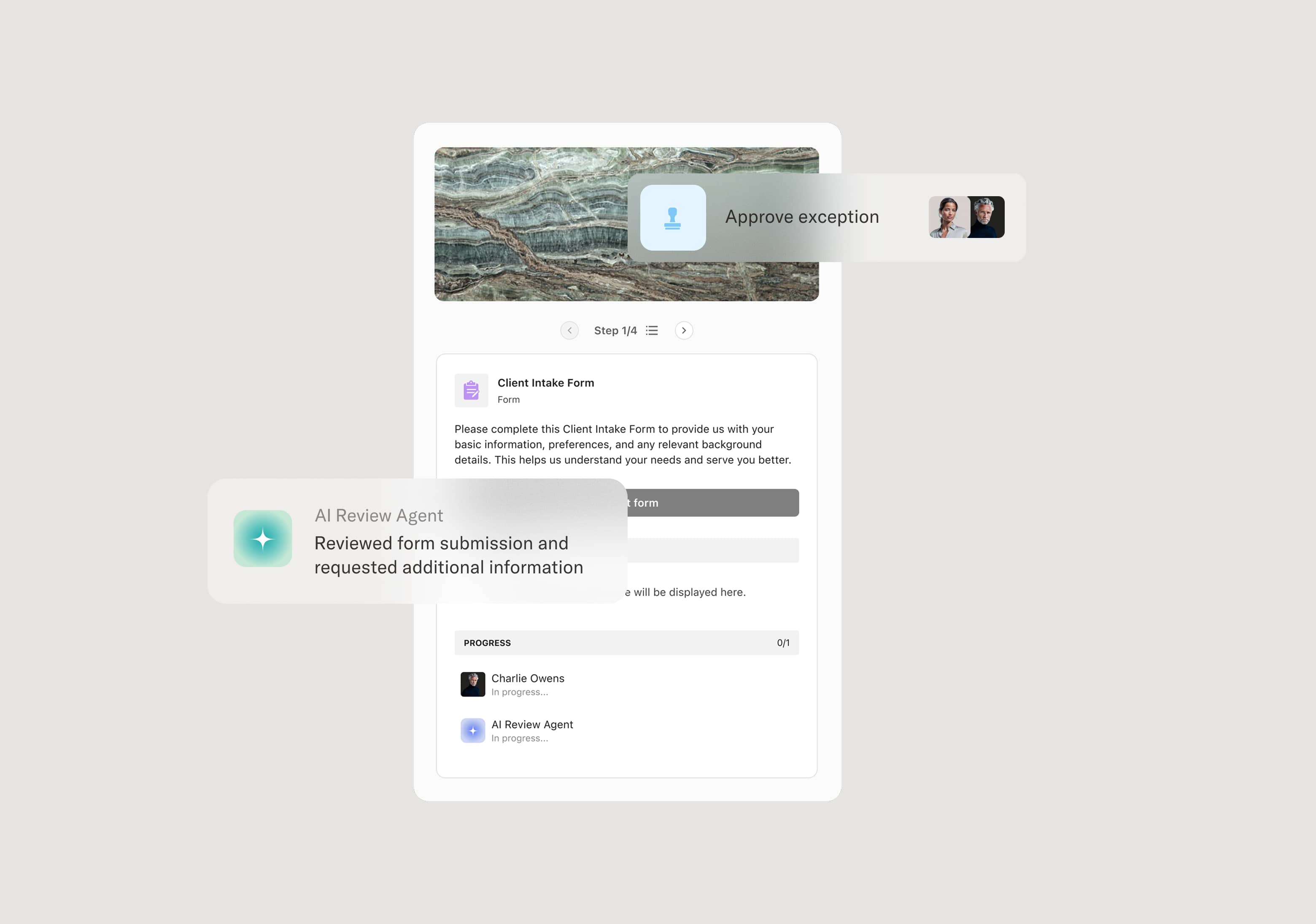
Orchestrates approval requests from internal teams to external customers with professional presentation
AI agents validate material completeness before customer submission
Enables direct customer communication within the approval workflow
Captures formal approval records with timestamps for billing and contract purposes