VP of customer success
CS operations manager
Customer success director
Enablement lead
Revenue operations leader
Customer experience manager

When new customer success playbooks are developed. When existing playbooks require significant updates. When intervention strategies for at-risk accounts need approval. When playbook changes impact cross-functional teams. Ideal for SaaS companies, subscription businesses, and any organization with structured customer success programs.
CS practitioners develop playbook content. CS operations review for consistency and completeness. Leadership approves strategic direction and resource implications. Enablement teams prepare for deployment. Cross-functional stakeholders review impacts on their areas.
Consistent playbook quality through structured review before deployment Strategic alignment ensuring playbooks support organizational goals Controlled playbook changes with clear approval authority Cross-functional coordination when playbooks impact multiple teams
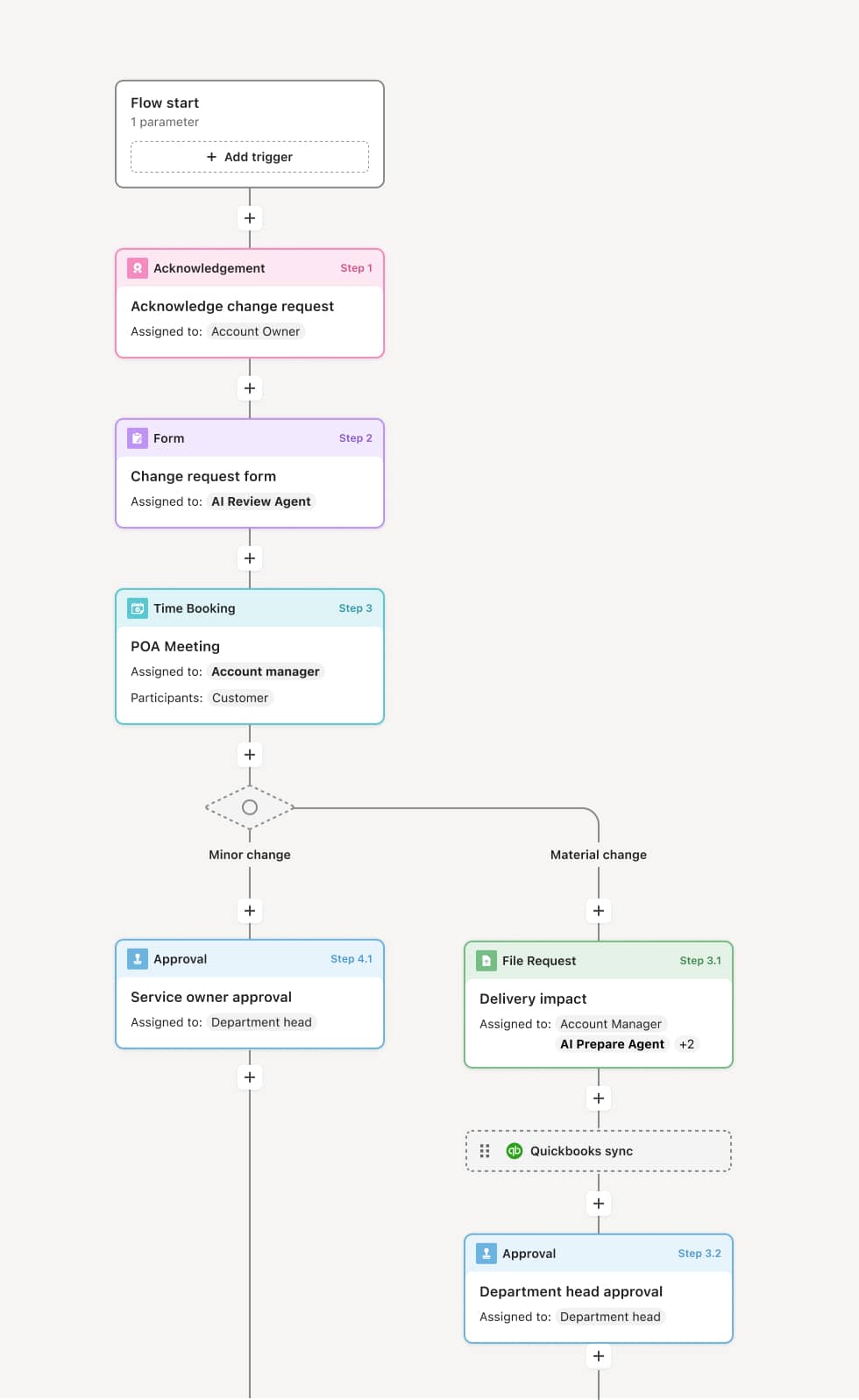
Your version of this process may vary based on roles, systems, data, and approval paths. Moxo's flow builder can be configured with AI agents, conditional branching, dynamic data references, and sophisticated logic to match how your organization runs this workflow. The steps below illustrate one example.
Playbook development
The process begins when a new playbook or significant update is developed. The author documents the playbook purpose, target scenarios, prescribed actions, and expected outcomes. AI agents may check for consistency with existing playbooks and flag potential conflicts.
Operations review
CS operations reviews the playbook for completeness, clarity, and operational feasibility. They assess resource requirements, integration needs, and measurement approaches. Feedback is provided for revision if needed.
Stakeholder review
Cross-functional stakeholders review playbook elements that impact their areas, such as product, support, or sales. They confirm alignment and identify any coordination requirements. Conflicts are resolved before advancing.
Leadership approval
CS leadership reviews the playbook for strategic alignment, resource implications, and organizational fit. They approve, request modifications, or decline. Major playbooks may require executive sign-off.
Deployment authorization
Approved playbooks are released for deployment with associated enablement materials. Version control is maintained. The playbook becomes available for CS teams to execute with their customers.
This process relies on playbook content, existing playbook library, organizational strategy documents, and stakeholder input. Triggers include new playbook submissions, update requests, or scheduled playbook reviews. Integration with CS platforms like Gainsight or Totango, knowledge management systems, and enablement tools supports governance.
Key decision points include determining whether the playbook meets quality and completeness standards, whether it aligns with strategy, and whether resource and cross-functional implications are acceptable.
Playbooks deployed without proper review causing inconsistent customer experience. Changes made without stakeholder awareness creating conflicts. Outdated playbooks remaining in use. Approval bottlenecks delaying needed interventions.
Orchestrates playbook review across operations, stakeholders, and leadership with structured handoffs
AI agents check for consistency with existing playbooks and flag conflicts
Coordinates cross-functional review when playbooks impact multiple teams
Maintains playbook version control and approval history