Accounts receivable manager
Finance controller
Billing operations lead
Revenue accountant
Accounts payable manager
Treasury operations manager

When billing errors result in undercharges that must be corrected. When previously issued credits need to be reversed. When contractual terms require charges such as late fees or penalties. When vendor agreements include chargeback provisions. Ideal for finance operations, billing departments, and any organization managing complex account adjustments.
Operations teams identify debit memo needs and initiate requests. Billing specialists validate calculations and supporting documentation. Finance reviewers assess appropriateness and policy compliance. Approvers authorize debits within their limits. Accounting teams post approved memos and manage collection.
Accurate account balances with properly documented adjustments Controlled debit issuance preventing unauthorized charges Compliant billing practices with proper justification for all debits Clear audit trail of all debit memo decisions and rationale
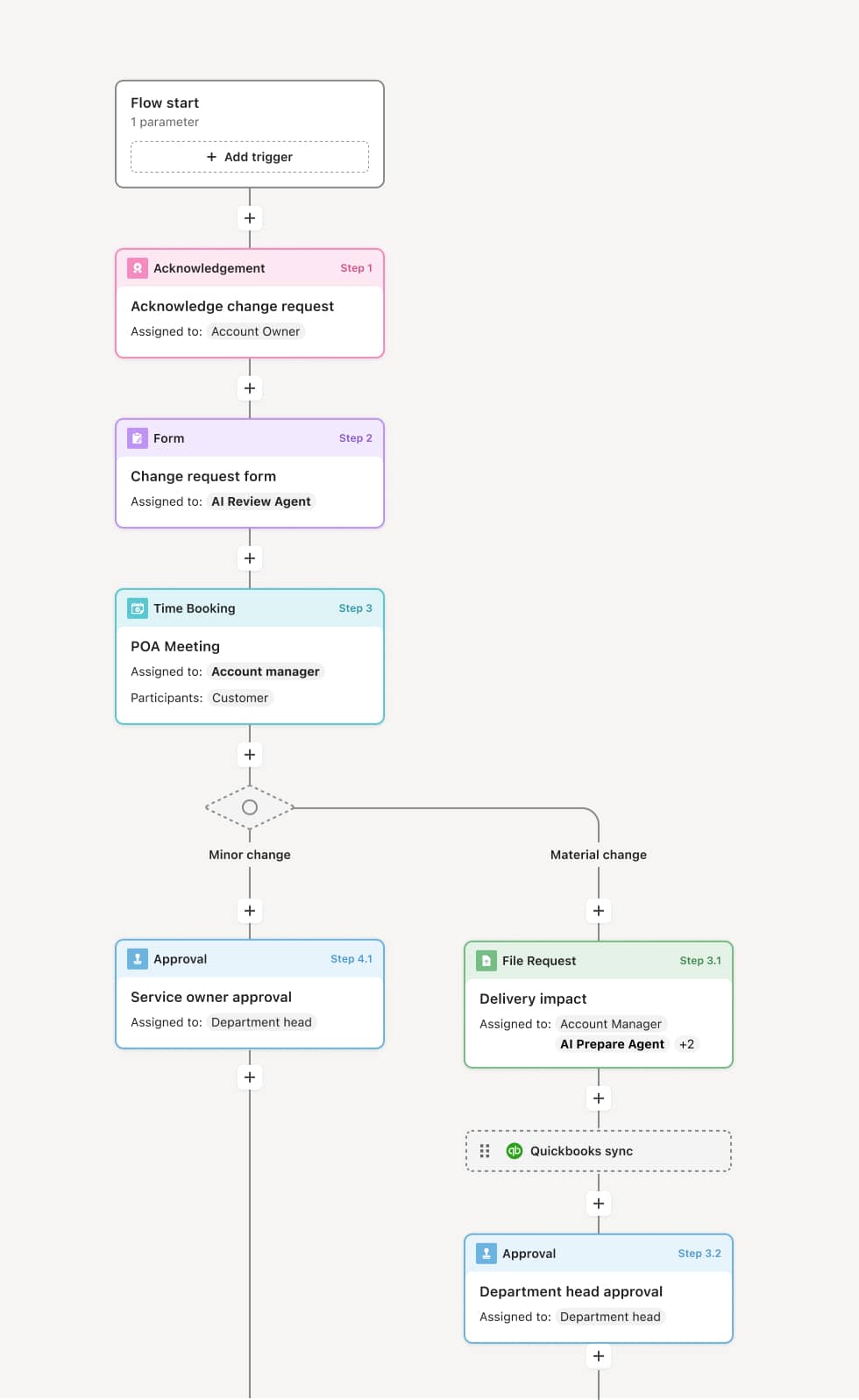
Your version of this process may vary based on roles, systems, data, and approval paths. Moxo's flow builder can be configured with AI agents, conditional branching, dynamic data references, and sophisticated logic to match how your organization runs this workflow. The steps below illustrate one example.
Debit memo initiation
The process begins when a debit memo need is identified, such as a billing correction, credit reversal, or contractual charge. The initiator documents the reason, amount, affected account, and supporting evidence. AI agents may validate calculations and flag unusual requests.
Documentation review
Supporting documentation such as original invoices, credit memos being reversed, or contract terms are reviewed. The reviewer confirms the debit is justified and correctly calculated. Incomplete documentation is returned for supplementation.
Policy compliance check
The request is evaluated against debit policies including authorization limits, customer communication requirements, and timing restrictions. Requests outside policy parameters are escalated or declined.
Approval decision
Based on the amount and type of debit, the request is routed to an approver with appropriate authority. Approvers may approve, modify, or reject with explanation. Large debits may require multiple approvals.
Posting and communication
Approved debit memos are posted to the account and communicated to the customer or vendor with clear explanation. Collection follow-up is initiated if needed. All documentation is preserved for audit.
This process relies on billing data, original transactions, credit history, and contract terms. Triggers include billing corrections, credit reversals, or contract events. Integration with ERP systems like SAP or Oracle, billing platforms, and accounts receivable systems ensures accurate posting.
Key decision points include determining whether the debit is justified by documentation, whether policy requirements are met, and whether customer relationship considerations affect the approach.
Debits issued without adequate justification damaging customer relationships. Calculation errors creating disputed charges. Debit memos not communicated properly causing payment issues. Lack of coordination between AR and customer service.
Orchestrates debit memo review and approval with clear documentation requirements
AI agents validate calculations and flag unusual patterns
Routes approvals based on amount thresholds and debit type
Maintains complete audit trail of all debit decisions and communications