Chief credit officer
Treasury director
Finance VP
Credit risk manager
Collections director
CFO

When organizations seek to monetize delinquent receivables. When portfolio management strategy includes debt sales. When balance sheet optimization requires receivables reduction. When regulatory or capital requirements influence debt disposition. Ideal for financial institutions, lenders, utilities, telecommunications companies, and any organization with significant receivables portfolios.
Credit or collections teams identify portfolios for potential sale. Finance analyzes valuation and P&L impact. Legal reviews buyer contracts and regulatory requirements. Risk management assesses reputational and compliance implications. Executive leadership authorizes significant transactions.
Optimized portfolio value through structured sale process and competitive bidding Regulatory compliance with debt sale and consumer protection requirements Controlled reputational risk by vetting buyers and sale terms Clear transaction governance with documented authorization and rationale
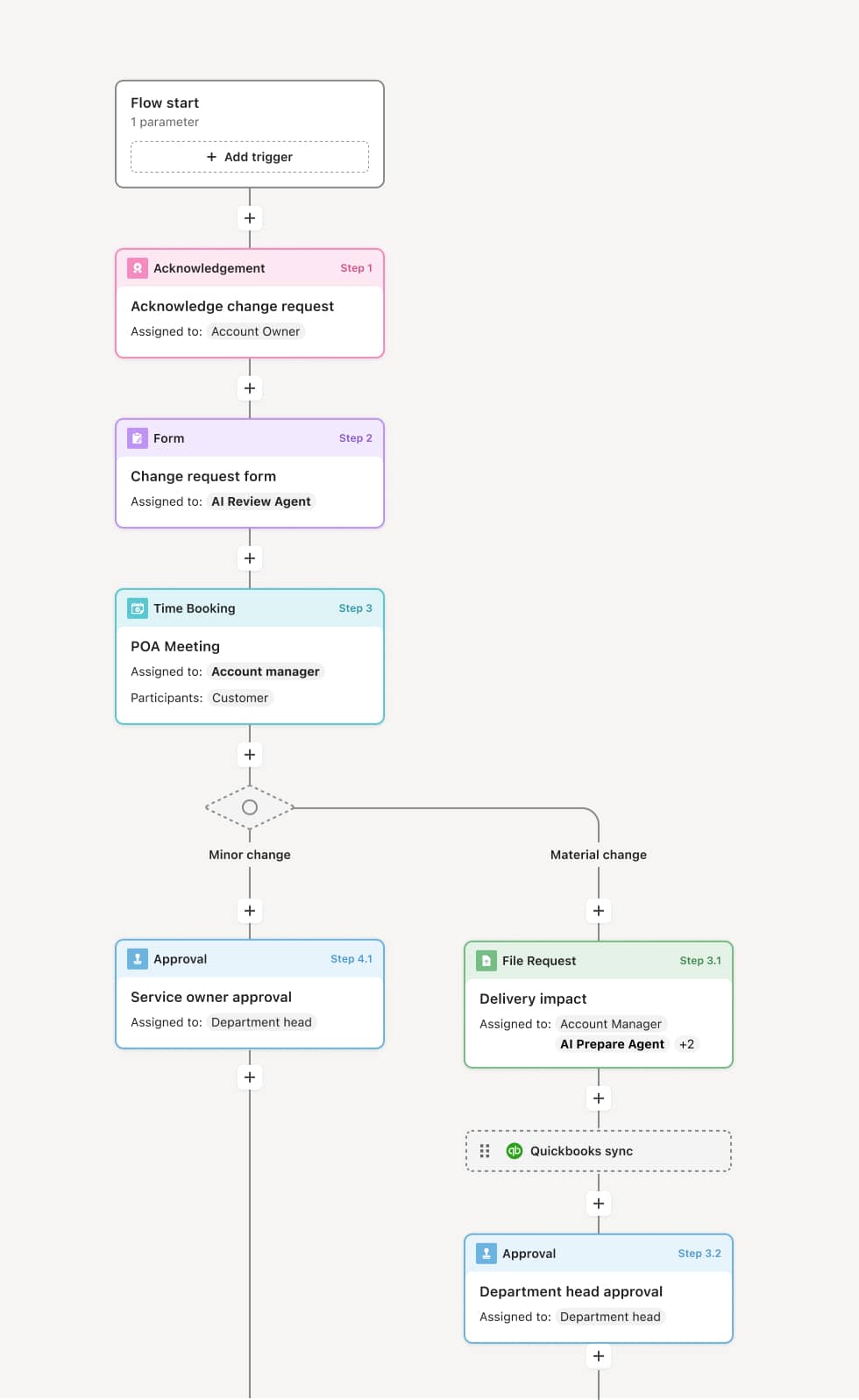
Your version of this process may vary based on roles, systems, data, and approval paths. Moxo's flow builder can be configured with AI agents, conditional branching, dynamic data references, and sophisticated logic to match how your organization runs this workflow. The steps below illustrate one example.
Portfolio identification
The process begins when a debt portfolio is identified for potential sale based on age, collectibility, or strategic factors. Portfolio characteristics are documented including balances, account types, and delinquency status. AI agents may analyze portfolio data and suggest optimal timing.
Valuation analysis
Finance conducts valuation analysis considering expected recovery rates, carrying costs, and market conditions. The analysis establishes floor pricing and expected proceeds. Historical sale performance informs valuation assumptions.
Buyer qualification and bidding
Potential buyers are evaluated for compliance track record, financial capacity, and operational capability. Qualified buyers receive portfolio information and submit bids. The bidding process ensures competitive pricing.
Legal and compliance review
Legal reviews the proposed sale agreement, representations, and warranties. Compliance evaluates buyer practices against regulatory requirements and company standards. Issues are negotiated before proceeding.
Authorization and execution
Based on transaction size and strategic significance, appropriate leadership authorizes the sale. Sale documents are executed and portfolio transfer is completed. Post-sale monitoring ensures buyer compliance with contractual terms.
This process relies on portfolio data, valuation models, buyer information, and regulatory requirements. Triggers include portfolio aging thresholds, strategic initiatives, or market opportunities. Integration with collections systems, financial planning tools, and contract management platforms supports transaction execution.
Key decision points include determining whether the portfolio is appropriate for sale, whether proposed pricing meets thresholds, whether the buyer meets qualification standards, and whether transaction terms adequately protect the organization.
Portfolios sold below optimal value due to poor timing or process. Buyer compliance issues creating reputational damage. Regulatory violations in sale process or buyer practices. Inadequate representations causing post-sale disputes.
Orchestrates debt sale from identification through execution with structured governance
AI agents analyze portfolio characteristics and support valuation
Coordinates multi-stakeholder review across credit, finance, legal, and leadership
Maintains transaction records for audit and regulatory compliance