Engineering manager
Product design director
Quality assurance manager
Configuration management lead
Chief technology officer
R&D director

When product designs require modification after initial release. When engineering specifications need updates based on new requirements. When quality issues require design corrections. When cost reduction initiatives affect design elements. Ideal for manufacturing, product development, aerospace, automotive, and any engineering-intensive organization.
Engineers submit change requests with technical justification. Design reviewers evaluate technical merit and feasibility. Quality assesses impact on product integrity. Manufacturing evaluates production implications. Change control boards authorize significant changes.
Controlled design evolution with proper authorization for all changes Maintained design integrity through structured impact analysis Documented change history supporting regulatory and quality requirements Coordinated change implementation across affected functions
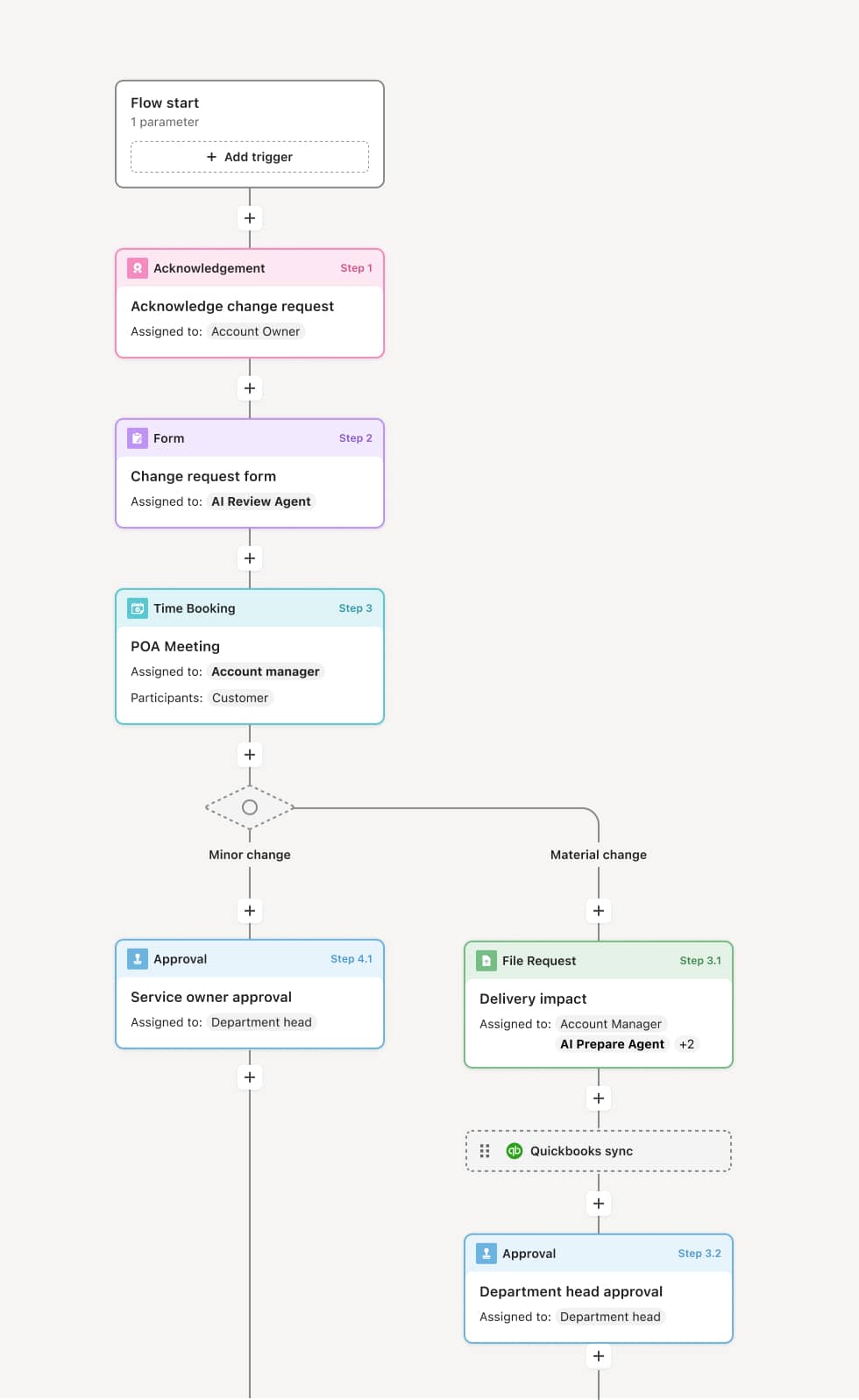
Your version of this process may vary based on roles, systems, data, and approval paths. Moxo's flow builder can be configured with AI agents, conditional branching, dynamic data references, and sophisticated logic to match how your organization runs this workflow. The steps below illustrate one example.
Change request submission
The process begins when a design change request is submitted including the proposed modification, technical justification, affected documents, and preliminary impact assessment. AI agents may identify related components and flag potential ripple effects.
Technical review
Engineering reviewers evaluate the change for technical soundness, feasibility, and alignment with design standards. They assess whether the change achieves its objectives without introducing new issues. Technical feedback is documented.
Impact analysis
Cross-functional analysis evaluates impacts on quality, manufacturing, supply chain, documentation, and customer commitments. Each affected function provides input on implementation requirements and concerns.
Change control authorization
Based on change significance and impact, appropriate authorization is obtained. Minor changes may be approved by engineering leadership. Significant changes require change control board review and approval.
Implementation coordination
Approved changes are coordinated for implementation across affected areas. Document updates, manufacturing instructions, and inventory disposition are managed. Change effectivity is tracked and documented.
This process relies on design documents, change requests, impact assessments, and configuration data. Triggers include engineering requests, quality findings, or customer requirements. Integration with PLM systems like PTC Windchill or Siemens Teamcenter, ERP systems, and document management supports change control.
Key decision points include determining whether the change is technically sound, whether impacts are acceptable, whether implementation timing is appropriate, and whether benefits justify costs.
Changes implemented without proper impact analysis causing downstream issues. Configuration management not updated creating documentation gaps. Manufacturing not prepared for changes causing production disruption. Change history incomplete affecting regulatory compliance.
Orchestrates design change review across engineering and impacted functions with structured analysis
AI agents identify affected components and potential ripple effects
Coordinates cross-functional impact assessment and implementation planning
Maintains change history for configuration management and compliance