Payroll manager
HR director
Controller
Chief financial officer
Compliance officer
Operations director

This process is used at the end of each pay cycle when payroll calculations are complete and require final authorization before funds are disbursed. It is triggered when payroll data has been compiled, adjustments such as overtime, bonuses, deductions, and corrections have been applied, and tax and compliance calculations are finalized. It applies when multiple stakeholders must verify accuracy before a high-value, time-sensitive payment is released. This process is common in organizations with complex payroll structures, multi-jurisdictional requirements, or regulatory obligations that mandate documented payroll authorization.
The final payroll approval process typically involves payroll specialists who prepare and validate payroll calculations, HR managers who verify employee changes, terminations, and adjustments, finance controllers who review total payroll liability and funding requirements, compliance officers who confirm tax withholdings and regulatory adherence, and a designated senior leader who provides the final authorization to release payroll.
On-time payroll disbursement by ensuring all review steps are completed within the pay cycle timeline. Reduced payroll errors through structured validation of calculations, adjustments, and deductions before authorization. Clear authorization accountability with a documented record of who approved payroll release and under what conditions. Regulatory confidence because compliance checks for tax withholdings, benefit deductions, and jurisdictional requirements are completed before disbursement. Fewer post-payroll corrections that create employee dissatisfaction and additional processing costs.
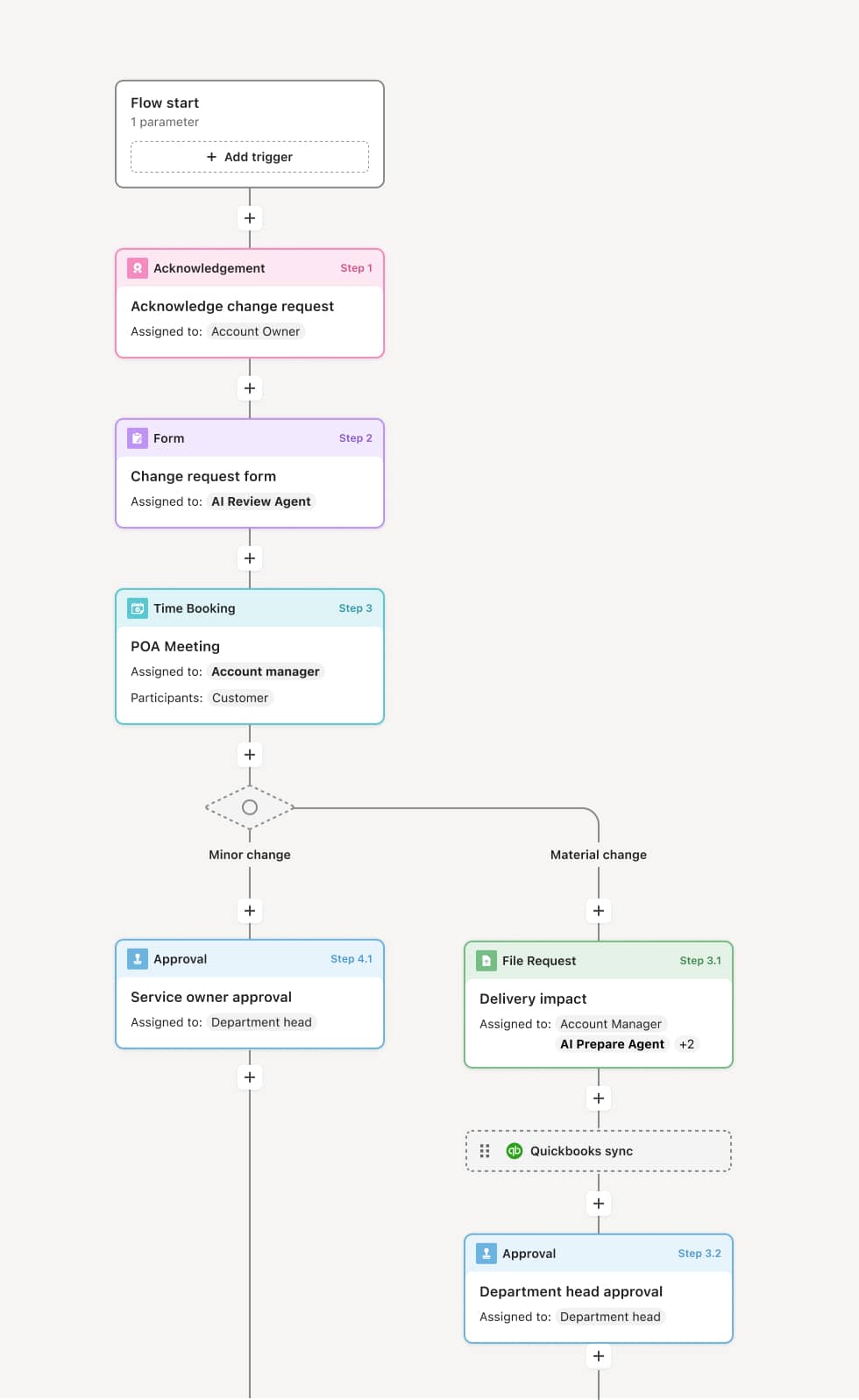
Your version of this process may vary based on roles, systems, data, and approval paths. Moxo’s flow builder can be configured with AI agents, conditional branching, dynamic data references, and sophisticated logic to match how your organization runs this workflow. The steps below illustrate one example.
Payroll data compilation and preparation
The process begins when the payroll team compiles data for the current pay period, including base compensation, overtime, bonuses, commissions, deductions, tax withholdings, and any adjustments for new hires, terminations, or status changes. An AI Agent may assist by flagging anomalies such as unusual overtime totals, missing deductions, or discrepancies compared to the prior pay period.
HR verification of employee changes
HR reviews the payroll data to confirm that all employee changes for the period are accurately reflected, including new hires, terminations, promotions, leaves of absence, and benefit elections. Any discrepancies between HR records and payroll data are flagged for resolution before the review proceeds.
Finance review of total liability and funding
The finance team reviews the total payroll amount, verifies funding availability, and confirms that the payroll aligns with budget projections. Significant variances from prior periods or budget are investigated and documented. The AI Agent may provide a variance summary highlighting material changes.
Compliance and tax validation
Compliance reviews confirm that tax withholdings, benefit deductions, garnishments, and any jurisdictional requirements are calculated correctly. This step is particularly important for organizations with employees across multiple states, provinces, or countries.
Final authorization and release
Once all verification steps are complete, the payroll summary is routed to the designated authorizer, typically a controller, CFO, or payroll manager, for final sign-off. The authorizer reviews the consolidated summary, confirms that all prerequisite checks have been completed, and authorizes payroll release. If any unresolved issues remain, the authorization is held until they are addressed.
Disbursement and record closure
Upon authorization, payroll is released for processing through the organization’s payment systems. The complete payroll approval record, including all verification steps, flags, resolutions, and the authorization decision, is stored for audit, compliance, and future reference.
This process commonly relies on inputs such as time and attendance records, compensation data, benefit elections, tax jurisdiction data, and prior-period payroll reports. It may be triggered by the pay cycle calendar or the completion of upstream payroll preparation. Systems commonly connected include HRIS platforms like Workday or ADP for employee and compensation data, ERP systems like NetSuite or SAP for financial validation and funding, and payroll processing systems for disbursement.
Key decision points include whether payroll data accurately reflects all employee changes for the period, whether the total payroll amount aligns with budget and funding availability, whether tax and compliance calculations are correct for all jurisdictions, and whether any anomalies or variances require investigation before release. If unresolved issues are identified at any stage, authorization is withheld until the issues are addressed.
Employee changes not reflected in payroll data, resulting in overpayments, underpayments, or missed deductions. Variance analysis skipped under time pressure, allowing errors to pass through to disbursement. Tax withholding errors for multi-jurisdictional employees not caught during compliance review. Payroll authorization delayed because prerequisite reviews are incomplete, risking late disbursement. Post-payroll corrections required because adjustments were applied after the review window closed, increasing processing cost and employee dissatisfaction.
Orchestrates payroll review steps across HR, finance, and compliance within the pay cycle timeline, ensuring all verifications are completed before the authorization deadline.
AI Agents flag payroll anomalies such as unusual variances, missing deductions, or discrepancies with prior periods, giving reviewers targeted focus areas.
Routes the payroll authorization to the designated approver only after all prerequisite reviews are confirmed complete, preventing premature sign-off.
Connects to HRIS platforms like Workday and ERP systems like NetSuite to pull employee change data and financial validation into the review workflow.
Maintains a complete payroll authorization record for every pay cycle, supporting audit readiness, regulatory compliance, and historical reference.