Fraud operations manager
Risk analyst
Compliance officer
Chief risk officer
Security operations lead
Finance controller

This process is used when a fraud monitoring system, employee report, or customer complaint generates an alert that requires human investigation and potential escalation. It is triggered when transaction patterns, account behaviors, or operational anomalies exceed defined risk thresholds, when a suspicious activity report is filed, or when an internal or external party reports a potential fraud incident. It applies when the investigation requires coordination across multiple teams such as fraud operations, compliance, legal, and finance, and when the severity of the alert may demand escalation to senior leadership or external authorities. This process is common in financial services, insurance, healthcare, e-commerce, and any organization managing transactional risk at scale.
The fraud alert escalation process typically involves fraud detection systems or monitoring teams that generate initial alerts, risk analysts who perform initial triage and investigation, fraud operations managers who oversee case management and escalation decisions, compliance officers who assess regulatory reporting obligations, legal counsel who advises on liability and law enforcement engagement, and senior risk leadership who authorize high-impact response actions.
Faster response to high-severity alerts through structured triage that prioritizes cases based on risk level and potential impact. Consistent escalation standards that ensure alerts of similar severity receive the same level of investigation and authority engagement. Coordinated investigation across fraud operations, compliance, and legal teams with shared visibility into case progress. Reduced fraud exposure by shortening the time between detection and containment actions. Regulatory compliance with documented investigation steps, decisions, and reporting actions for every escalated alert.
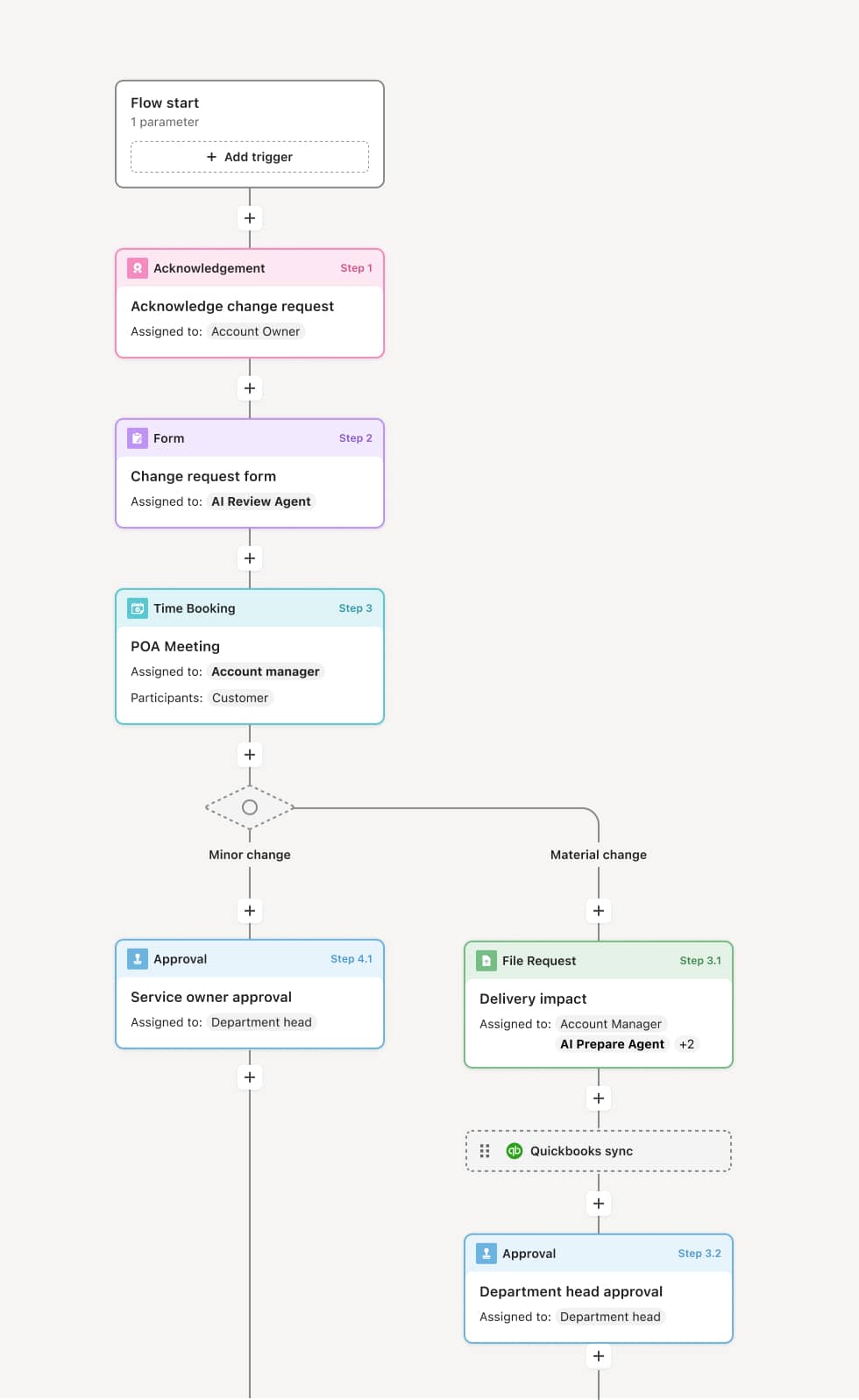
Your version of this process may vary based on roles, systems, data, and approval paths. Moxo’s flow builder can be configured with AI agents, conditional branching, dynamic data references, and sophisticated logic to match how your organization runs this workflow. The steps below illustrate one example.
Alert intake and initial triage
The process begins when a fraud alert is generated by a monitoring system, reported by an employee, or received from a customer or external party. The alert is captured with available context such as transaction details, account information, and the triggering rule or pattern. An AI Agent may assist by enriching the alert with related account history, prior alerts, and risk scoring data to help the triage analyst assess severity.
Investigation and evidence gathering
Based on the triage assessment, the alert is assigned to a risk analyst for investigation. The analyst reviews the evidence, contacts relevant parties if needed, and documents findings. For alerts involving multiple accounts or complex patterns, the investigation may involve coordination across fraud operations and account management teams. The AI Agent may compile a case summary as the investigation progresses.
Severity assessment and escalation routing
As the investigation unfolds, the severity of the alert is reassessed based on evidence. Low-severity cases may be resolved by the analyst with documented disposition. Medium and high-severity cases escalate to the fraud operations manager, who evaluates whether additional teams need to be engaged, whether containment actions are required, and whether the case warrants regulatory reporting.
Cross-functional response for escalated cases
For cases that escalate, the workflow coordinates involvement from compliance, legal, and potentially senior leadership. Compliance assesses regulatory reporting obligations such as Suspicious Activity Reports. Legal advises on liability exposure and potential law enforcement engagement. Senior risk leadership may authorize containment actions such as account holds, transaction reversals, or customer notifications.
Resolution, reporting, and closure
Once the investigation is complete and all required actions have been taken, the case is formally resolved. The resolution includes a documented determination, a record of all investigative steps and decisions, any regulatory filings submitted, and any containment or remediation actions taken. The complete case record is stored for regulatory compliance, audit, and trend analysis.
This process commonly relies on inputs such as automated fraud alerts, transaction data, account histories, customer reports, and prior case files. It may be triggered by a fraud monitoring system alert, a suspicious activity report, or a manual referral. Systems commonly connected include fraud detection platforms, transaction monitoring systems, CRM tools like Salesforce for account context, and case management systems for investigation tracking.
Key decision points include the initial severity assessment that determines the investigation path, whether the evidence supports escalation to the fraud operations manager, whether containment actions are warranted, whether regulatory reporting is required, and whether senior leadership authorization is needed for high-impact response actions. If the investigation does not confirm fraud, the case is closed with a documented false-positive determination.
High-volume alert queues delaying triage of genuinely high-risk cases, allowing fraud exposure to grow. Insufficient context provided to investigators, requiring them to manually assemble case data from multiple systems. Escalation thresholds applied inconsistently, causing some high-severity cases to be under-investigated. Containment actions delayed because the required authority is not available or the escalation path is unclear.Regulatory reporting deadlines missed because investigation and compliance coordination is not tracked against filing timelines.
AI Agents enrich fraud alerts at intake by pulling account history, prior case data, and risk scores from connected monitoring and CRM systems, accelerating triage decisions.
Routes escalated cases to the correct authority level based on severity, financial exposure, and regulatory implications, ensuring the right teams are engaged without manual handoffs.
Coordinates cross-functional response across fraud operations, compliance, legal, and senior leadership within a single workflow, maintaining shared visibility into case progress.
Tracks investigation steps and regulatory reporting deadlines within the workflow, alerting teams when filing windows are approaching.
Maintains a complete, auditable case record from alert through resolution, supporting regulatory compliance, audit, and fraud trend analysis.