Logistics manager
Transportation director
Freight audit analyst
Accounts payable manager
Procurement lead
Supply chain operations manager

This process is used when carrier invoices are received and must be validated before payment is authorized. It is triggered when a freight invoice arrives, when a shipment is delivered and requires payment reconciliation, or when discrepancies between contracted rates and invoiced amounts are identified. It applies when the organization manages a significant volume of shipments across multiple carriers and needs to ensure invoice accuracy, prevent overpayment, and maintain carrier relationships. This process is common in manufacturing, retail, distribution, e-commerce, and any organization with substantial freight and transportation spend.
The freight payment approval process typically involves logistics coordinators who match invoices to shipment records, freight audit analysts who validate rates, accessorials, and charges against carrier contracts, procurement or vendor management leads who handle carrier disputes, accounts payable teams who process approved payments, and finance managers who authorize high-value or disputed invoices.
Reduced freight overpayments through systematic invoice validation against contracted rates and shipment records. Faster invoice processing by automating the matching of invoices to shipment data and flagging exceptions for human review. Clear dispute resolution with documented records of rate discrepancies, carrier communications, and resolution outcomes. Stronger carrier accountability because every invoice is validated before payment, reinforcing contract compliance. Improved cash flow management through predictable, validated freight payment cycles.
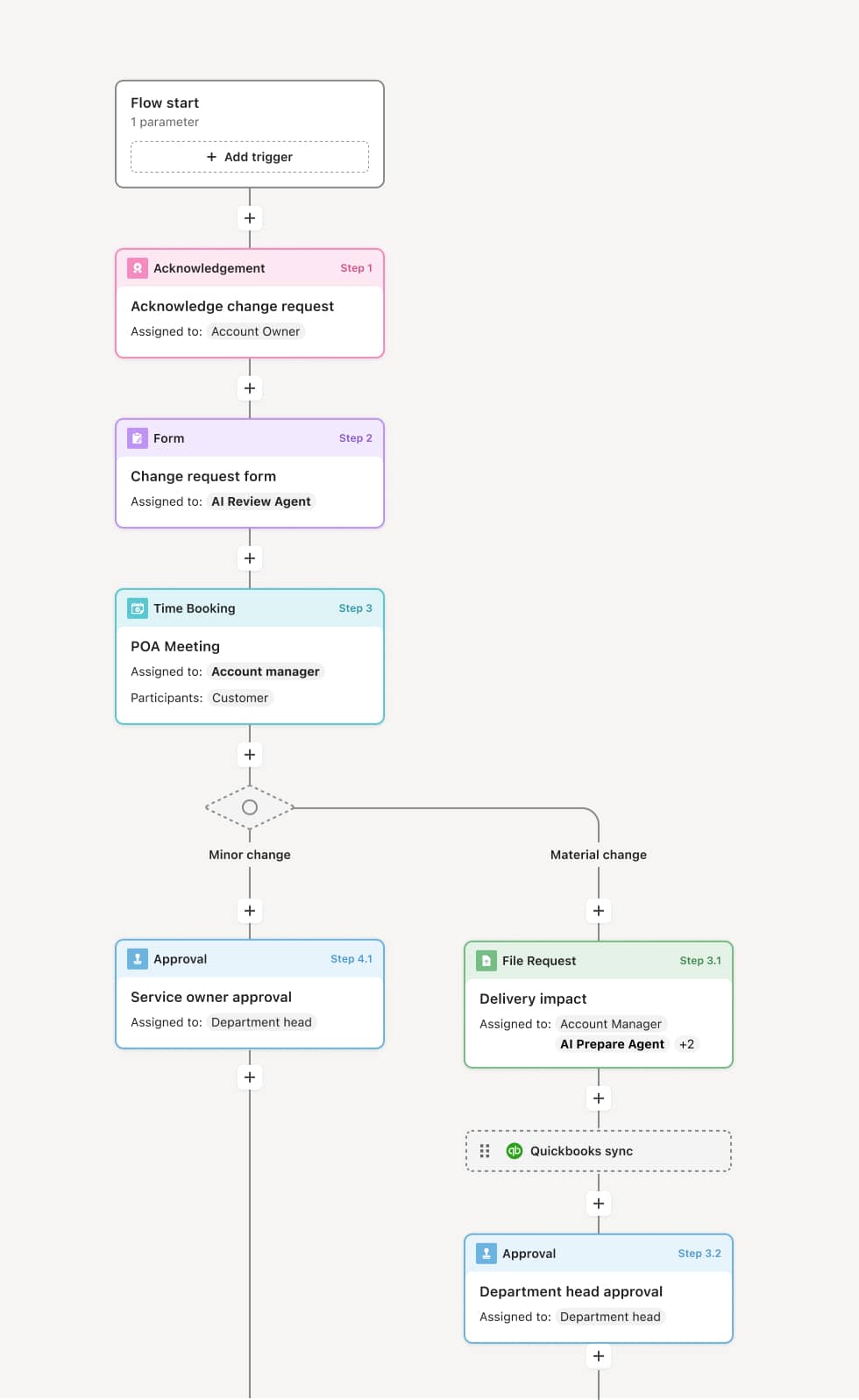
Your version of this process may vary based on roles, systems, data, and approval paths. Moxo’s flow builder can be configured with AI agents, conditional branching, dynamic data references, and sophisticated logic to match how your organization runs this workflow. The steps below illustrate one example.
Invoice receipt and data capture
The process begins when a carrier invoice is received, either electronically through an EDI feed or manually via email or portal submission. The invoice data is captured and associated with the corresponding shipment records. An AI Agent may assist by extracting key data points from the invoice and matching them to shipment reference numbers, purchase orders, or bill of lading details in connected systems.
Rate and charge validation
The invoice is validated against the contracted carrier rates, accessorial schedules, and the actual shipment details such as weight, distance, service level, and delivery confirmation. The AI Agent may flag discrepancies between invoiced charges and contracted rates, identify unauthorized accessorials, or detect duplicate invoices.
Exception handling and dispute initiation
Invoices that fail validation are routed to a freight audit analyst or logistics coordinator for review. The reviewer evaluates the discrepancy, determines whether it is a carrier billing error, a contract interpretation issue, or a legitimate charge, and either adjusts the payable amount, initiates a dispute with the carrier, or approves the invoice as-is with documentation. Carrier disputes are tracked within the workflow until resolution.
Approval routing
Validated invoices, along with any adjusted or resolved disputed invoices, are routed to the appropriate approver based on the invoice amount and organizational policy. Standard invoices within authority limits may be approved by the logistics manager or AP lead. High-value invoices or those with unresolved disputes route to a finance manager for additional authorization.
Payment processing and record closure
Approved invoices are released to accounts payable for payment processing. Payment data flows to connected financial systems for GL posting and carrier payment. The complete record, including the original invoice, validation results, any dispute history, and the approval decision, is stored for carrier management, audit, and freight spend analysis.
This process commonly relies on inputs such as carrier invoices, bills of lading, shipment tracking data, contracted rate schedules, delivery confirmations, and purchase order data. It may be triggered by invoice receipt via EDI, email, or carrier portal, or by the completion of a shipment delivery. Systems commonly connected include TMS platforms for shipment data, ERP systems like SAP or NetSuite for financial processing and GL coding, and carrier management platforms for rate and contract reference.
Key decision points include whether the invoice matches contracted rates and shipment records, whether identified discrepancies are billing errors or legitimate charges, whether to initiate a carrier dispute or approve the invoice as-is, and whether high-value or disputed invoices require additional financial authorization. If a dispute is initiated, the workflow tracks the resolution process through to a final payable determination.
Invoices processed without rate validation, leading to systematic overpayment across the carrier portfolio. Duplicate invoices not detected, resulting in double payments. Dispute resolution cycles extending beyond payment terms, damaging carrier relationships. Accessorial charges approved without verification, allowing unauthorized fees to pass through. Freight spend data not flowing to financial systems accurately, undermining spend analysis and budget reporting.
AI Agents match invoices to shipment records and contracted rates at intake, flagging discrepancies, duplicates, and unauthorized charges before any human review.
Routes validated invoices to the appropriate approver based on value and exception status, ensuring the right authority level is engaged.
Tracks carrier dispute resolution within the workflow, maintaining visibility from dispute initiation through final resolution and payment adjustment.
Connects approved invoices to ERP systems like SAP or NetSuite for GL posting and payment processing, reducing manual data transfer.
Extends existing logistics and carrier management systems by incorporating freight audit and payment approval into a single orchestrated process.