Hiring manager
HR business partner
Talent acquisition lead
Finance business partner
Department head
Compensation analyst

This process is used when a hiring team has identified a preferred candidate and needs formal authorization to extend an offer. It is triggered when the interview process is complete, a candidate has been selected, and the proposed compensation and start date have been determined. It applies when the offer must be validated against the approved headcount, budget, compensation guidelines, and any organizational policies such as internal equity reviews or background check requirements. This process is common in organizations that require formal sign-off before any offer is extended, particularly those with structured compensation frameworks or regulatory hiring requirements.
The hiring approval process typically involves the hiring manager who submits the offer recommendation, the talent acquisition lead who coordinates the approval workflow, HR business partners who validate the candidate’s qualifications and compliance with hiring policy, compensation analysts who review the proposed offer against guidelines and internal equity, finance business partners who confirm budget availability, and department heads or senior leaders who authorize offers above defined thresholds.
Faster offer delivery by routing approvals through a structured workflow rather than waiting on sequential email sign-offs. Compensation consistency with every offer reviewed against guidelines and internal equity before it is extended. Budget alignment because finance validates the financial impact of the hire before the offer is authorized. Reduced compliance risk through documented verification of hiring policy requirements, background checks, and eligibility confirmations. Lower offer rejection rates because faster approval cycles reduce the time candidates wait for a response.
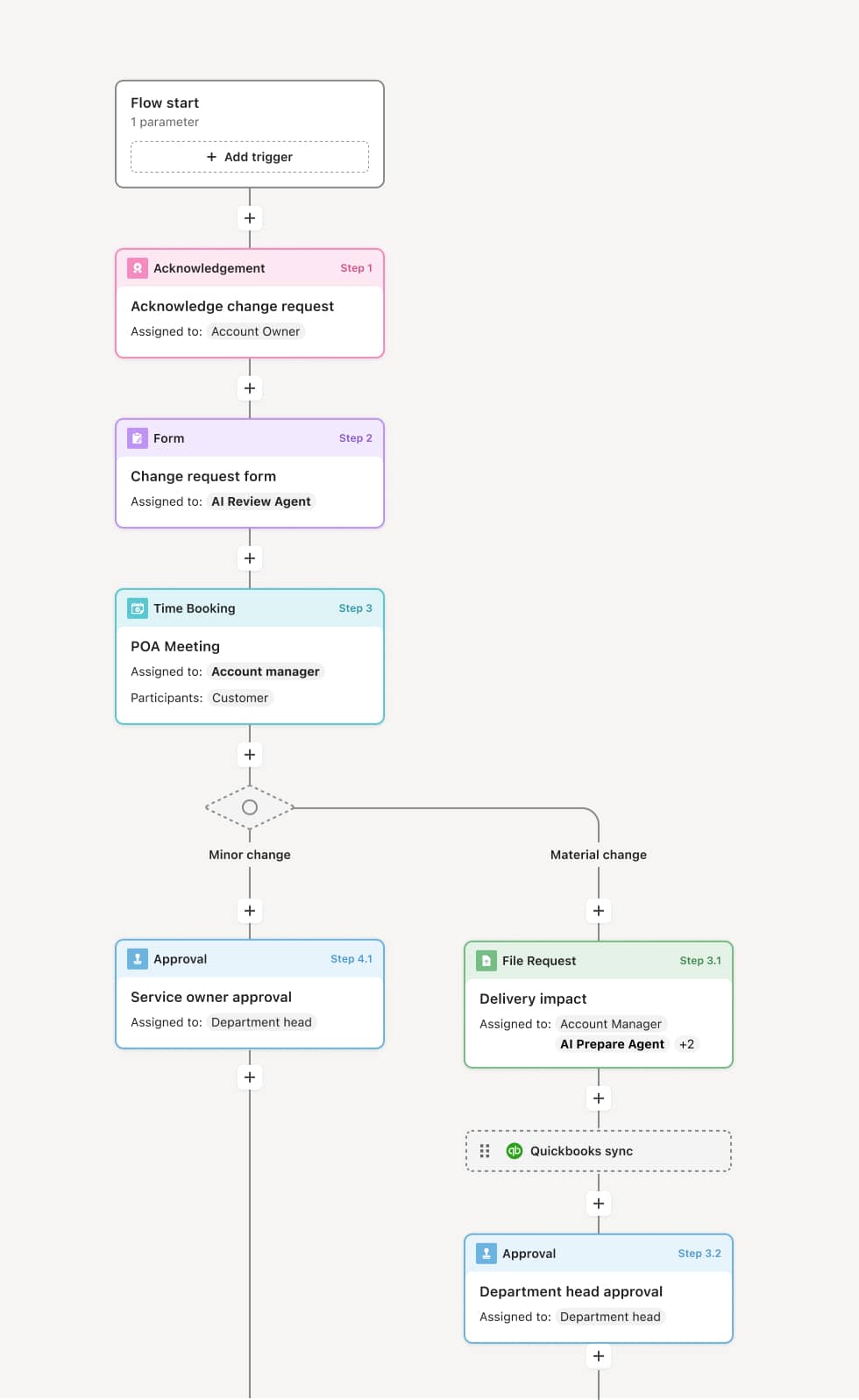
Your version of this process may vary based on roles, systems, data, and approval paths. Moxo’s flow builder can be configured with AI agents, conditional branching, dynamic data references, and sophisticated logic to match how your organization runs this workflow. The steps below illustrate one example.
Offer recommendation submission
The process begins when the hiring manager submits an offer recommendation that includes the candidate’s details, proposed role, compensation package, start date, and a summary of the interview evaluation. An AI Agent may assist by pulling the approved headcount record, role requirements, and budget data from connected HRIS and financial systems to pre-populate context for reviewers.
HR and compensation review
HR evaluates the candidate’s qualifications against the role requirements and confirms compliance with hiring policy, including any background check, reference check, or eligibility requirements. The compensation analyst reviews the proposed offer against compensation guidelines, salary bands, and internal equity data. If the proposed compensation falls outside guidelines, HR recommends adjustments.
Finance validation
The finance business partner confirms that the hire is within the approved budget and validates the fully-loaded cost impact. If the hire is a backfill, finance confirms that the vacancy savings offset the new hire cost. If the position exceeds the budget or was not part of the approved headcount plan, the request may escalate to leadership for additional authorization.
Management authorization
The offer recommendation, along with HR and finance reviews, is routed to the department head or senior leader for final authorization. The approver evaluates the business need, candidate fit, and financial alignment before authorizing or requesting modifications. For senior-level hires or those with non-standard compensation arrangements, additional executive approval may be required.
Offer execution and record closure
Upon approval, the offer is prepared and extended to the candidate. The workflow may trigger downstream actions such as offer letter generation, onboarding preparation, or system provisioning requests. The complete record, including the offer recommendation, all reviewer inputs, and the authorization decision, is stored for talent acquisition reporting, compensation audit, and compliance purposes.
This process commonly relies on inputs such as interview evaluations, candidate profiles, compensation proposals, headcount authorizations, and budget data. It may be triggered by a recommendation from the applicant tracking system, a form submission from the hiring manager, or the completion of the interview stage. Systems commonly connected include ATS platforms for candidate data, HRIS platforms like Workday for organizational and compensation data, and ERP systems like NetSuite for budget validation.
Key decision points include whether the candidate meets the role requirements and hiring policy criteria, whether the proposed compensation aligns with guidelines and internal equity, whether the hire is within the approved budget and headcount plan, and whether non-standard arrangements require additional leadership authorization. If any reviewer identifies an issue, the offer recommendation returns to the hiring manager for adjustment.
Offer recommendations submitted without verified headcount approval, creating risk that the position is not actually authorized. Compensation reviews delayed because internal equity data is not readily available, extending the time to offer. Budget validation disconnected from the approval workflow, allowing offers that exceed financial capacity. Background check or eligibility requirements not completed before the offer is extended, creating compliance exposure. Slow approval cycles causing top candidates to accept competing offers before the organization responds.
Orchestrates hiring approvals across HR, compensation, finance, and management in parallel where possible, reducing the time from candidate selection to offer delivery.
AI Agents pre-populate offer context by pulling headcount authorizations, compensation bands, and budget data from connected HRIS and financial systems.
Routes offers to the appropriate approval tier based on role level, compensation, and policy requirements, ensuring the right authority is engaged without unnecessary escalation.
Tracks compliance requirements such as background checks and eligibility verifications within the workflow, ensuring they are completed before the offer is finalized.
Connects approved offers to downstream onboarding and provisioning workflows, creating a seamless transition from hiring authorization to new employee setup.