HR business partner
Hiring manager
Compensation analyst
Diversity and inclusion lead
Legal counsel
Department head

This process is used when a new job description is created or an existing one is materially revised before it can be used for recruiting or organizational planning. It is triggered when a hiring manager drafts a new role, when an existing role’s responsibilities or requirements change significantly, when compensation bands need to be validated, or when compliance requirements such as pay transparency laws mandate formal review. It applies when the job description must be evaluated for accuracy, internal equity, legal compliance, and organizational alignment before publication. This process is common in organizations with structured job architectures, pay equity programs, regulatory hiring obligations, or formal requisition approval workflows.
The job description approval process typically involves the hiring manager who drafts the role description, HR business partners who evaluate organizational fit and role classification, compensation analysts who validate salary bands and internal equity, diversity and inclusion leads who review for inclusive language and equitable requirements, legal or compliance teams who confirm adherence to labor regulations and pay transparency requirements, and department heads who confirm strategic alignment.
Accurate role definitions that clearly articulate responsibilities, qualifications, and expectations before recruiting begins. Compensation alignment with every job description validated against salary bands and internal equity data before posting. Regulatory compliance through structured review of pay transparency, non-discriminatory language, and classification requirements. Consistent job architecture because new and revised roles are evaluated against the organization’s existing role framework. Faster time-to-post by routing reviews in parallel and catching issues before the description reaches external candidates.
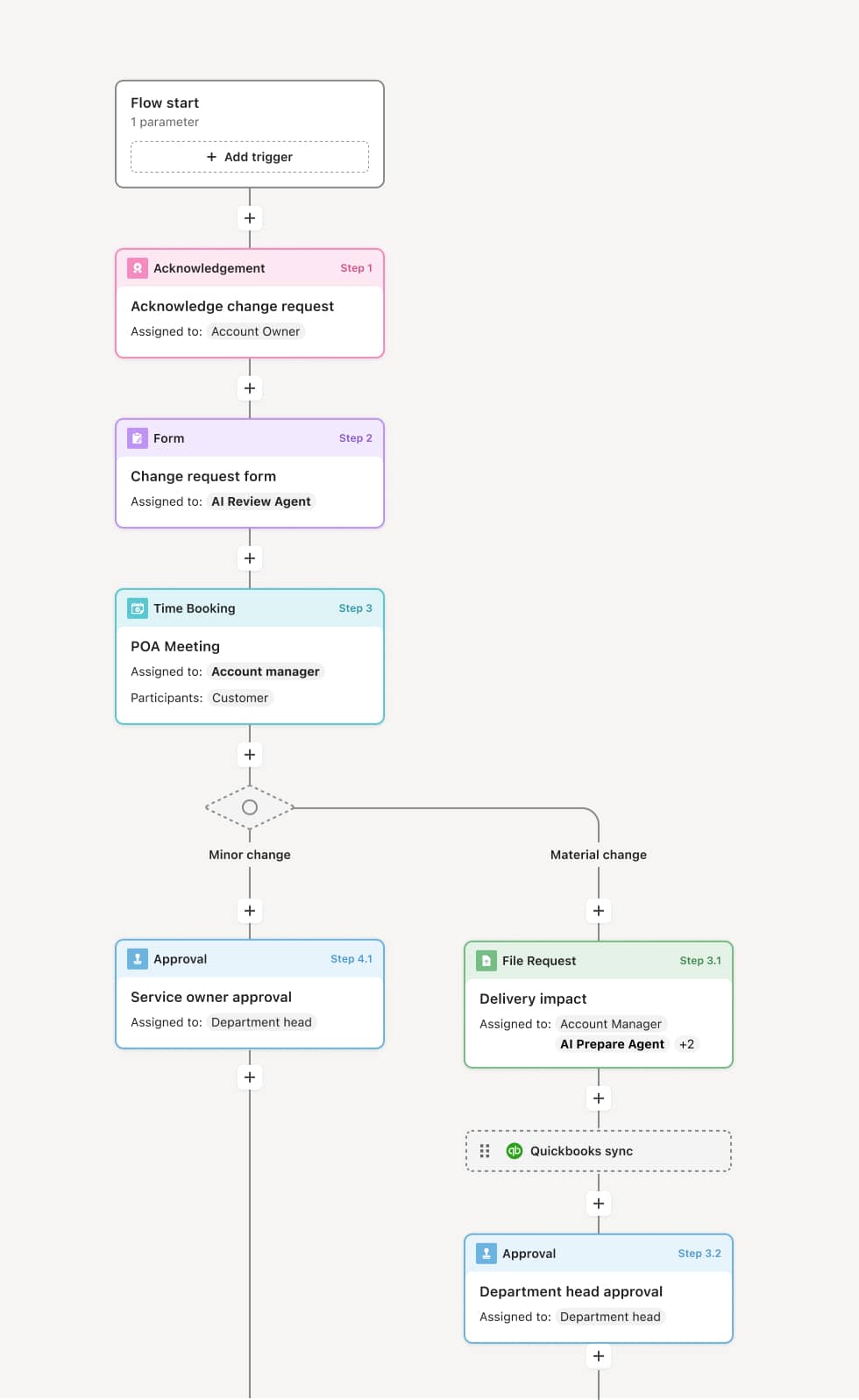
Your version of this process may vary based on roles, systems, data, and approval paths. Moxo’s flow builder can be configured with AI agents, conditional branching, dynamic data references, and sophisticated logic to match how your organization runs this workflow. The steps below illustrate one example.
Job description drafting and submission
The process begins when a hiring manager drafts a job description, including the role title, department, reporting structure, key responsibilities, required and preferred qualifications, and proposed compensation range. An AI Agent may assist by pulling templates for similar roles, flagging missing required fields, and suggesting language based on the organization’s job description standards.
HR review and classification
HR evaluates the job description against the organization’s job architecture to confirm that the role is appropriately classified, the title aligns with existing conventions, the responsibilities are clearly defined, and the qualifications are appropriate for the level. If the role overlaps with existing positions or creates organizational ambiguity, HR returns it with recommendations for revision.
Compensation and equity review
The compensation team validates the proposed salary band against market data, internal equity, and the organization’s compensation philosophy. If the proposed range falls outside guidelines or creates equity concerns relative to similar roles, the team recommends adjustments. The AI Agent may compile benchmark data and internal comparisons to support the review.
Compliance and inclusive language review
Legal or compliance reviews the description for adherence to labor regulations, including pay transparency requirements, non-discriminatory qualification criteria, and proper employment classification. A diversity and inclusion review may evaluate the language for bias and accessibility. If changes are needed, the description is returned to the hiring manager with specific guidance.
Final approval and publication authorization
Once all reviews are complete, the job description routes to the department head and HR leader for final approval. The approver confirms that the role is strategically justified, properly classified, and ready for posting. Upon approval, the description is authorized for use in the requisition and recruiting process.
Record closure and downstream activation
The approved job description is stored as part of the organization’s role library and linked to the corresponding requisition. Downstream actions such as requisition creation in the ATS or internal job posting may be triggered by the approval. The complete record, including all reviewer feedback and approval decisions, is maintained for audit, compensation analysis, and organizational planning.
This process commonly relies on inputs such as draft job descriptions, role templates, compensation benchmark data, job architecture frameworks, and regulatory guidelines. It may be triggered by a hiring manager’s submission, a headcount approval, or an organizational restructuring. Systems commonly connected include HRIS platforms like Workday for job architecture and compensation data, ATS platforms for requisition creation, and compliance databases for regulatory reference.
Key decision points include whether the role is properly classified within the job architecture, whether the compensation range aligns with market data and internal equity, whether the description complies with labor regulations and pay transparency requirements, and whether the role is strategically justified. If any reviewer identifies an issue, the description returns to the hiring manager for revision before it can be approved.
Job descriptions submitted with vague or inflated qualifications, attracting misaligned candidates or creating legal exposure. Compensation ranges not validated against internal equity, creating pay disparities that surface later as retention or legal issues. Compliance review skipped, exposing the organization to pay transparency violations or discriminatory posting claims. Approved descriptions not linked to the requisition, causing the recruiting team to work from outdated or unapproved versions. Revision cycles extending beyond hiring timelines, delaying the start of recruiting.
AI Agents check job description completeness against organizational standards, flagging missing fields, unclear qualifications, and potential language issues before routing to reviewers.
Routes descriptions through HR, compensation, and compliance reviews in parallel where possible, reducing the time from draft to approved posting.
Pulls compensation benchmark and internal equity data from connected HRIS platforms like Workday, giving the compensation team immediate analytical context.
Supports iterative revision loops where returned descriptions cycle back to the hiring manager with specific reviewer feedback, reducing back-and-forth.
Connects approved job descriptions to downstream requisition workflows, ensuring the recruiting process begins with the authorized version.