Laboratory director
Clinical operations manager
Ordering physician
Lab information systems manager
Nurse coordinator
Pathologist

This process is used when a healthcare provider orders a diagnostic laboratory test as part of patient evaluation, treatment monitoring, screening, or pre-procedural assessment. It applies when the test order must be validated for clinical appropriateness, the specimen must be collected and transported according to specific handling requirements, and the results must be reviewed and acted upon within clinically relevant timeframes. It is common when ordering providers, phlebotomists, laboratory technicians, and clinical teams must coordinate across collection, analysis, and result delivery. Ideal for hospitals, outpatient clinics, reference laboratories, and any healthcare organization processing diagnostic lab work.
The lab test order process typically involves the ordering provider who requisitions the test, nursing or phlebotomy staff who collect the specimen, laboratory technicians who process and analyze the specimen, pathologists or lab directors who review complex or critical results, and clinical teams who receive and act on the findings.
Faster turnaround from order to result by routing orders, collections, and results through a coordinated workflow without handoff gaps. Fewer specimen errors through structured collection protocols that validate patient identification, specimen labeling, and handling requirements. Timely critical result notification so abnormal or critical findings reach the ordering provider promptly for clinical intervention. Reduced duplicate or unnecessary testing because order validation checks for recent prior results and clinical appropriateness before collection. Complete chain of documentation from order through result, supporting clinical decision-making, billing, and regulatory compliance.
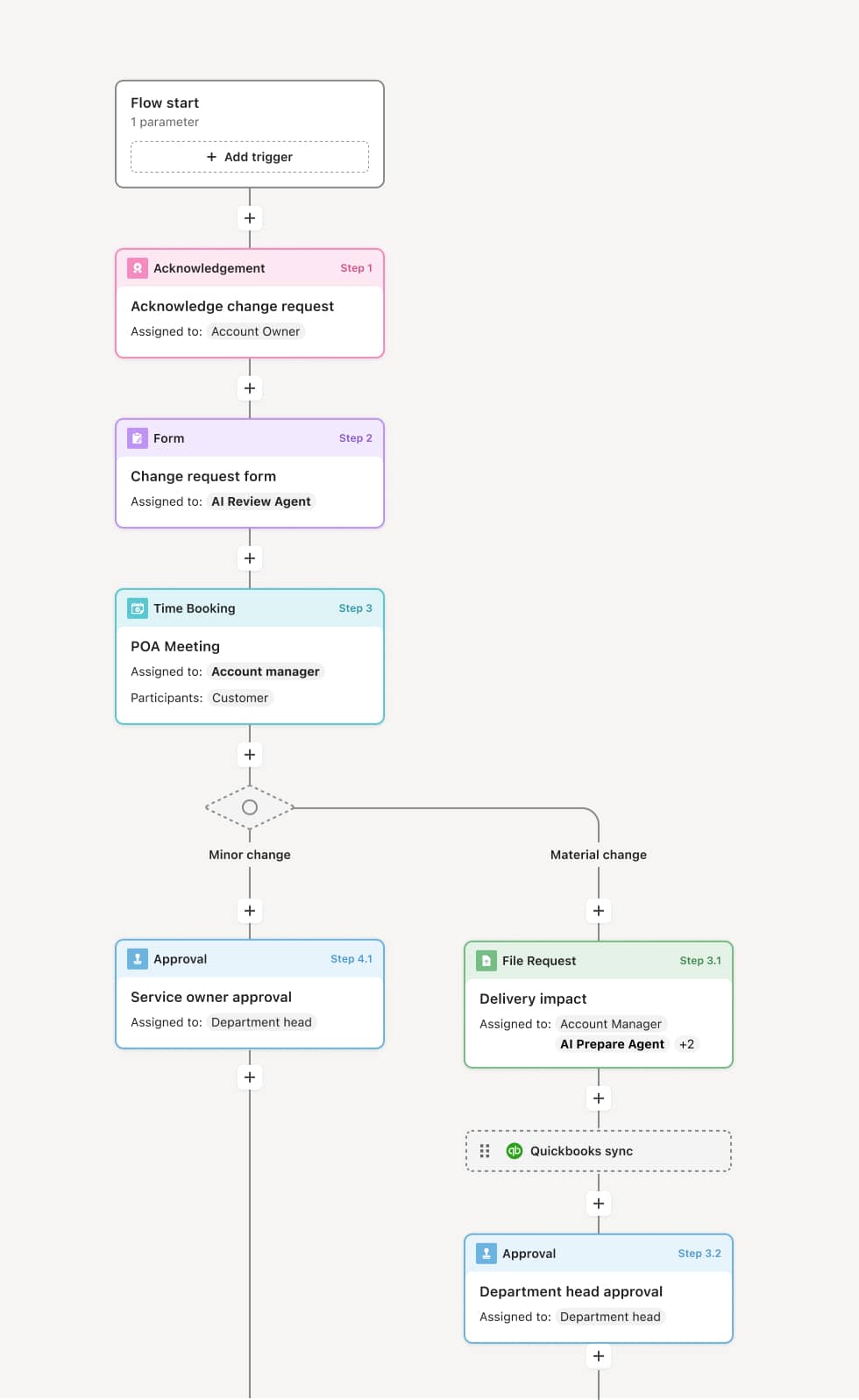
Your version of this process may vary based on roles, systems, data, and approval paths. Moxo’s flow builder can be configured with AI agents, conditional branching, dynamic data references, and sophisticated logic to match how your organization runs this workflow. The steps below illustrate one example.
Test order placement
The process begins when a provider places a laboratory test order, specifying the test or panel, clinical indication, urgency, and any special instructions. This may be entered through an EHR order entry system or submitted manually. An AI Agent can assist by validating the order against clinical guidelines, checking for duplicate recent orders, and flagging tests that require specific patient preparation or fasting.
Order verification and scheduling
The laboratory or nursing team verifies the order for completeness, confirms specimen requirements, and schedules the collection. If the order is incomplete, requires clarification, or conflicts with the patient’s current status (e.g., medication interactions affecting test accuracy), the ordering provider is notified.
Specimen collection
The phlebotomist or nursing staff collects the specimen following established protocols for patient identification, specimen labeling, and handling. Specimen integrity requirements — such as temperature, transport medium, and processing time — are followed. The specimen is logged and transported to the laboratory.
Laboratory analysis
The laboratory receives the specimen, verifies integrity and labeling, and performs the ordered analysis. If the specimen is compromised or insufficient, a recollection is requested. Results are generated and undergo quality review by laboratory technicians.
Result review and critical value notification
Results are reviewed for quality and completeness. If critical or significantly abnormal values are detected, the laboratory initiates a critical value notification to the ordering provider within established timeframes. An AI Agent may flag results that fall outside normal ranges and identify which require immediate provider notification.
Result delivery and clinical action
Results are delivered to the ordering provider through the EHR or results reporting system. The provider reviews the results and determines clinical follow-up — which may include additional testing, treatment modification, or patient notification. The result and any follow-up actions are documented in the patient record.
This process commonly relies on inputs such as the test order, patient demographics, clinical indication, specimen collection data, and laboratory analysis results. It may be triggered by a provider order, a standing order protocol, or a pre-procedural requirement. Connected systems often include EHR platforms like Epic or Cerner for order entry and results, laboratory information systems (LIS) like Sunquest or Beaker for specimen tracking and analysis, and clinical decision support tools for order validation.
Key decision points include whether the test order is clinically appropriate and complete, whether specimen collection meets integrity and handling requirements, whether laboratory results require critical value notification to the provider, and whether the results indicate the need for additional testing, treatment changes, or patient follow-up.
Incomplete or ambiguous orders that require clarification before collection can proceed, delaying results. Specimen handling errors such as incorrect labeling, inadequate volume, or improper transport conditions that require recollection. Delayed critical value notifications when abnormal results are not communicated to the ordering provider within established timeframes. Results delivered without clinical context, making it difficult for the provider to prioritize follow-up. Disconnected order and result systems that create reconciliation gaps between what was ordered and what was resulted.
Orchestrates the lab test workflow from order placement through result delivery across ordering providers, collection staff, laboratory, and clinical teams in a single coordinated flow.
Routes orders with validation checks so incomplete or potentially duplicate orders are flagged before specimen collection begins.
AI Agents validate orders against clinical guidelines and flag tests requiring special preparation, fasting, or medication holds.
Supports critical result notification by identifying abnormal values and routing them to the ordering provider with urgency and context.
Connects to EHR and LIS platforms like Epic, Cerner, and Sunquest so order data, specimen tracking, and results flow seamlessly across systems.
Preserves the complete order-to-result record including the requisition, collection documentation, analysis, result delivery, and clinical follow-up for patient care continuity and regulatory compliance.