Clinical pharmacist
Pharmacy director
Primary care physician
Care management coordinator
Population health manager
Quality improvement lead

This process is used when a patient meets criteria for medication therapy management — typically patients with multiple chronic conditions, complex medication regimens, high medication costs, or who are at risk for adverse drug events or non-adherence. It applies when a comprehensive medication review is needed to evaluate appropriateness, effectiveness, safety, and adherence across all medications, and when the findings require coordination between the pharmacist, the patient, and prescribing providers. It is common in Medicare Part D MTM programs, health plan quality initiatives, and clinical pharmacy services within health systems. Ideal for pharmacies, health plans, accountable care organizations, and healthcare systems with clinical pharmacy programs.
The MTM process typically involves the clinical pharmacist who conducts the comprehensive medication review and develops the action plan, the patient who participates in the review and provides medication use information, prescribing providers who receive and act on therapy recommendations, care coordinators who facilitate follow-up, and pharmacy or quality leadership who oversee program performance.
Optimized medication therapy by identifying and resolving drug therapy problems such as unnecessary medications, untreated conditions, suboptimal dosing, and adverse effects. Improved patient adherence through patient education, simplification of regimens, and addressing barriers to medication use. Reduced adverse drug events by catching drug interactions, therapeutic duplications, and contraindications during the comprehensive review. Better care coordination because therapy recommendations are communicated to all involved prescribers with clear rationale and follow-up expectations. Documented MTM encounters that meet CMS requirements for Medicare Part D programs and support quality measure reporting.
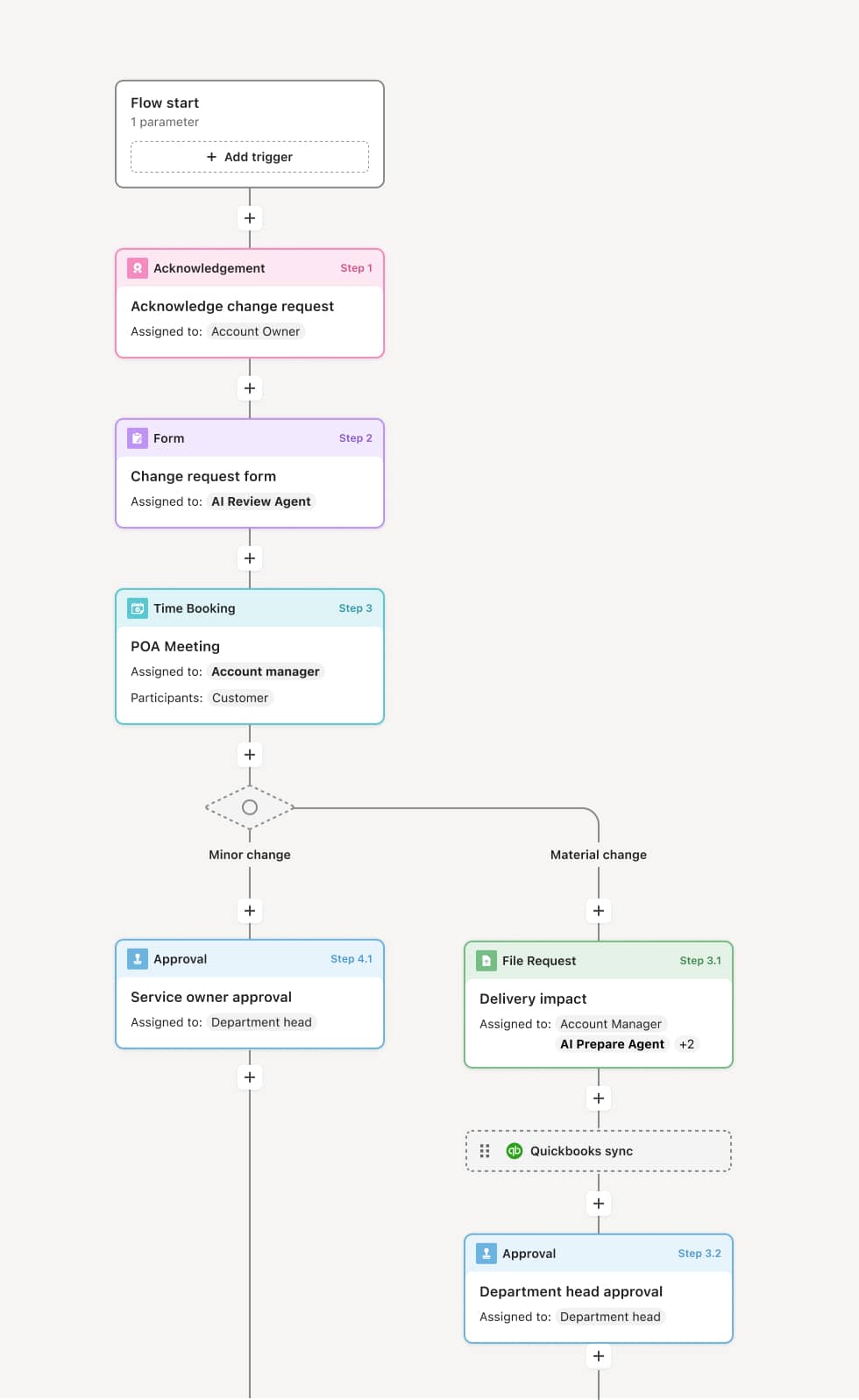
Your version of this process may vary based on roles, systems, data, and approval paths. Moxo’s flow builder can be configured with AI agents, conditional branching, dynamic data references, and sophisticated logic to match how your organization runs this workflow. The steps below illustrate one example.
Patient identification and outreach
The process begins when a patient is identified as eligible for MTM services — based on the number of chronic conditions, number of medications, anticipated medication costs, or health plan targeting criteria. The pharmacist or care team contacts the patient to schedule the MTM encounter. An AI Agent can assist by reviewing the patient’s medication list and flagging potential therapy issues to prepare the pharmacist before the encounter.
Comprehensive medication review
The pharmacist conducts a comprehensive medication review (CMR) with the patient, reviewing all prescription medications, over-the-counter products, supplements, and herbal remedies. The review assesses each medication for indication, effectiveness, safety, and adherence. The pharmacist identifies drug therapy problems, including unnecessary therapy, therapeutic gaps, drug interactions, incorrect dosing, and adherence barriers. An AI Agent may cross-reference the medication list against clinical guidelines and formulary data to highlight potential issues.
Personal medication list and action plan development
Based on the review, the pharmacist creates an updated personal medication list (PML) for the patient and develops a medication action plan (MAP) that documents identified problems, recommended actions, and patient-specific goals. The MAP includes both patient actions (such as adherence strategies or lifestyle changes) and provider-directed recommendations (such as dose adjustments, medication changes, or additional monitoring).
Provider communication and recommendations
Therapy recommendations that require prescriber action are communicated to the relevant providers with clinical rationale. The pharmacist documents which providers were contacted, the specific recommendations, and the response. If a recommendation is declined or modified by the provider, the rationale is documented and the plan is adjusted accordingly.
Patient education and documentation
The pharmacist reviews the medication action plan and personal medication list with the patient, providing education on each medication’s purpose, proper use, and potential side effects. The completed CMR, PML, and MAP are documented and provided to the patient.
Follow-up and targeted medication reviews
Follow-up encounters are scheduled to assess the impact of implemented recommendations, monitor adherence, and address any new medication issues. Targeted medication reviews (TMRs) may be conducted between annual CMRs to address specific therapy concerns as they arise.
This process commonly relies on inputs such as the patient’s medication list, medical history, lab results, claims or formulary data, and prior MTM encounter records. It may be triggered by health plan eligibility criteria, a provider referral, or a population health analytics flag. Connected systems often include pharmacy management systems, EHR platforms like Epic or Cerner for clinical data, health plan eligibility and claims systems, and MTM platforms like OutcomesMTM or Mirixa.
Key decision points include whether the patient meets MTM eligibility criteria and consents to participate, which drug therapy problems are identified during the comprehensive medication review, which recommendations require prescriber action versus patient education alone, and whether follow-up targeted reviews are needed based on the complexity of identified issues.
Patients not reached for scheduling, preventing eligible patients from receiving MTM services and affecting program completion rates. Incomplete medication information when the patient does not bring all medications or cannot recall over-the-counter products and supplements. Provider recommendations not acted upon because the communication did not reach the prescriber or lacked sufficient clinical rationale. Follow-up not scheduled or tracked, leaving identified therapy problems unresolved. Documentation not meeting CMS requirements for the CMR, PML, and MAP, creating compliance gaps in Medicare Part D reporting.
Orchestrates the MTM encounter lifecycle from patient identification through follow-up across pharmacists, providers, and patients in a single coordinated flow.
Engages patients directly within the workflow for scheduling, medication review discussions, and education, keeping all communications in context.
AI Agents prepare the pharmacist by reviewing the medication list, flagging potential drug therapy problems, and pulling relevant clinical data before the CMR encounter.
Routes therapy recommendations to prescribers with clinical rationale and tracks their response within the workflow.
Connects to pharmacy management, EHR, and MTM platforms like Epic, OutcomesMTM, and health plan systems so medication data and encounter records are accessible.
Preserves the complete MTM record including CMR documentation, personal medication list, action plan, provider communications, and follow-up outcomes for CMS compliance and quality reporting.