Patient access director
Registration supervisor
Clinical operations manager
Revenue cycle director
Nurse manager
Health information management lead

This process is used at every new patient encounter or when existing patient information must be updated — including new registrations, return visits with changed information, hospital admissions, and pre-procedure check-ins. It applies when demographic data, insurance coverage, medical history, allergies, current medications, and consent documents must be collected or verified before the clinical encounter begins. It is common when registration staff, nursing, and billing teams must coordinate to ensure that the patient’s record is accurate and complete before the provider sees the patient. Ideal for hospitals, physician practices, urgent care centers, ambulatory surgery centers, and any healthcare setting managing patient registration and clinical intake.
The patient intake process typically involves registration staff who collect and verify demographic and insurance data, the patient who provides information, completes forms, and signs consent documents, nursing staff who collect clinical information such as medical history, medications, and vital signs, insurance verification teams who confirm coverage and eligibility, and billing staff who rely on accurate intake data for clean claim submission.
Complete patient records before the clinical encounter so providers have the demographic, insurance, clinical, and consent information they need at the point of care. Fewer registration errors through structured data collection and real-time insurance verification during intake. Reduced claim denials because insurance eligibility and coverage are confirmed before services are rendered. Better patient experience by streamlining the intake process so patients spend less time filling out paperwork and repeating information. Accurate baseline clinical data including medical history, medications, and allergies, documented and available before the clinical assessment begins.
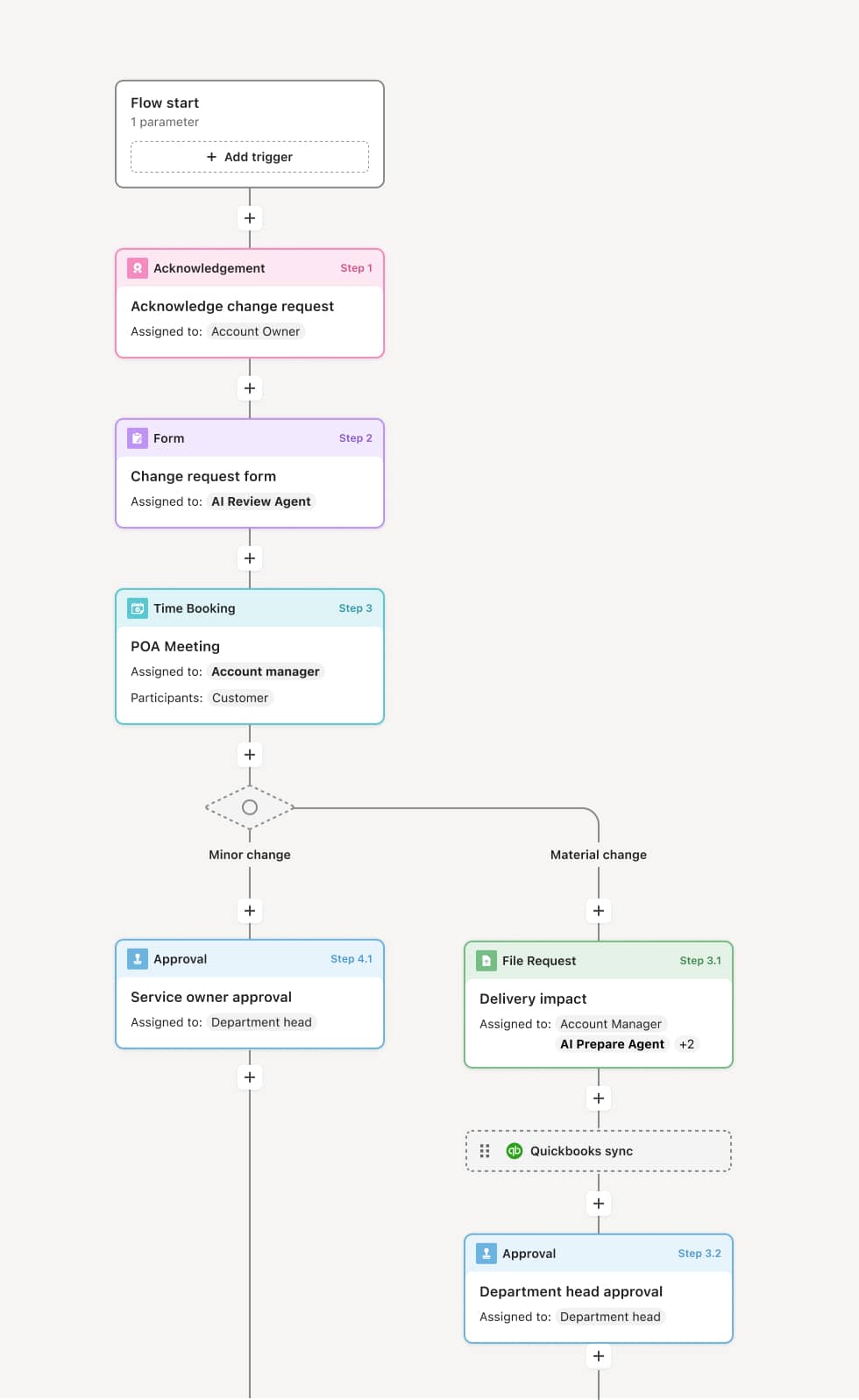
Your version of this process may vary based on roles, systems, data, and approval paths. Moxo’s flow builder can be configured with AI agents, conditional branching, dynamic data references, and sophisticated logic to match how your organization runs this workflow. The steps below illustrate one example.
Pre-visit registration and data collection
The process may begin before the patient arrives through pre-registration, where the patient completes demographic, insurance, and medical history forms online or through a patient portal. An AI Agent can assist by pre-populating known information from the patient’s existing record and flagging fields that require updating since the last visit.
Arrival and identity verification
When the patient arrives, registration staff verify the patient’s identity using a photo ID, confirm or update demographic data, and collect any forms not completed during pre-registration. Insurance cards are scanned and coverage is verified in real time.
Insurance verification and eligibility confirmation
The registration or insurance verification team confirms active coverage, plan details, copay and deductible information, and any pre-authorization requirements for the scheduled services. If coverage issues are identified — such as expired coverage, referral requirements, or prior authorization needs — they are addressed before the encounter. An AI Agent may check for common eligibility issues based on the payer and service type.
Clinical information collection
Nursing staff collect clinical intake information including chief complaint, medical history updates, current medication list, allergy verification, and vital signs. This information is entered into the EHR and is available to the provider before the clinical encounter begins.
Consent and acknowledgment
The patient reviews and signs required consent documents, including general treatment consent, privacy practice acknowledgment, and any procedure-specific consents. An AI Agent may verify that all required documents are presented based on the visit type.
Record verification and handoff to clinical team
The completed intake record is reviewed for accuracy and completeness. The patient is handed off to the clinical team with a complete, verified record ready for the provider’s assessment.
This process commonly relies on inputs such as patient demographics, insurance cards, medical history, medication lists, allergy information, and consent documents. It may be triggered by a scheduled appointment, a walk-in visit, or a hospital admission. Connected systems often include EHR platforms like Epic or Cerner, practice management systems, insurance eligibility verification tools, and patient portal platforms.
Key decision points include whether the patient’s demographic and insurance information is current and accurate, whether insurance eligibility is confirmed and any authorization requirements are met, whether clinical information such as medical history and medications has been updated since the last visit, and whether all required consent documents have been obtained for the scheduled services.
Insurance eligibility not verified before the encounter, resulting in claim denials after services are rendered. Incomplete pre-registration when patients skip or partially complete online forms, creating data gaps at check-in. Medication lists not reconciled, leaving providers with outdated medication information at the point of care. Consent documents missed for specific services or procedures, creating compliance and legal exposure. Long wait times at registration when the intake process is not streamlined, negatively affecting patient experience.
Orchestrates patient intake across pre-registration, arrival, insurance verification, clinical data collection, and consent in a single flow that prepares a complete record before the clinical encounter.
Engages patients before the visit through pre-registration workflows where demographics, insurance, and medical history are collected in advance.
AI Agents pre-populate known data and flag required updates so returning patients only need to verify and supplement their existing record.
Confirms insurance eligibility in real time within the workflow, surfacing coverage issues before services are rendered.
Connects to EHR, practice management, and eligibility platforms like Epic, Cerner, and payer systems so intake data flows directly into the patient record.
Preserves the complete intake record including demographics, insurance verification, clinical data, and consent documentation for billing accuracy and compliance.