Referral coordinator
Primary care physician
Specialist office manager
Care management coordinator
Patient access director
Revenue cycle manager

This process is used when a provider determines that a patient needs evaluation or treatment by another provider or specialist, and the referral must be documented, authorized by insurance if required, and tracked through the patient’s specialist visit and outcome. It applies when referral processing involves insurance authorization, clinical information exchange, patient notification, appointment scheduling, and follow-up documentation. It is common when referral coordinators, referring providers, receiving specialists, insurance teams, and the patient must coordinate to complete the referral loop. Ideal for primary care practices, health systems, multispecialty groups, and any healthcare organization managing referral volumes.
The referral process typically involves the referring provider who determines the need and initiates the referral, referral coordinators who process the referral, obtain authorization, and facilitate scheduling, insurance authorization staff who secure required approvals, the receiving specialist who accepts the referral and sees the patient, and the patient who schedules and attends the appointment.
Faster access to specialty care because referrals are processed, authorized, and scheduled promptly rather than stalling in administrative queues. Closed referral loops so the referring provider receives specialist findings and recommendations, enabling continuity of care. Fewer authorization denials because referrals include the clinical information required by the insurance plan at submission. Reduced patient leakage by tracking referrals to completion and following up with patients who have not scheduled or attended their specialist appointment. Complete referral documentation supporting care coordination, quality reporting, and insurance billing accuracy.
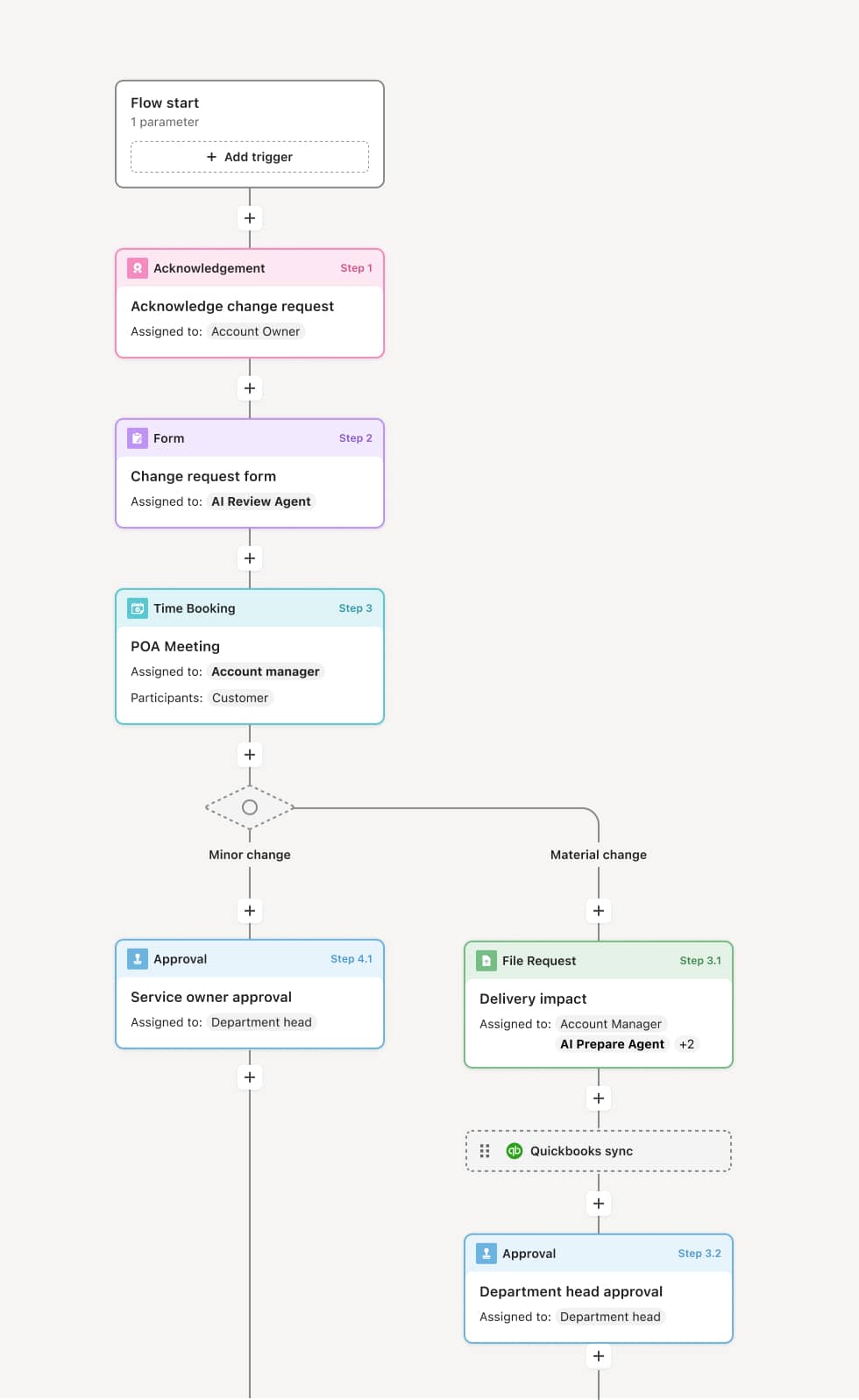
Your version of this process may vary based on roles, systems, data, and approval paths. Moxo’s flow builder can be configured with AI agents, conditional branching, dynamic data references, and sophisticated logic to match how your organization runs this workflow. The steps below illustrate one example.
Referral initiation
The process begins when the referring provider determines that the patient needs specialist care and creates a referral order specifying the specialist type, clinical indication, urgency, and relevant clinical information. An AI Agent can assist by checking whether the patient’s insurance requires prior authorization for the referral and pre-populating the authorization request with the necessary clinical data.
Insurance authorization (if required)
If the patient’s insurance plan requires prior authorization, the referral coordinator submits the authorization request with the clinical justification. The authorization is tracked until approved, denied, or additional information is requested. If denied, the coordinator works with the referring provider to appeal or modify the referral.
Referral transmission and specialist coordination
The referral, along with relevant clinical information (notes, labs, imaging, medications), is transmitted to the receiving specialist’s office. The specialist’s office confirms receipt and acceptance of the referral. An AI Agent may verify that all required clinical documents are included before transmission.
Patient notification and scheduling
The patient is notified that the referral has been processed and provided with the specialist’s information and scheduling instructions. If the organization coordinates scheduling, the appointment is arranged and the patient is notified of the date and any preparation requirements.
Specialist visit and findings
The patient attends the specialist appointment. The specialist documents findings, recommendations, and any treatment plan. The specialist’s report is transmitted back to the referring provider.
Referral loop closure
The referring provider reviews the specialist’s findings and integrates them into the patient’s care plan. The referral is marked as complete. If the patient did not schedule or attend the appointment, the referral coordinator follows up.
This process commonly relies on inputs such as the referral order, clinical notes, diagnostic results, insurance authorization, and specialist availability. It may be triggered by a provider order, a clinical assessment finding, or a care management recommendation. Connected systems often include EHR platforms like Epic or Cerner for referral orders and clinical data, referral management platforms, insurance authorization portals, and scheduling systems.
Key decision points include whether the patient’s insurance requires prior authorization for the referral, whether the clinical information submitted supports the referral and meets authorization requirements, whether the patient schedules and attends the specialist appointment, and whether the specialist’s findings are received and reviewed by the referring provider to close the referral loop.
Authorization delays when clinical information is insufficient and additional documentation must be gathered before the insurance plan approves the referral. Referral not transmitted to the specialist’s office, leaving the patient unscheduled and the referral in limbo. Patient does not schedule the appointment, resulting in an open referral and potential care gap. Specialist findings not returned to the referring provider, breaking the referral loop and leaving the care plan incomplete. Referral tracking gaps when referrals are not systematically monitored, allowing open referrals to accumulate without follow-up.
Orchestrates the referral lifecycle from initiation through specialist visit and loop closure across referring providers, coordinators, specialists, insurance, and the patient.
Routes authorization requests to insurance with the required clinical documentation and tracks approval status within the workflow.
AI Agents verify referral completeness at submission, checking that clinical data, authorization, and specialist information are included before the referral is transmitted.
Engages patients within the workflow for scheduling notification, appointment reminders, and follow-up if the appointment is not scheduled.
Connects to EHR and referral management platforms like Epic, Cerner, and scheduling systems so referral data, clinical information, and specialist reports flow seamlessly.
Tracks referrals to completion and alerts the care team when referral loops are not closed, preventing open referrals from falling through gaps.