Patient access director
Scheduling supervisor
Clinic operations manager
Provider office manager
Revenue cycle lead
Patient experience officer

This process is used when a patient needs to schedule, reschedule, or cancel an appointment for a clinical visit, procedure, diagnostic test, or consultation. It applies when the scheduling must consider provider availability, appointment type, insurance and referral requirements, patient preferences, and any preparation instructions. It is common when scheduling staff, providers, insurance teams, and patients must coordinate to book the right appointment at the right time. Ideal for physician practices, hospital outpatient departments, ambulatory surgery centers, imaging centers, and any healthcare organization managing patient appointment volumes.
The patient scheduling process typically involves scheduling staff who manage appointment requests and provider calendars, providers whose availability and scheduling rules determine appointment slots, insurance verification staff who confirm coverage and referral requirements, and patients who request, confirm, and attend appointments.
Optimized provider utilization because scheduling rules match appointment types to available slots based on duration, provider specialty, and preparation requirements. Reduced no-show rates through automated appointment confirmations, reminders, and easy rescheduling options. Fewer day-of-visit issues because insurance eligibility and referral requirements are verified at the time of scheduling. Better patient access by offering multiple scheduling channels and promptly filling cancellation slots. Accurate scheduling data supporting demand forecasting, capacity planning, and operational efficiency analysis.
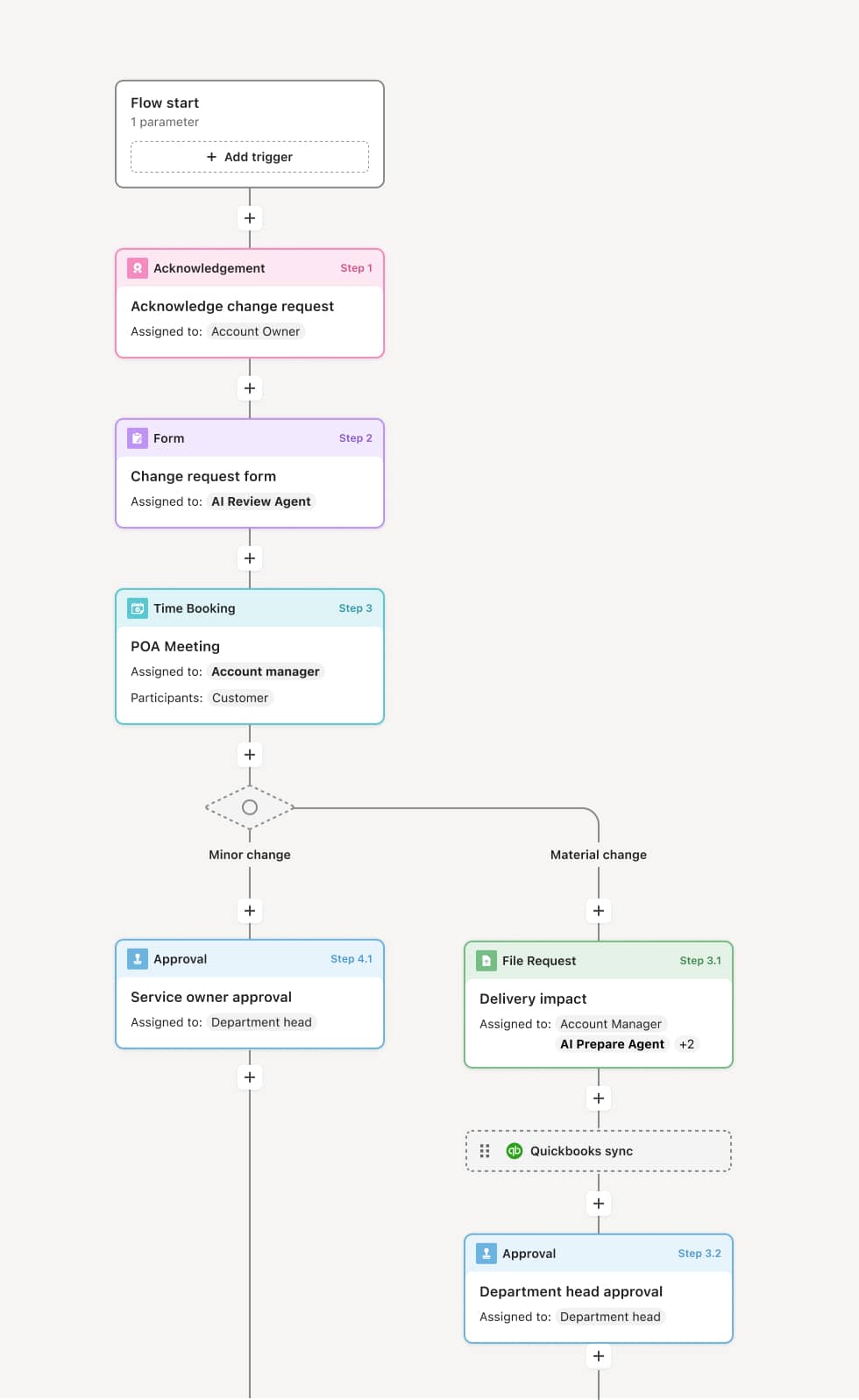
Your version of this process may vary based on roles, systems, data, and approval paths. Moxo’s flow builder can be configured with AI agents, conditional branching, dynamic data references, and sophisticated logic to match how your organization runs this workflow. The steps below illustrate one example.
Appointment request
The process begins when a patient requests an appointment — by phone, online portal, mobile app, or in-person at checkout after a visit. The scheduling staff or system captures the appointment type, preferred provider, timing preferences, and any urgency. An AI Agent can assist by matching the request to the right appointment type based on the patient’s stated need and the provider’s scheduling templates.
Provider matching and slot selection
The scheduling system identifies available slots based on the appointment type, provider availability, appointment duration rules, and the patient’s preferences. If the preferred provider is unavailable within the requested timeframe, alternative providers or dates are offered.
Insurance and referral verification
Before confirming the appointment, insurance eligibility is verified and any referral or prior authorization requirements are checked. If a referral is needed and not on file, the patient is notified and the referral process is initiated. If insurance verification reveals issues, the patient is contacted to resolve them before the visit. An AI Agent may check for common authorization requirements based on the appointment type and payer.
Appointment confirmation and patient preparation
The appointment is confirmed with the patient, including the date, time, location, provider, and any preparation instructions (fasting, medication holds, documents to bring). Automated confirmation and reminder messages are sent at defined intervals before the appointment.
Schedule changes and cancellation management
If the patient needs to reschedule or cancel, the change is processed and the freed slot is made available for waitlisted patients or same-day scheduling. No-show patterns are tracked for follow-up and operational analysis.
Pre-visit preparation and handoff
Before the appointment, the patient’s registration and intake information is reviewed and any outstanding pre-visit tasks are completed. The patient’s record is prepared for the provider.
This process commonly relies on inputs such as the appointment request, provider scheduling templates, insurance eligibility data, referral status, and patient contact information. It may be triggered by a patient call, an online request, a provider referral, or a post-visit scheduling action. Connected systems often include practice management and scheduling systems, EHR platforms like Epic or Cerner, insurance eligibility verification tools, and patient communication platforms for reminders and confirmations.
Key decision points include which provider and appointment type best match the patient’s request, whether insurance eligibility and referral requirements are met before the appointment is confirmed, how cancellation slots are filled to maximize schedule utilization, and whether no-show patterns warrant proactive follow-up or overbooking strategies.
Appointments booked without verifying insurance, resulting in day-of-visit coverage issues and potential financial surprises for the patient. Referral requirements not identified at scheduling, causing the visit to be canceled or the claim to be denied. Patient no-shows when reminders are not sent or the patient cannot easily reschedule. Scheduling template mismatches when the wrong appointment type or duration is booked for the patient’s clinical need. Cancellation slots not filled, reducing provider utilization and extending access wait times for other patients.
Orchestrates patient scheduling from request through confirmation, preparation, and follow-up across scheduling staff, providers, insurance, and patients in a single coordinated flow.
Matches appointment requests to provider availability and scheduling rules with AI Agents that identify the best slot based on appointment type, duration, and patient preferences.
Verifies insurance eligibility and referral requirements within the scheduling workflow so coverage issues are resolved before the appointment is confirmed.
Sends automated confirmations and reminders through the workflow and tracks patient responses, reducing no-show rates.
Connects to practice management, EHR, and eligibility systems like Epic, Cerner, and payer platforms so scheduling data flows into the patient record and billing systems.
Tracks scheduling patterns and no-show data as part of the operational record, supporting demand forecasting, capacity planning, and access improvement.