Pharmacy manager
Clinical pharmacist
Prescribing physician
Pharmacy technician
Patient access coordinator
Director of pharmacy operations

This process is used when a patient requests a refill of an existing prescription, and the request must be verified for remaining refills, prescription validity, clinical appropriateness, and insurance coverage before dispensing. It applies when the prescription has remaining refills that can be processed directly, when refills are exhausted and provider authorization is required, or when clinical factors such as drug interactions, lab monitoring requirements, or therapy changes necessitate provider review. It is common when pharmacy staff, prescribers, and patients must coordinate to ensure continuity of medication therapy. Ideal for retail pharmacies, hospital outpatient pharmacies, specialty pharmacies, and any pharmacy managing prescription refill volumes.
The pharmacy refill process typically involves pharmacy technicians who receive and verify the refill request, clinical pharmacists who review for drug interactions and clinical appropriateness, prescribing providers who authorize refills when refills are exhausted or clinical review is required, insurance or benefits staff who verify coverage, and patients who confirm pickup or delivery.
Faster refill processing by routing straightforward refills through automated verification while flagging exceptions for clinical or provider review. Uninterrupted medication access because refill requests are tracked from submission through dispensing, preventing patients from falling through gaps. Clinical safety verification at every refill, catching potential drug interactions, expired prescriptions, or monitoring requirements before dispensing. Reduced provider burden because only refills requiring authorization, clinical judgment, or therapy changes are routed to the prescriber. Clear refill documentation supporting pharmacy compliance, controlled substance tracking, and insurance billing accuracy.
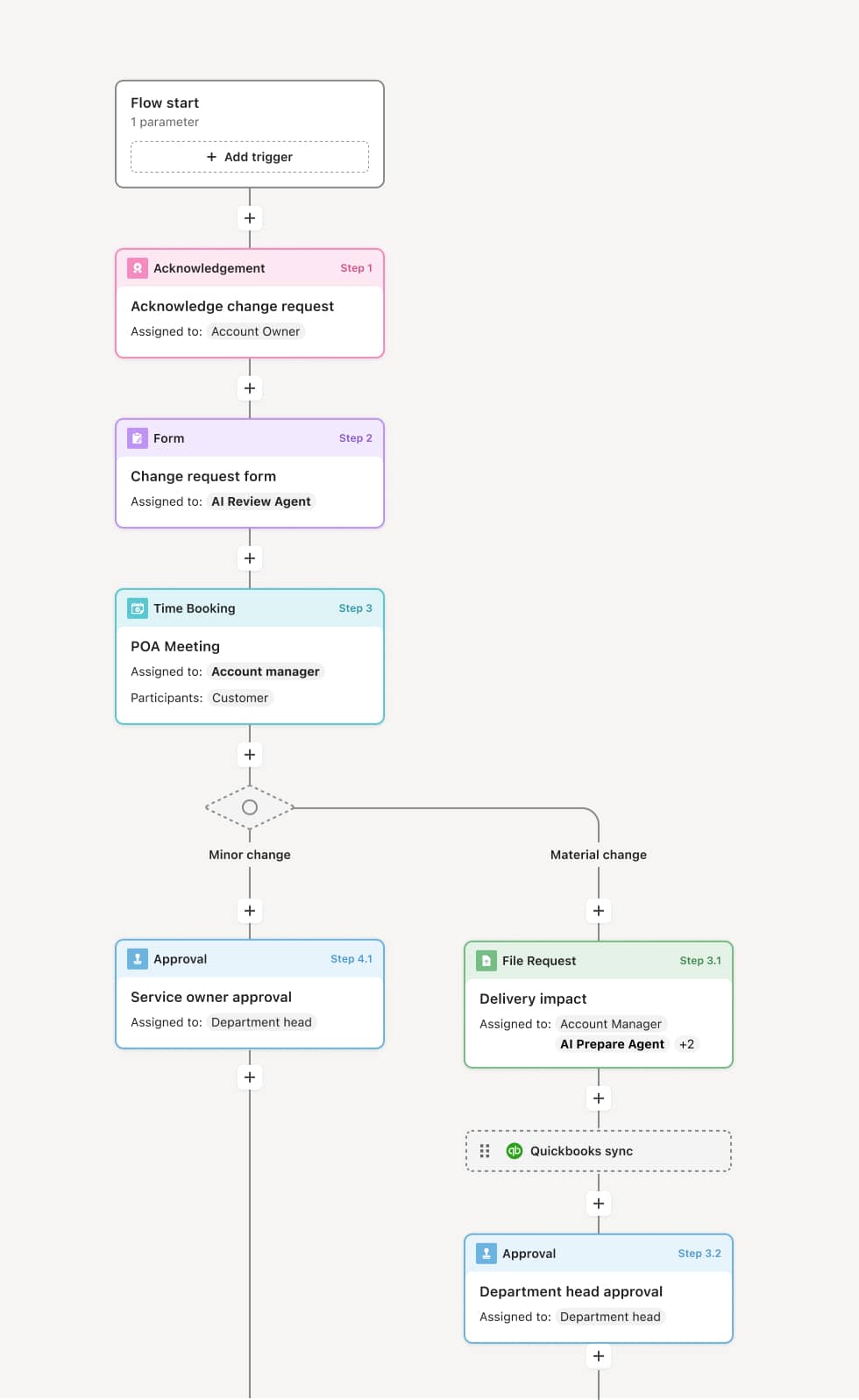
Your version of this process may vary based on roles, systems, data, and approval paths. Moxo’s flow builder can be configured with AI agents, conditional branching, dynamic data references, and sophisticated logic to match how your organization runs this workflow. The steps below illustrate one example.
Refill request receipt
The process begins when a patient submits a refill request — via phone, online portal, mobile app, or in-person visit. The pharmacy technician identifies the prescription by number, medication name, or patient record. An AI Agent can assist by matching the request to the correct prescription in the pharmacy system and pulling the current refill status.
Prescription verification
The pharmacy team verifies the prescription’s validity, including remaining refills, expiration date, and any prior authorization requirements. If refills remain and the prescription is current, the request proceeds to clinical review. If refills are exhausted or the prescription has expired, a provider authorization request is generated.
Clinical appropriateness review
A clinical pharmacist reviews the refill for potential concerns — drug-drug interactions with current medications, overdue lab monitoring (such as INR or renal function), therapy duration limits, or recent changes to the patient’s medication regimen. If clinical concerns are identified, the refill is held pending provider consultation. An AI Agent may cross-reference the refill against the patient’s current medication list and flag potential interactions.
Provider authorization (if required)
When the prescription requires renewal or clinical issues are identified, the provider is contacted for authorization. The request includes the medication, current dosage, patient’s refill history, and the specific reason for the authorization request. The provider approves, modifies, or discontinues the prescription.
Insurance verification and processing
The refill is processed through insurance adjudication. If coverage issues arise — such as prior authorization requirements, formulary restrictions, or copay concerns — the pharmacy coordinates with the insurance plan and notifies the patient of any cost implications.
Dispensing and patient notification
Once verified and processed, the medication is prepared for dispensing. The patient is notified that their refill is ready for pickup or delivery. Counseling is offered when required by regulation or clinical circumstances.
This process commonly relies on inputs such as the refill request, prescription records, patient medication history, insurance formulary data, and lab monitoring results. It may be triggered by a patient call, an online request, an automated refill reminder, or a prescription monitoring alert. Connected systems often include pharmacy management systems like QS/1 or PioneerRx, EHR platforms like Epic or Cerner for clinical records, and insurance adjudication systems for coverage verification.
Key decision points include whether the prescription has remaining refills and is still valid, whether the refill passes clinical appropriateness review or requires provider consultation, whether provider authorization is granted for expired or exhausted prescriptions, and whether insurance coverage is confirmed or alternative arrangements are needed.
Provider authorization requests not responded to promptly, causing medication gaps for the patient. Clinical monitoring requirements overlooked when refills are processed without checking whether labs or appointments are overdue. Insurance adjudication issues discovered at pickup, surprising the patient with cost changes or coverage denials. Prescription-patient mismatch when the wrong prescription is matched to the refill request due to similar medication names or patient records. Refill requests lost between channels when patients contact the pharmacy through multiple methods and the requests are not consolidated.
Orchestrates the refill lifecycle from patient request through dispensing across pharmacy staff, clinical pharmacists, prescribers, and the patient in a single coordinated flow.
Routes refills based on prescription status and clinical flags so routine refills proceed quickly while those requiring authorization or clinical review reach the right party.
AI Agents verify prescription validity and flag clinical concerns by cross-referencing the refill against the patient’s medication list, lab monitoring status, and prescription records.
Engages providers within the workflow for authorization requests with the full prescription context, reducing response time and back-and-forth.
Connects to pharmacy management and EHR systems like QS/1, PioneerRx, and Epic so prescription data, clinical records, and insurance adjudication are accessible in context.
Preserves the complete refill record for every processed request, supporting pharmacy compliance, controlled substance tracking, and patient medication history.