Communications director
Public relations manager
General counsel
Chief marketing officer
Investor relations manager
Executive sponsor

This process is used whenever an organization prepares to issue a formal public statement, whether related to a product launch, financial results, partnership announcement, executive change, crisis response, or regulatory disclosure. It is triggered when a draft press release is prepared by the communications team or when an external event requires an organizational response. Press release approval becomes especially important when the content involves financial data subject to disclosure rules, when legal or regulatory language must be precise, or when the announcement could materially affect stock price, partnerships, or public perception. This process is critical in publicly traded companies, regulated industries, and any organization where public statements carry legal or reputational consequences.
Press release approval typically involves the communications or PR team that drafts the release, subject matter experts who verify factual accuracy, legal counsel who reviews for compliance and risk, an investor relations team when financial data is involved, and an executive sponsor or C-suite leader who provides final authorization. External agencies may also participate in drafting or distribution coordination.
Accurate and legally sound public statements by ensuring every release is reviewed for factual correctness, regulatory compliance, and legal risk before distribution. Consistent brand voice and messaging through structured review that ensures alignment with organizational positioning and communications standards. Timely publication by routing drafts through parallel review paths where possible and eliminating ad hoc email-based coordination. Full authorization traceability with every draft, comment, revision, and approval decision recorded as part of the release’s lifecycle.
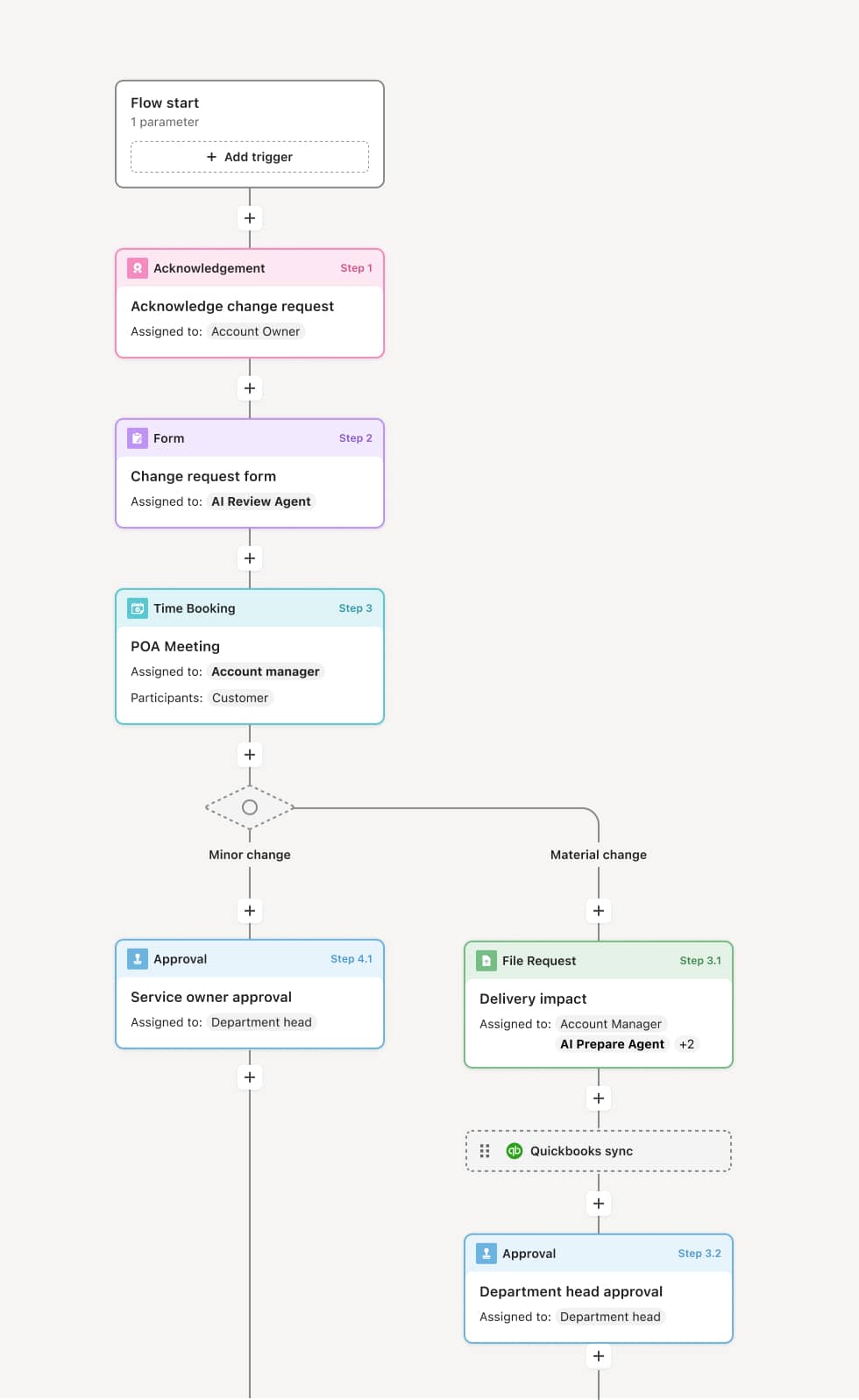
Your version of this process may vary based on roles, systems, data, and approval paths. Moxo’s flow builder can be configured with AI agents, conditional branching, dynamic data references, and sophisticated logic to match how your organization runs this workflow. The steps below illustrate one example.
Drafting and submission
The process begins when the communications team prepares a draft press release based on an upcoming announcement, event, or organizational development. The draft includes the headline, body copy, supporting quotes, boilerplate language, and any embargoed timing requirements. An AI Agent may assist by checking the draft against the organization’s style guide and boilerplate standards, flagging inconsistencies or missing elements before the draft enters review.
Subject matter and factual review
The draft is routed to subject matter experts who verify the accuracy of all claims, data points, product descriptions, and attributed quotes. If the release involves financial data, investor relations reviews the figures for accuracy and compliance with disclosure requirements. If it involves a partnership or customer reference, the relevant relationship owner confirms that the external party has approved their mention. Feedback is captured in context alongside the specific passages it addresses.
Legal and compliance review
After factual review, the draft moves to legal counsel for compliance assessment. Legal evaluates the release for regulatory risk, disclosure obligations, forward-looking statement requirements, and any language that could create contractual or liability exposure. If the release involves material non-public information, legal coordinates with investor relations on timing and disclosure protocols. If revisions are required, the draft is returned to the communications team with specific guidance.
Executive authorization
With factual and legal reviews complete, the release is routed to the executive sponsor or designated authority for final approval. The approver reviews the complete package, including the current draft, review history, legal sign-off, and any outstanding comments. If the release is tied to a market-sensitive announcement, the approver also confirms the distribution timing and embargo compliance. Authorization may be conditional on final edits being incorporated before distribution.
Distribution and closure
Once authorized, the press release is finalized and distributed through the organization’s wire service, media contacts, and owned channels. All stakeholders involved in the process are notified of publication. The complete record, including all drafts, review comments, legal sign-offs, and the authorization decision, is retained as a structured communications artifact for future reference and compliance.
This process commonly relies on inputs such as the draft press release, supporting data and quotes, brand and style guidelines, regulatory disclosure requirements, and embargo timing instructions. It may be triggered by a planned announcement, an external event requiring response, or a regulatory filing deadline. Systems such as a digital asset management platform, a wire distribution service like PR Newswire or Business Wire, or a communications workflow tool may be connected to support drafting, review, and distribution.
Key decision points include whether the draft is factually accurate and aligned with the organization’s messaging standards, whether legal identifies language that requires revision for compliance or risk mitigation, whether the release involves material information subject to disclosure timing rules, and whether the executive sponsor authorizes publication or requires additional revisions.
Factual inaccuracies reaching publication, when data points or claims are not verified by the appropriate subject matter expert before legal and executive review. Missed embargo windows, when review cycles take longer than planned and the release cannot be distributed within the required timing. Unapproved external references, when a partner, customer, or individual is named in the release without their confirmed consent. Version confusion across reviewers, when multiple drafts circulate simultaneously and feedback is applied to outdated versions.
Orchestrates the full press release lifecycle from drafting through factual review, legal compliance, executive authorization, and distribution coordination in a single process.
AI Agents check drafts against style guides and boilerplate standards flagging inconsistencies before the release reaches human reviewers.
Enables parallel factual and stakeholder reviews so subject matter experts and relationship owners can confirm accuracy simultaneously rather than waiting in sequence.
Extends existing communications and distribution platforms by connecting wire services, digital asset tools, and review workflows into a single coordinated process.
Captures a complete record of every draft, review comment, legal sign-off, and authorization so communications teams can trace any published release back to its full review history.