Sales manager
Revenue operations lead
Legal counsel
Finance director
Pricing analyst
Account executive

This process is used when a proposal to a client, prospect, or partner requires internal review and authorization before submission. It is triggered when proposals include non-standard pricing, custom terms, high-value commitments, or scope that deviates from pre-approved templates. Proposal approval is especially critical when multiple functions—sales, legal, finance, delivery—must align on what is being committed, and when the proposal’s value, risk profile, or strategic significance exceeds the originator’s authority to approve independently. It is common in professional services, technology, consulting, manufacturing, and financial services.
The account executive or sales representative originates the proposal and submits it for review. The sales manager or revenue operations lead evaluates it against pipeline and quota considerations. Legal reviews terms, conditions, and contractual risk. Finance or pricing teams validate margins, discounting, and revenue recognition implications. Executive leadership approves proposals that exceed defined value or risk thresholds.
Faster proposal turnaround by routing reviews in parallel where possible, so legal, finance, and leadership can evaluate simultaneously rather than sequentially. Reduced deal risk because pricing, terms, and scope are validated by the appropriate functions before any commitment is made to the client. Consistent proposal quality across the organization by applying standardized review criteria and approval thresholds to every proposal. Clearer deal visibility for leadership, who can see where proposals stand in the approval pipeline and intervene early when strategic deals require attention. Stronger client confidence because proposals are submitted on time with accurate, defensible terms that have been fully vetted internally.
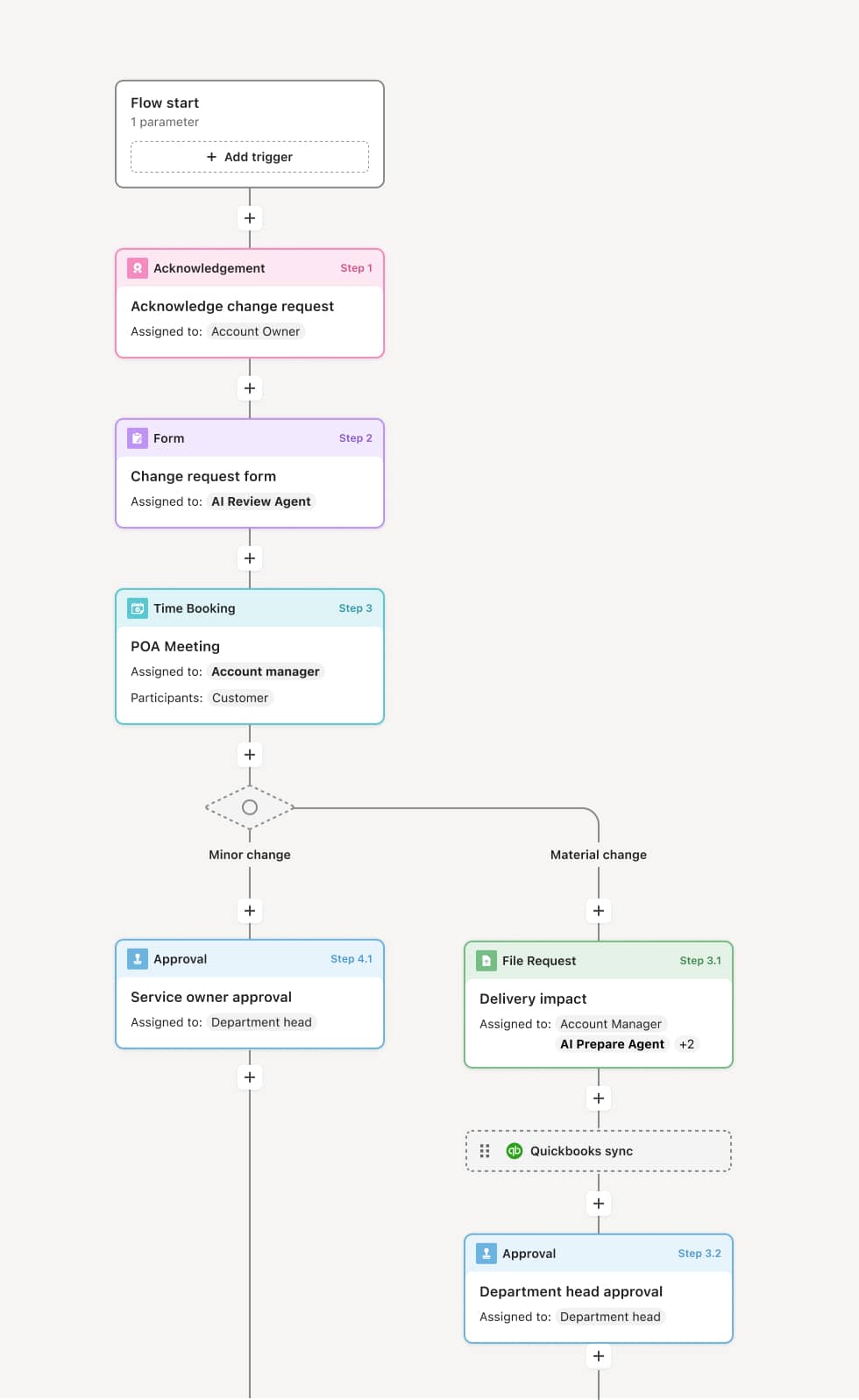
Your version of this process may vary based on roles, systems, data, and approval paths. Moxo’s flow builder can be configured with AI agents, conditional branching, dynamic data references, and sophisticated logic to match how your organization runs this workflow. The steps below illustrate one example.
Proposal drafting and submission
The process begins when an account executive or sales representative drafts a proposal and submits it for internal approval. The submission includes the proposal document, pricing breakdown, scope of work, deal context, and any non-standard terms or exceptions. An AI agent can assist by validating that all required fields are populated, checking the proposal against approved pricing templates, and flagging deviations that will require additional review.
Pricing and margin review
The finance or pricing team evaluates the proposal’s financial terms, including discount levels, margin impact, payment terms, and revenue recognition considerations. If pricing falls within pre-approved ranges, the review proceeds. If discounts exceed thresholds or terms create financial risk, the process branches to require additional justification from the sales team or escalation to a senior finance approver.
Legal and terms review
In parallel with or following the pricing review, the legal team assesses the proposal’s contractual terms, liability exposure, intellectual property provisions, and compliance with regulatory requirements. If standard terms are used, legal sign-off may be expedited. If custom terms or high-risk clauses are involved, legal may request modifications before the proposal can proceed. AI agents can surface relevant precedent terms from prior proposals to accelerate the review.
Executive or deal desk approval
For proposals that exceed defined value thresholds or involve strategic accounts, the proposal is routed to executive leadership or a deal desk for final authorization. The approver reviews the full package—including pricing validation, legal assessment, and deal context—before making a decision. If additional conditions are required, such as client reference checks or delivery capacity confirmation, the process accommodates those steps before final approval is granted.
Approval confirmation and proposal release
Once all required approvals are obtained, the proposal is finalized and released for submission to the client or prospect. The approved version is locked and a record of all reviews, decisions, and conditions is retained. The sales team is notified that the proposal is cleared for delivery, and any downstream actions—such as generating a formal contract or updating the CRM opportunity record—are triggered.
This process commonly relies on inputs such as proposal documents, pricing calculators, scope of work descriptions, client or prospect data, and deal history. It may be triggered by a proposal submission form, a CRM opportunity stage change, or a direct request from the sales team. Connected systems such as Salesforce, HubSpot, or Microsoft Dynamics provide deal and pipeline data, while CPQ tools, contract management platforms, or ERP systems like NetSuite supply pricing and financial context.
Key decision points include whether the proposal’s pricing and terms fall within pre-approved parameters, whether legal identifies any contractual risks that require modification, whether the deal value or risk level requires executive or deal desk approval, and whether any conditions imposed during review have been satisfied before the proposal is released. If any review results in a rejection or request for modification, the process routes back to the originator for revision.
Proposals submitted without complete deal context, causing reviewers to request additional information and delaying turnaround. Sequential review bottlenecks where legal, finance, and executive reviews happen one at a time instead of in parallel, extending the approval cycle unnecessarily. Discount authority unclear, leading to repeated escalations for pricing decisions that could be pre-authorized. Approved proposals not locked before client submission, creating version control issues and risk of unapproved terms being sent. CRM not updated upon approval, causing pipeline and forecast data to fall out of sync with actual deal status.
Orchestrates proposal reviews across sales, legal, finance, and executive approvers with the ability to run reviews in parallel, reducing turnaround time without sacrificing rigor.
AI agents assist with proposal validation by checking submissions against pricing templates, flagging missing fields, and surfacing relevant precedent terms to accelerate legal review.
Routes proposals to the appropriate approval authority based on deal value, discount level, and risk profile, ensuring that standard proposals move quickly while exceptions receive the attention they require.
Connects to CRM, CPQ, and contract management systems such as Salesforce, HubSpot, or NetSuite to pull deal context and push approval status back into the systems sales teams already use.
Maintains a complete record of every review, decision, and condition attached to each proposal, providing clear accountability and a defensible audit trail for deal governance.