Channel operations manager
Finance director
Sales operations lead
Partner manager
Accounts payable lead
Revenue operations analyst

This process is used when a rebate claim is submitted by a partner, distributor, customer, or internal team based on qualifying purchases, volume thresholds, or program milestones. It is triggered at the end of a rebate period, upon reaching a volume tier, or when a claim is submitted for validation against an active rebate agreement. Rebate approval is critical when multiple programs are active simultaneously, when accruals must be reconciled against actual performance, or when the rebate amount is significant enough to require finance and executive authorization. It is common in manufacturing, distribution, retail, technology, and any industry with channel incentive or volume-based pricing programs.
The partner or channel participant submits the rebate claim or it is generated automatically based on transaction data. Channel operations or sales operations validates eligibility against program terms and qualifying transactions. Finance reviews accrual balances, verifies the claimed amount, and confirms the rebate aligns with financial controls. The partner manager or account owner confirms the relationship context and any special terms. For high-value rebates or those exceeding accrual reserves, executive authorization may be required.
Accurate rebate settlements because every claim is validated against program terms, qualifying transactions, and accrual balances before payment is authorized. Faster rebate processing by routing claims through structured validation paths based on program type, amount, and partner tier, reducing cycle time from claim to settlement. Reduced financial exposure through accrual reconciliation built into the approval process, ensuring rebate payments do not exceed reserved amounts without explicit authorization. Stronger partner confidence because rebate claims are processed predictably and transparently, reinforcing trust in the incentive program. Clear program compliance with documented validation of every claim against eligibility criteria, supporting audit requirements and program governance.
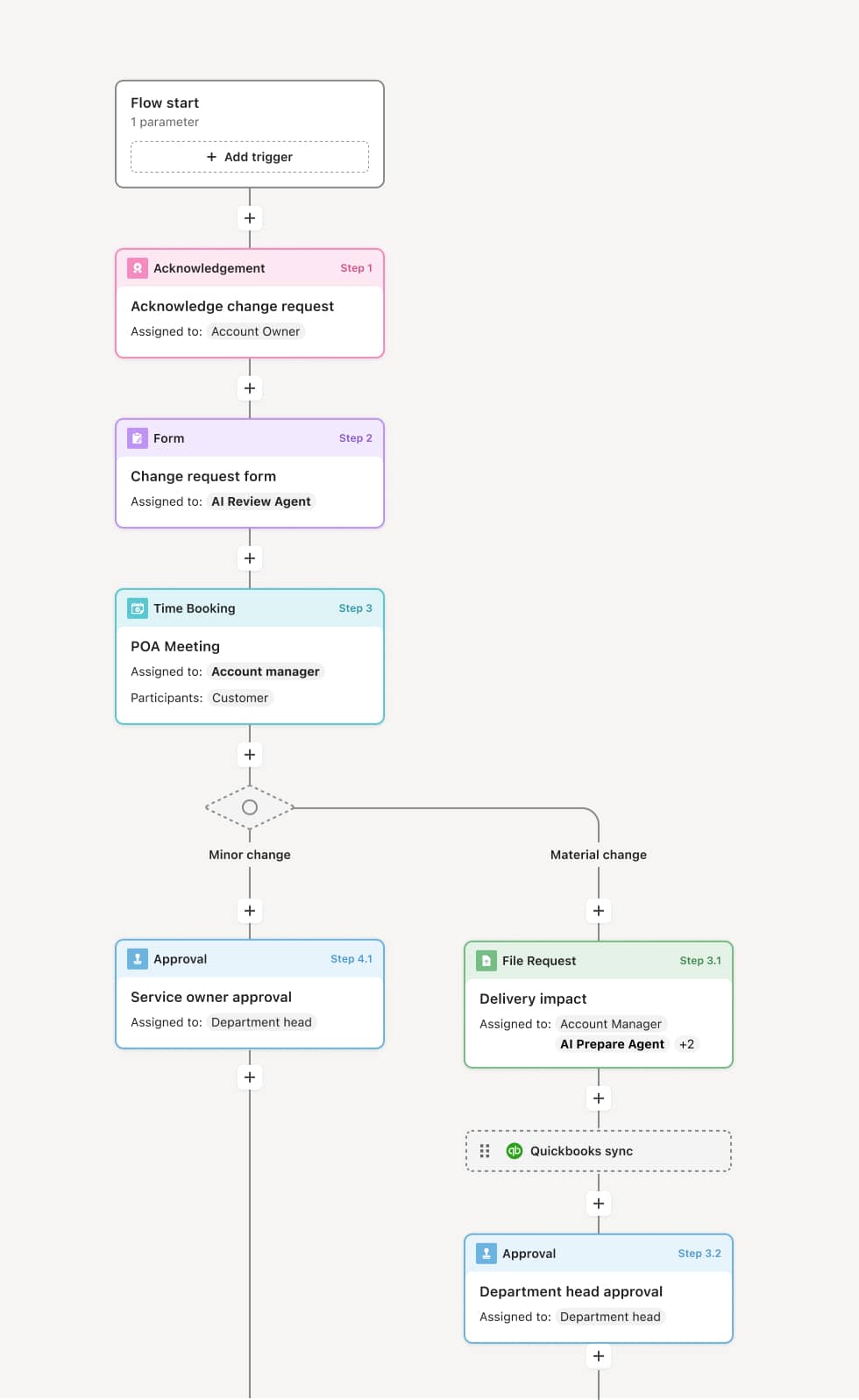
Your version of this process may vary based on roles, systems, data, and approval paths. Moxo’s flow builder can be configured with AI agents, conditional branching, dynamic data references, and sophisticated logic to match how your organization runs this workflow. The steps below illustrate one example.
Claim submission and eligibility check
The process begins when a rebate claim is submitted—either by a partner through a portal or form, or generated automatically based on transaction data from connected systems. The claim includes the program reference, qualifying period, claimed amount, and supporting transaction detail. An AI agent can assist by cross-referencing the claim against active rebate agreements, validating that the partner is enrolled in the applicable program, and flagging any discrepancies between claimed and recorded transaction volumes.
Transaction and volume validation
Channel operations or sales operations reviews the qualifying transactions that support the rebate claim. This includes verifying purchase volumes, confirming that transactions fall within the qualifying period, and checking that products or services meet program eligibility criteria. If the claimed amount does not match validated transaction data, the claim is returned to the partner with a detailed reconciliation showing the variance. AI agents can automate the transaction matching process by pulling data from connected ERP or distribution systems.
Accrual reconciliation and financial review
Finance reviews the validated claim against the rebate accrual balance to ensure that the payment or credit does not exceed reserved amounts. This step also confirms that the rebate is properly classified for financial reporting and that payment terms align with program agreements. If the claim exceeds accruals or creates a financial variance, the process branches to require additional justification, accrual adjustment, or escalation to a senior finance approver.
Partner relationship and program context review
The partner manager or account owner reviews the claim in the context of the overall partner relationship, including any special terms, performance history, or strategic considerations. This step ensures that any nuances—such as negotiated exceptions or program amendments—are considered before the rebate is finalized. If the partner has outstanding disputes or compliance issues, those are flagged for resolution.
Authorization and settlement
Once all validations are complete, the rebate is authorized by the appropriate approver based on the amount and program type. The settlement—whether a payment, credit memo, or account adjustment—is processed and communicated to the partner. The complete claim record—including eligibility validation, transaction matching, accrual reconciliation, and approval—is retained for program governance and audit purposes.
This process commonly relies on inputs such as rebate program agreements, partner enrollment records, qualifying transaction data, accrual balances, and claim submission forms. It may be triggered by a partner-submitted claim, an end-of-period accrual review, or an automated threshold notification from a connected system. Connected systems such as SAP, Oracle, or NetSuite provide transaction and accrual data, while CRM platforms like Salesforce supply partner and program context.
Key decision points include whether the partner and transactions meet program eligibility criteria, whether the claimed amount matches validated transaction volumes, whether the accrual balance supports the payment without adjustment, whether the partner relationship context introduces any special considerations, and whether the rebate amount requires escalation to executive approval. If any validation fails, the claim is returned to the partner or routed for additional review before settlement.
Claims validated against incomplete transaction data, resulting in overpayments or underpayments that require correction after settlement. Accrual balances not reconciled before approval, causing rebate payments to exceed reserved amounts and creating financial variances. Partner eligibility not confirmed at claim time, leading to payments for programs the partner was not enrolled in. Multiple claims for the same qualifying period processed independently, creating duplicate payment risk. Settlement communicated to the partner before all internal approvals are complete, undermining financial controls and creating expectation mismatches.
Orchestrates rebate validation across channel operations, finance, partner management, and executive approvers in a structured process that ensures every claim is reviewed by the right stakeholders with full context.
AI agents assist with eligibility and transaction validation by cross-referencing claims against active programs, matching qualifying transactions, and flagging discrepancies before the claim reaches human reviewers.
Routes claims to the appropriate approval authority based on rebate amount, program type, and accrual status, ensuring routine claims are settled quickly while high-value or exception claims receive additional scrutiny.
Connects to ERP, CRM, and distribution systems such as SAP, Oracle, Salesforce, or NetSuite to pull transaction data, accrual balances, and partner records directly into the validation workflow.
Maintains a complete record of every claim, validation, accrual reconciliation, and settlement decision, supporting rebate program governance, financial audit, and partner relationship management.