Compliance director
Internal audit manager
Operations lead
Risk manager
Legal counsel
Chief operating officer

This process is used when an organization must formally respond to audit findings, regulatory citations, risk assessment results, or incident investigations with defined corrective actions. It is triggered when an audit report identifies control deficiencies, when a regulatory examination produces findings requiring remediation, when a risk assessment reveals gaps that must be addressed, or when an incident investigation identifies root causes requiring systemic correction. Remediation approval is critical when multiple departments must contribute to the response, when timelines are mandated by regulators or auditors, and when the effectiveness of remediation must be verified. It is common in financial services, healthcare, energy, manufacturing, and any regulated industry.
The compliance or internal audit team identifies the findings and coordinates the remediation process. The responsible business unit or operations team develops the remediation plan and implements corrective actions. Legal reviews the remediation for regulatory sufficiency and risk exposure. Risk management assesses whether the proposed actions adequately address the identified gaps. Executive leadership authorizes the remediation plan, particularly when significant resources, policy changes, or organizational adjustments are required. External auditors or regulators may review and accept the remediation as part of the closure process.
Timely finding closure because remediation plans are developed, approved, and tracked against defined deadlines, preventing findings from aging without resolution. Effective root cause resolution because remediation plans are evaluated for adequacy before approval, not just speed of response. Clear ownership of corrective actions across every department involved, ensuring that accountability for implementation does not get lost across organizational boundaries. Reduced repeat findings because remediation effectiveness is verified before findings are closed, catching incomplete corrections before the next audit cycle. Stronger regulatory relationships because the organization demonstrates a disciplined, documented approach to addressing findings and implementing improvements.
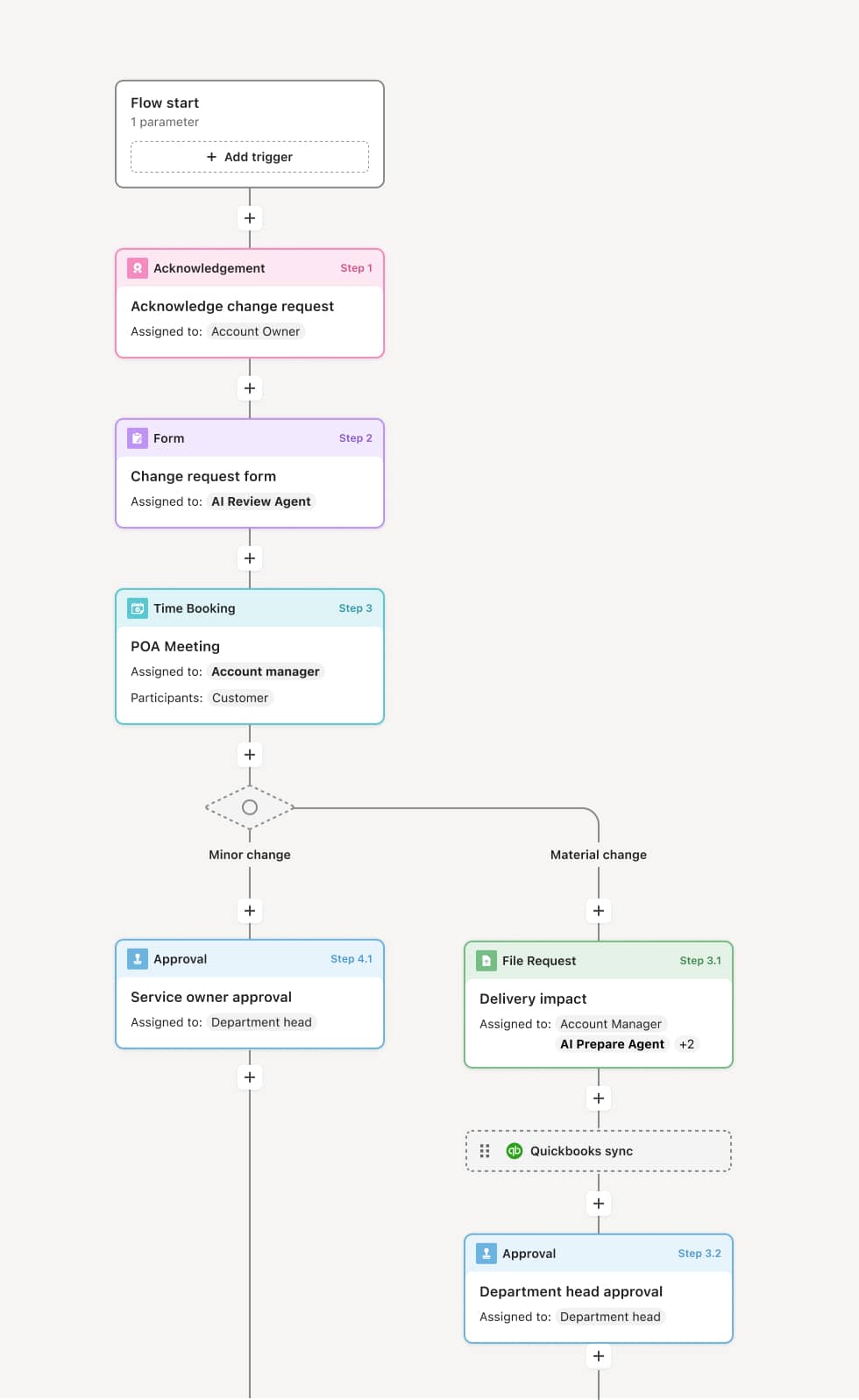
Your version of this process may vary based on roles, systems, data, and approval paths. Moxo’s flow builder can be configured with AI agents, conditional branching, dynamic data references, and sophisticated logic to match how your organization runs this workflow. The steps below illustrate one example.
Finding assignment and remediation plan development
The process begins when an audit finding, regulatory citation, or risk assessment result is formally assigned to the responsible business unit for remediation. The business unit develops a remediation plan that includes the root cause analysis, proposed corrective actions, responsible owners, implementation milestones, and target completion dates. An AI agent can assist by pulling the original finding details, relevant policy references, and any prior remediation history for similar issues to help the business unit develop a comprehensive response.
Plan review and adequacy assessment
The proposed remediation plan is reviewed by compliance, risk management, and legal to assess whether the corrective actions adequately address the finding. This includes evaluating whether the root cause has been properly identified, whether the proposed actions will prevent recurrence, whether the timeline is realistic, and whether the plan meets any regulatory or auditor expectations. If the plan is insufficient, it is returned to the business unit with specific feedback for revision. AI agents can compare the proposed plan against remediation standards and flag potential gaps.
Executive authorization
For remediation plans that require significant resources, policy changes, or organizational adjustments, executive leadership reviews and authorizes the plan. The executive approver evaluates the plan’s strategic implications, resource requirements, and alignment with organizational priorities. If the executive requires modifications—such as accelerated timelines or expanded scope—those are incorporated before the plan is finalized.
Implementation tracking and milestone monitoring
Once approved, the remediation actions are implemented by the assigned owners. Progress is tracked against the approved milestones and timelines. If implementation stalls, encounters obstacles, or requires adjustments, the process accommodates re-planning and re-approval. Stakeholders—including compliance, audit, and executive leadership—have visibility into implementation status throughout the process.
Effectiveness verification and finding closure
Before a finding is closed, the remediation is subject to effectiveness verification—confirming that the corrective actions have actually resolved the issue and that the control gap no longer exists. This may involve retesting, evidence review, or independent assessment by internal audit or compliance. If the verification confirms effectiveness, the finding is formally closed with a complete record. If the verification reveals that the remediation was insufficient, the process loops back to plan revision and re-implementation.
This process commonly relies on inputs such as audit reports, regulatory examination findings, risk assessment results, incident investigation reports, remediation plan templates, and compliance policy references. It may be triggered by an audit report issuance, a regulatory notification, a risk assessment completion, or an incident closure that identifies systemic issues. Connected systems such as AuditBoard, Workiva, ServiceNow GRC, or Archer provide finding and compliance data, while project management and ERP systems supply implementation tracking and resource information.
Key decision points include whether the proposed remediation plan adequately addresses the root cause and finding requirements, whether the plan requires executive authorization due to resource or policy implications, whether implementation progress is on track or requires re-planning, and whether effectiveness verification confirms that the corrective actions have resolved the identified gaps. If any stage reveals inadequacy, the process loops back to plan revision before the finding can be closed.
Remediation plans that address symptoms rather than root causes, leading to repeat findings in subsequent audit cycles. Unrealistic timelines that are approved but cannot be met, creating a false sense of progress and eroding credibility with auditors or regulators. Ownership of corrective actions unclear across departments, resulting in actions that are approved but never implemented. Effectiveness verification skipped or treated as a formality, allowing incomplete remediations to be closed prematurely. Finding status not communicated to regulators or auditors on time, damaging the organization’s compliance standing and relationship with oversight bodies.
Orchestrates remediation across compliance, operations, legal, risk, and executive teams so that every finding receives a coordinated response with clear ownership and defined timelines.
AI agents assist with remediation plan development by pulling original finding details, policy references, and prior remediation history to help business units develop comprehensive corrective action plans.
Tracks implementation milestones and deadlines within the workflow, providing real-time visibility to compliance, audit, and leadership without requiring manual status updates.
Connects to GRC, audit management, and project systems such as AuditBoard, ServiceNow, or Workiva to pull finding data and push remediation status back into the compliance system of record.
Enforces effectiveness verification before finding closure, ensuring that corrective actions are validated as effective rather than simply marked as complete, reducing repeat findings and strengthening the organization’s control environment.