HR business partner
Hiring manager
Department head
Compensation analyst
People operations lead
VP of human resources

This process is used when an employee is being considered for a promotion, lateral transfer, title change, or departmental move that requires formal review and authorization. It applies when the change affects compensation, reporting structure, headcount allocation, or budget, and when multiple stakeholders such as current and receiving managers, HR, and finance must coordinate on the decision. It is common in organizations with structured leveling frameworks, compensation bands, or workforce planning cycles. Ideal for mid-to-large enterprises across technology, professional services, financial services, healthcare, and manufacturing.
The role change approval process typically involves the requesting manager who initiates and justifies the role change, HR business partners who validate eligibility and policy compliance, compensation or people analytics teams who assess budget and pay band implications, the receiving manager or department head who confirms the position and reporting alignment, and senior leaders or HR directors who provide final authorization for changes above certain thresholds.
Faster internal mobility by routing role change requests to the right reviewers based on change type, eliminating delays from unclear approval paths. Consistent compensation decisions because every role change is validated against current pay bands, leveling frameworks, and budget allocations before approval. Clear transition accountability so the handoff between current and receiving teams is coordinated with defined responsibilities at each stage. Reduced compliance risk by ensuring role changes follow established policies for equity, eligibility, and documentation. Better employee experience through timely, transparent handling of internal career moves.
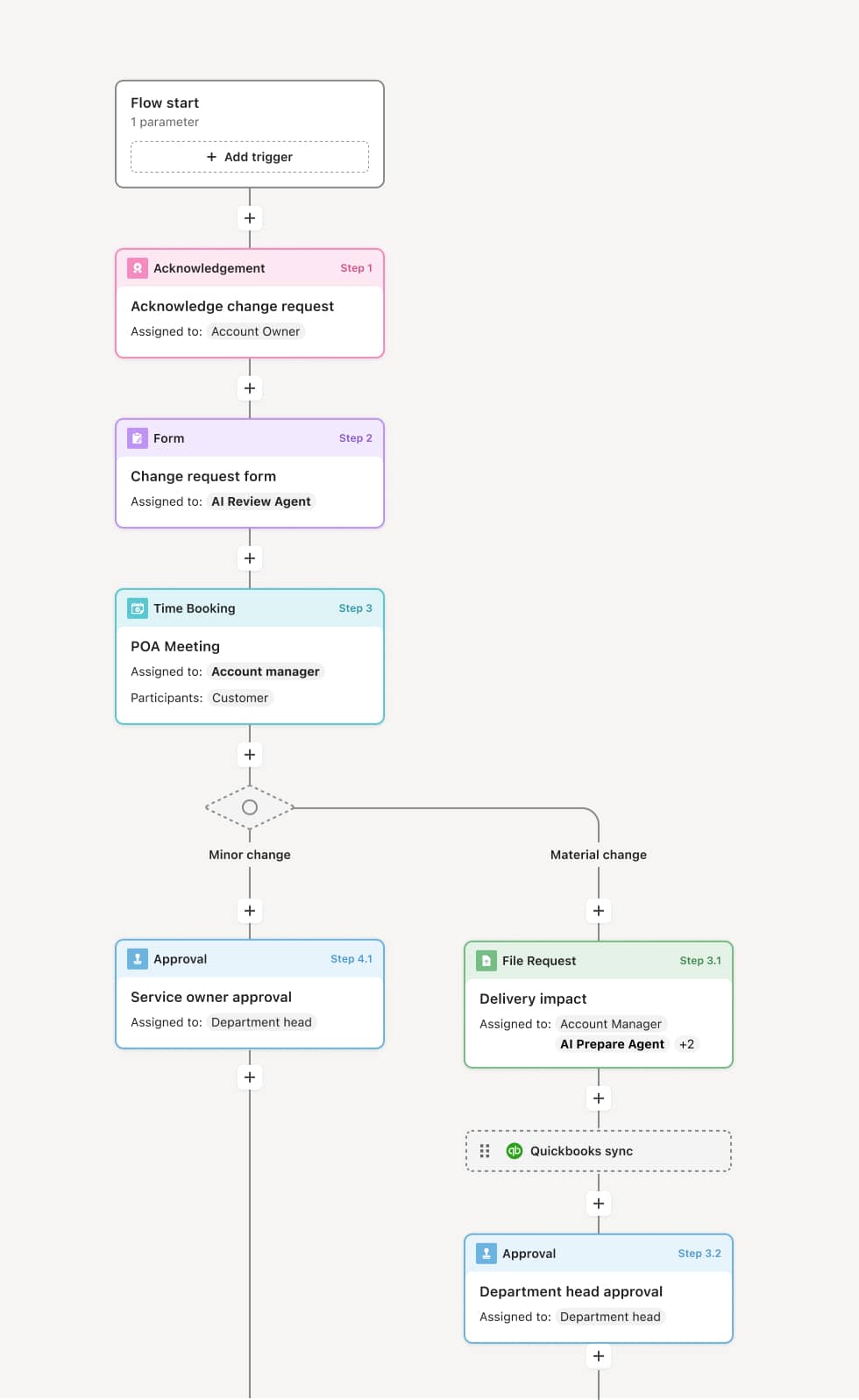
Your version of this process may vary based on roles, systems, data, and approval paths. Moxo’s flow builder can be configured with AI agents, conditional branching, dynamic data references, and sophisticated logic to match how your organization runs this workflow. The steps below illustrate one example.
Request initiation
The process begins when a manager submits a role change request, specifying the employee, current and proposed role, justification, and effective date. This may be triggered by a performance review cycle, a vacancy, or a workforce planning decision. An AI Agent can assist by pre-populating employee data, current compensation details, and role specifications from HR systems.
Eligibility and policy review
HR validates the request against organizational policies — tenure requirements, performance eligibility, leveling guidelines, and any active restrictions. If the request falls outside policy parameters, it is returned to the requesting manager with guidance on required adjustments.
Compensation and budget assessment
The compensation or people analytics team reviews the financial implications, including salary adjustments, pay band alignment, equity considerations, and headcount budget impact. If the role change involves a significant compensation increase or crosses budget thresholds, it is flagged for senior approval. An AI Agent may summarize the compensation comparison and budget impact for the approver.
Receiving team confirmation
If the role change involves a departmental transfer, the receiving manager or department head confirms the position availability, reporting structure, and onboarding plan. This review may proceed in parallel with the compensation assessment.
Approval decision
The designated approver — HR director, VP, or executive sponsor depending on the level of change — reviews the complete package including justification, policy compliance, compensation impact, and receiving team readiness. The approver authorizes, requests modifications, or declines the role change.
Execution and system update
Upon approval, HR processes the change in the HRIS, compensation adjustments are applied, and the employee, current manager, and receiving team are formally notified. All supporting documentation, approvals, and communications are preserved as part of the employee record.
This process commonly relies on inputs such as the role change request form, employee performance data, current compensation and leveling details, budget allocations, and organizational charts. It may be triggered by a manager submission, a performance review cycle, or a workforce planning event. Connected systems often include Workday or BambooHR for employee data, compensation management tools, and budget planning systems.
Key decision points include whether the employee meets eligibility and policy requirements for the proposed change, whether the compensation adjustment falls within approved pay bands and budget, whether a receiving department has confirmed position availability and reporting alignment, and whether the overall role change requires senior or executive authorization based on level or financial impact.
Requests submitted without current compensation or leveling data, requiring HR to gather information manually and delaying the review cycle. Misalignment between current and receiving managers on transition timing, responsibilities, or onboarding expectations. Budget surprises when compensation impact is assessed late in the process, forcing last-minute renegotiation. Inconsistent approval thresholds across departments, leading to unequal treatment of similar role changes and employee frustration.
Orchestrates role change review across requesting managers, HR, compensation teams, and executive approvers in a single structured flow.
Routes requests based on change type and level so promotions, transfers, and title changes follow the appropriate review path and approval authority.
AI Agents prepare role change packages by assembling employee data, compensation details, and budget context from connected HR systems automatically.
Supports parallel reviews so compensation assessment and receiving team confirmation happen concurrently, reducing total cycle time.
Integrates with HRIS platforms like Workday and BambooHR so employee records, organizational data, and compensation details flow into the process.
Maintains a complete record of every role change request, review, decision, and communication for HR compliance and governance.