Processes

Statement of work approval

Who this is for

Delivery director

Project manager

Sales operations lead

General counsel

Finance reviewer

VP of professional services

Statement of work approval is a structured process that ensures the scope, deliverables, pricing, timeline, and terms of an SOW are reviewed and authorized by the appropriate stakeholders before the organization commits to a client or partner engagement. In Moxo, this process is orchestrated across delivery, sales, legal, and finance teams to ensure that every SOW is operationally feasible, commercially sound, and properly authorized.
Statement of work approval

When this process is used

This process is used when a statement of work must be reviewed before execution, particularly when the engagement involves complex deliverables, custom pricing, resource commitments, or terms that deviate from standard templates. It applies when delivery, sales, legal, and finance teams must each validate different aspects of the SOW — feasibility, margin, risk, and contractual compliance — before the organization commits. It is common in consulting, professional services, technology, marketing agencies, and any project-based or services-driven business.

Roles involved

The SOW approval process typically involves the project manager or delivery lead who reviews scope feasibility and resource requirements, sales operations who validate pricing and commercial terms, legal who reviews liability, IP, and contract compliance provisions, finance who assesses margin and revenue recognition, and a senior leader or engagement sponsor who provides final authorization for commitments above defined thresholds.

Outcomes to expect

Reduced scope risk because every SOW is validated for feasibility, resource availability, and deliverable clarity before client commitment. Protected margins through structured pricing review that catches under-scoped work, unbounded effort, or non-standard discounts. Faster SOW turnaround by routing reviews to the right stakeholders in parallel rather than sequentially. Consistent contractual standards because legal reviews ensure SOW terms align with master agreements and organizational risk tolerance. Clear commitment accountability so every executed SOW has documented approvals from delivery, commercial, legal, and financial perspectives.

Example flow in Moxo's process designer

Step by step process

Your version of this process may vary based on roles, systems, data, and approval paths. Moxo’s flow builder can be configured with AI agents, conditional branching, dynamic data references, and sophisticated logic to match how your organization runs this workflow. The steps below illustrate one example.

SOW submission

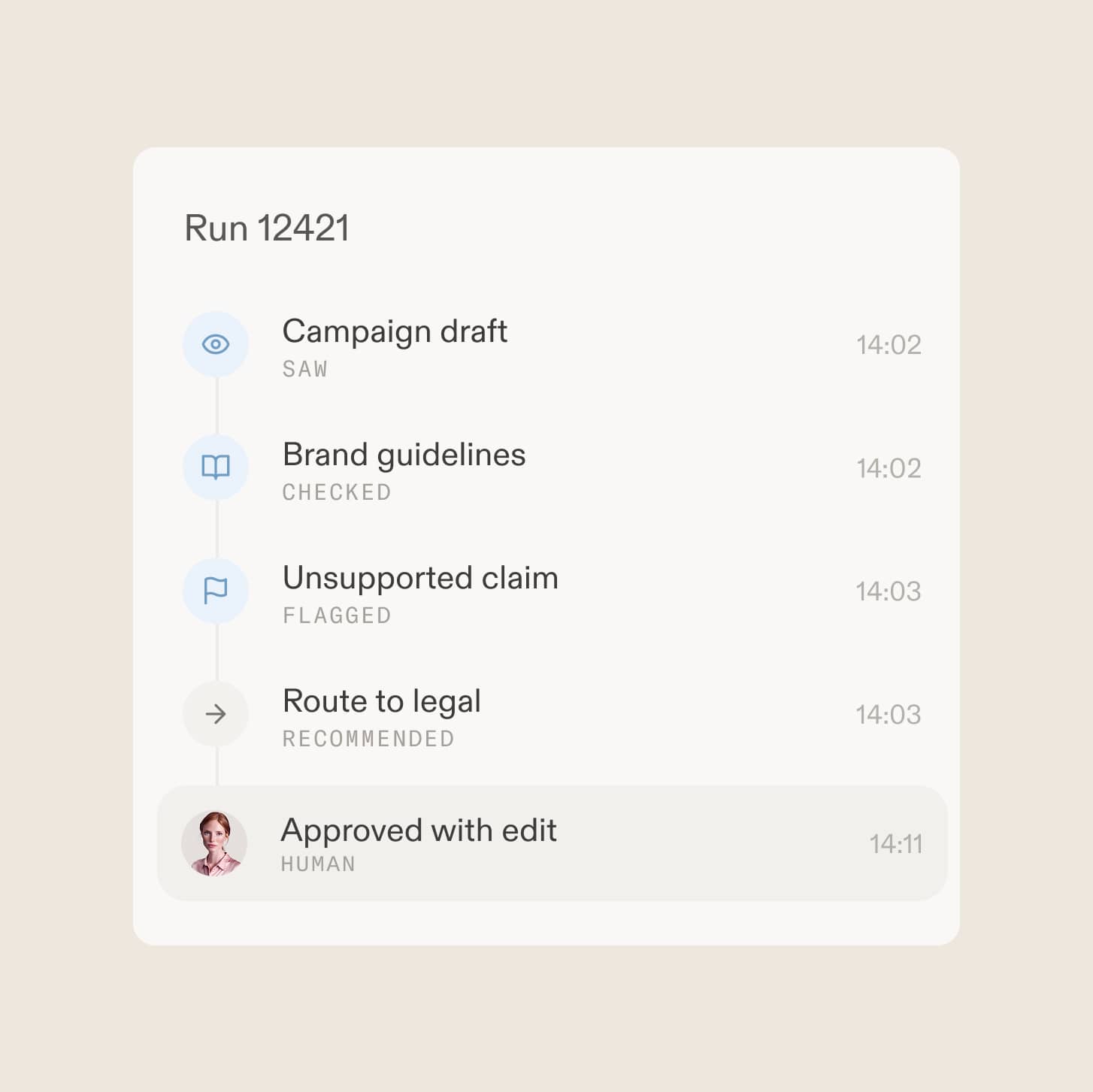
The process begins when a project manager, sales lead, or account executive submits a draft SOW for review. The submission includes the scope of work, deliverables, timeline, pricing, resource plan, and any non-standard terms. An AI Agent can assist by comparing the submitted SOW against the standard template and flagging deviations in scope, pricing, or terms that may require additional review.

Delivery feasibility review

The delivery team assesses whether the proposed scope, timeline, and resource plan are operationally feasible. If resource constraints, unrealistic timelines, or ambiguous deliverables are identified, the SOW is returned with specific feedback for revision. This review ensures the organization can deliver what is being committed.

Commercial and pricing review

Sales operations or the deal desk reviews pricing, discount levels, and commercial terms against current guidelines. If the SOW involves non-standard pricing, fixed-fee risk, or margin below threshold, it is flagged for escalation. An AI Agent may prepare a margin analysis comparing the proposed engagement against standard benchmarks.

Legal review

Legal reviews the SOW for liability, intellectual property, termination, confidentiality, and compliance provisions. If terms deviate from the master agreement or introduce unacceptable risk, legal provides specific redline recommendations. This review may proceed in parallel with the commercial and delivery reviews.

Financial review

Finance assesses revenue recognition, payment terms, and overall financial impact. For large or complex engagements, finance may model different scenarios based on delivery assumptions.

Approval decision

The SOW is routed to the appropriate approver based on engagement value and risk. The approver reviews the complete package — feasibility confirmation, commercial validation, legal assessment, and financial review — and authorizes, requests revisions, or declines. Upon approval, the SOW is cleared for client execution.

Client execution and record-keeping

The approved SOW is presented to the client for review and signature. E-signatures are collected, and the executed SOW is recorded alongside all internal review documentation and approval records.

Inputs + systems

This process commonly relies on inputs such as the draft SOW document, standard templates, pricing guidelines, resource availability data, and master agreement terms. It may be triggered by a sales handoff, a client request, or a project kickoff requirement. Connected systems often include CRM tools like Salesforce for deal context, project management platforms for resource planning, and contract management systems for template and agreement tracking.

Key decision points

Key decision points include whether the proposed scope and timeline are operationally feasible given current resource capacity, whether pricing and commercial terms meet margin and policy requirements, whether legal terms adequately protect the organization and align with the master agreement, and whether the overall engagement risk warrants senior approval or additional conditions.

Common failure points

SOWs submitted with ambiguous scope definitions, leading to disputes during delivery over what was included in the commitment. Pricing not validated against delivery effort, resulting in engagements that consume more resources than projected and erode margin. Legal review delays when non-standard terms require extensive negotiation that was not anticipated in the deal timeline. Sequential review cycles that extend the approval timeline beyond the client’s patience, risking the engagement. Executed SOWs that differ from the approved version when last-minute changes are made without returning through the review process.

How Moxo supports this workflow

Orchestrates SOW review across delivery, sales operations, legal, and finance in a single flow that keeps the engagement timeline on track.

Routes SOWs based on engagement value and complexity so standard engagements are approved quickly while complex or high-risk SOWs receive appropriate scrutiny.

AI Agents flag SOW deviations from standard templates, pricing guidelines, and master agreement terms at submission, reducing late-stage surprises.

Supports parallel delivery, commercial, and legal reviews so all assessment tracks proceed concurrently rather than sequentially.

Connects to CRM and project management systems like Salesforce and resource planning tools so deal context and capacity data are available during review.

Preserves the complete SOW record including every review comment, approval decision, and executed version for governance, delivery reference, and future engagements.

Moxo's action taking experience