Sales forecasting accuracy: How to measure and improve it

Describe your business process. Moxo builds it.
Thank you! Your submission has been received!
Oops! Something went wrong while submitting the form.

Sales forecasting accuracy is the measure of how closely your predicted revenue matches actual closed revenue over a given period.

The formula is easy. The hard part is that the process feeding the formula (reps submitting inputs, managers validating, RevOps reconciling, Finance acting on the number) is almost always improvised.

Gartner research found that median forecast accuracy sits between 70% and 79%, and only 7% of sales teams achieve 90% or higher. The gap is the coordination between teams that generate, validate, and act on the forecast.

The article discusses how to measure sales forecasting accuracy using formulas like MAPE and weighted accuracy, and argues that inaccuracy is primarily a "coordination problem," not a data problem. It recommends improving accuracy by standardizing the forecasting process, assigning clear owners and deadlines, and ensuring stage changes are triggered by verifiable actions rather than subjective judgments.

Key takeaways

Sales forecasting accuracy is a coordination problem, not just a data problem. Forecasts miss because the process collecting inputs from reps, validating them through RevOps, and reconciling them with Finance is undesigned. Fixing the process fixes the number.

Best-in-class teams don't forecast better because they have better tools. They forecast better because they've designed the process around forecasting: who submits, who validates, who reconciles, and by when. A structured cadence with a $200/month tool will outperform a $75K platform running on Sunday-night CRM updates.

What is sales forecasting accuracy?

Sales forecasting accuracy measures the gap between what your revenue team predicted and what actually closed.

The forecast doesn't stay inside RevOps. It becomes the basis for hiring plans, marketing budgets, inventory commitments, and board guidance. When the forecast is off by 15%, every downstream decision built on that number is off by at least 15%.

How to measure sales forecasting accuracy

Three formulas cover the territory, and each diagnoses a different problem.

MAPE (mean absolute percentage error)

MAPE calculates the average percentage deviation between forecast and actual results. Formula: MAPE = (1/n) × Σ |Actual − Forecast| / Actual × 100. If you forecasted $500K and closed $420K, the error is 19%. MAPE tells you how far off you are on average, but not which direction.

Weighted forecast accuracy

Weighted accuracy adjusts for deal or segment size, so a $2M enterprise miss doesn't get averaged away by 50 accurate SMB deals. This is the formula RevOps should use when reporting to Finance.

With Moxo, structured data collection across segments ensures inputs arrive validated and on time, connected to the same sales and operations planning implementation cadence.

Forecast bias

Bias measures whether you consistently over-forecast or under-forecast. A team with 80% MAPE accuracy and persistent 12% positive bias isn't just inaccurate, they're systematically optimistic. Bias often traces to reps who sandbag, managers who inflate, or a cadence that rewards confidence over accuracy.

Formula What it measures Best used by Limitation
MAPE Average percentage error RevOps for trending Hides directional bias
Weighted accuracy Revenue-impact-adjusted error Finance for planning Requires clean segmentation
Forecast bias Directional consistency RevOps for coaching Doesn't show magnitude

Why sales forecasts miss (and why it's not a data problem)

Forecasts miss because the process around the forecast is improvised, not because the model is wrong.

CRM data is unreliable because updating it is disconnected from deal execution. Reps update Salesforce when told to, not when deals move. Stage fields say "Negotiation" for deals that haven't had a conversation in three weeks. The forecast ingests this faithfully and produces a fiction. Automating sales processes so CRM updates happen as a byproduct of execution is the first fix.

Pipeline stage definitions are inconsistent because there's no shared standard. One AE marks "Demo Completed" after a 15-minute screen share. Another waits until the champion confirms budget. Same stage, completely different deal maturity. With Moxo, stage transitions tie to structured workflow actions (a completed form, an uploaded document, an approval) so movement reflects execution, not self-reporting. Dynamic forms with 25+ field types capture the verifiable data that confirms a stage change actually happened.

The handoff between Sales and Finance is where forecasts lose connection to reality. The number passes through the VP of Sales, RevOps, and Finance, each applying their own adjustment. By the time it reaches the board, it's been through four layers of opinion and zero layers of verification.  

How to improve sales forecasting accuracy

Improving accuracy requires designing the process around the forecast, not refining the model.

Standardize what triggers a stage change. Replace subjective judgment with verifiable actions. "Discovery Complete" means the BANT form is submitted, not that the rep feels good about the call. A process orchestration platform makes event-based triggers enforceable without admin overhead.

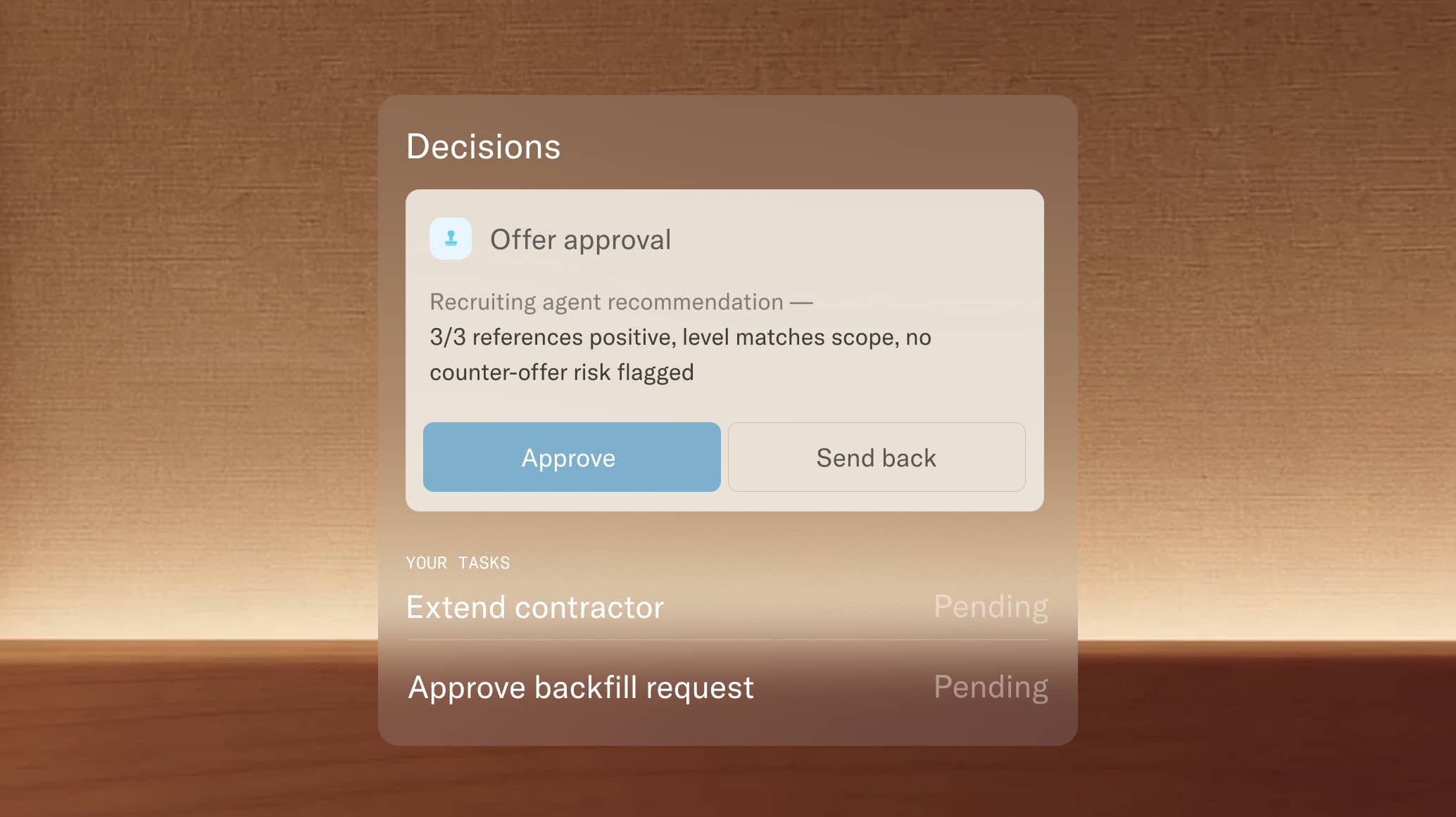
Build a forecasting cadence with assigned owners and SLAs. Reps submit Tuesday. Managers validate Wednesday. RevOps reconciles Thursday. Finance reviews Friday. Each step has a named owner, a deadline, and a defined output. With Moxo, this cadence runs as a structured workflow.

Proactive nudges with idle detection fire when submissions are late. Guided step phases (Preparing, Executing, Reviewing) show each participant exactly what's needed and what's next. Escalation paths route to management automatically when SLAs slip.

Measure accuracy at the level where it drives action. Company-level accuracy is meaningless for coaching (errors cancel out). Measure at the rep, segment, and deal-size tier to find patterns. Connect this to your broader business process optimization efforts.

How to build a sales forecasting workflow on Moxo

Moxo structures the forecasting cadence most RevOps teams run through Slack reminders and spreadsheet consolidation.

Step 1: Generate your workflow from a prompt. Describe your cadence in the prompt box. Moxo's AI Flow Assistant generates a structured workflow with roles, deadlines, and milestones. Or start from one of 94 gallery templates and customize.

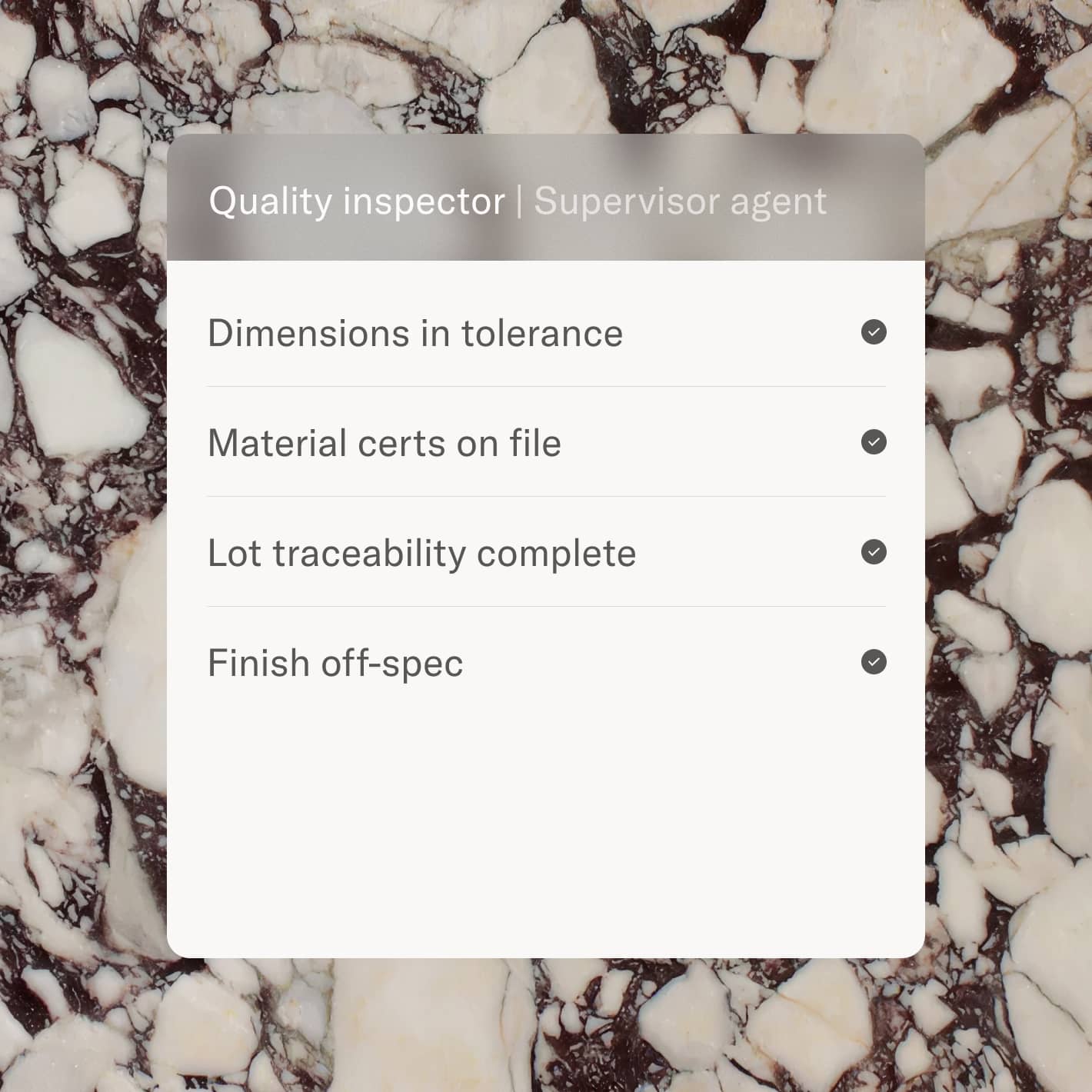
Step 2: Assign stakeholders and configure AI agents. Each participant owns a defined step. The AI Intake Validator pre-fills known deal data from your CRM so reps update what changed, not everything. The AI Compliance Screener validates that submitted forecasts include required fields (close date rationale, next steps, deal risk flag) before they reach the manager. Dynamic forms with 25+ field types capture structured forecast data at each submission.

Step 3: Test one cycle. Run end-to-end. Validate handoffs and confirm Finance receives a consolidated, validated number by the target date. Every action is logged with compliance-grade audit trails across 65+ action types.

Step 4: Bring cross-functional stakeholders in without friction. Finance leadership and board-facing stakeholders review through magic-link access, no account setup required. Guided step phases show exactly what's pending review.

Step 5: Monitor and optimize. Process Pulse reporting (10 report types) shows where the cadence stalls: which reps submit late, which validation steps create bottlenecks, and how accuracy trends over time. Conversational reports let you ask "which segment had the highest forecast variance last quarter?" and get data, not a dashboard to interpret. Flow Briefings generate AI-written status summaries so leadership sees cadence health at a glance.

Get started for free and build your forecasting cadence on Moxo today.

Master your forecast with orchestration, not just estimation

Sales forecasting accuracy isn't a data problem—it's an operational one. When your process for collecting, validating, and reconciling revenue inputs remains improvised, your forecasts will inevitably miss the mark. The difference between industry leaders and the rest isn't a better model; it's a better design.

Moxo transforms your forecasting from a chaotic spreadsheet exercise into a structured, automated workflow. By orchestrating the handoffs between Sales, RevOps, and Finance, Moxo ensures that your forecast reflects real deal execution rather than guesswork. Give your team the transparency and accountability they need to hit your number with confidence.

Get started for free and orchestrate your forecasting cadence on Moxo today.

FAQ

What is a good sales forecast accuracy rate?

Best-in-class B2B organizations target 90-95%. Hitting 85% is considered strong. Gartner's research shows the median sits between 70% and 79%. The benchmark that matters most is your own quarter-over-quarter trend.

Why is my CRM data not improving my forecast accuracy?

CRM data reflects what reps enter, not what's happening in deals. If updating the CRM is a separate admin task rather than part of the workflow, data will always lag reality. Tie updates to verifiable deal events so pipeline data reflects execution, not compliance.

What is the difference between forecast accuracy and forecast bias?

Accuracy (MAPE) measures how far off predictions are on average. Bias measures whether you consistently miss in the same direction. A team can have reasonable accuracy but significant bias, meaning errors are structural and coachable, not random.

How do I start improving forecast accuracy this quarter?

Define verifiable criteria for your top three pipeline stages. Replace subjective labels with observable events ("discovery form submitted," "proposal delivered through tracked channel"). This single fix cleans the inputs feeding your model and gives RevOps data they can validate.

Describe your business process. Moxo builds it.
Thank you! Your submission has been received!
Oops! Something went wrong while submitting the form.