Quote to cash is the end-to-end business process that starts when a customer requests a price and ends when payment is collected and recognized as revenue.
It covers configuration, pricing, quoting, contract negotiation, order management, fulfillment, invoicing, and collections. When the quote to cash process works, revenue flows predictably. When it doesn't, deals stall in the gap between teams that were never designed to talk to each other.
McKinsey research across nearly 500 B2B subscription companies found that those with optimized quote-to-cash practices grew annual recurring revenue at four times the rate of their peers. That's not a marginal improvement. That's a structural advantage hiding inside a process most companies treat as someone else's problem.
The article details the eight interconnected steps of the Q2C process, explains why failures happen at the handoffs between teams, and suggests using process orchestration platforms like Moxo to fix these coordination gaps.
Key takeaways
Quote to cash spans far more than quoting software. The Q2C process covers eight interconnected steps from configuration through revenue recognition, touching Sales, Legal, Finance, and Fulfillment. Understanding the full cycle is the first step toward fixing what breaks inside it.
Most Q2C failures happen between steps, not within them. The real bottlenecks are coordination gaps: manual re-entry between systems, approval requests stuck in email, and status updates that live in someone's head. These handoff failures compound into longer cycle times and revenue leakage.
Fixing Q2C requires designing the handoffs, not just automating the steps. CPQ and ERP tools handle individual steps well, but they don't orchestrate the transitions between teams. The companies pulling ahead are the ones treating Q2C as a coordination problem.
What is the quote to cash process?
The quote to cash process (Q2C) is the complete revenue cycle from the moment a buyer asks "how much?" to the moment cash hits your account.
Every team that touches revenue (Sales, Legal, Finance, Fulfillment) plays a role somewhere in this cycle, and most organizations have each step handled by a different tool. CPQ handles configuration. CRM tracks the deal. CLM manages the contract. ERP processes the order. The tools work. The problem is that nobody designed what happens between them.
You've probably lived this version: a deal closes in Salesforce, but the order details get manually re-entered into the ERP because the two systems don't sync cleanly. Legal approved the contract terms, but Finance never saw the non-standard discount. The invoice goes out with the wrong pricing, and now someone from RevOps is spending their Thursday afternoon on a reconciliation call instead of, you know, doing RevOps.
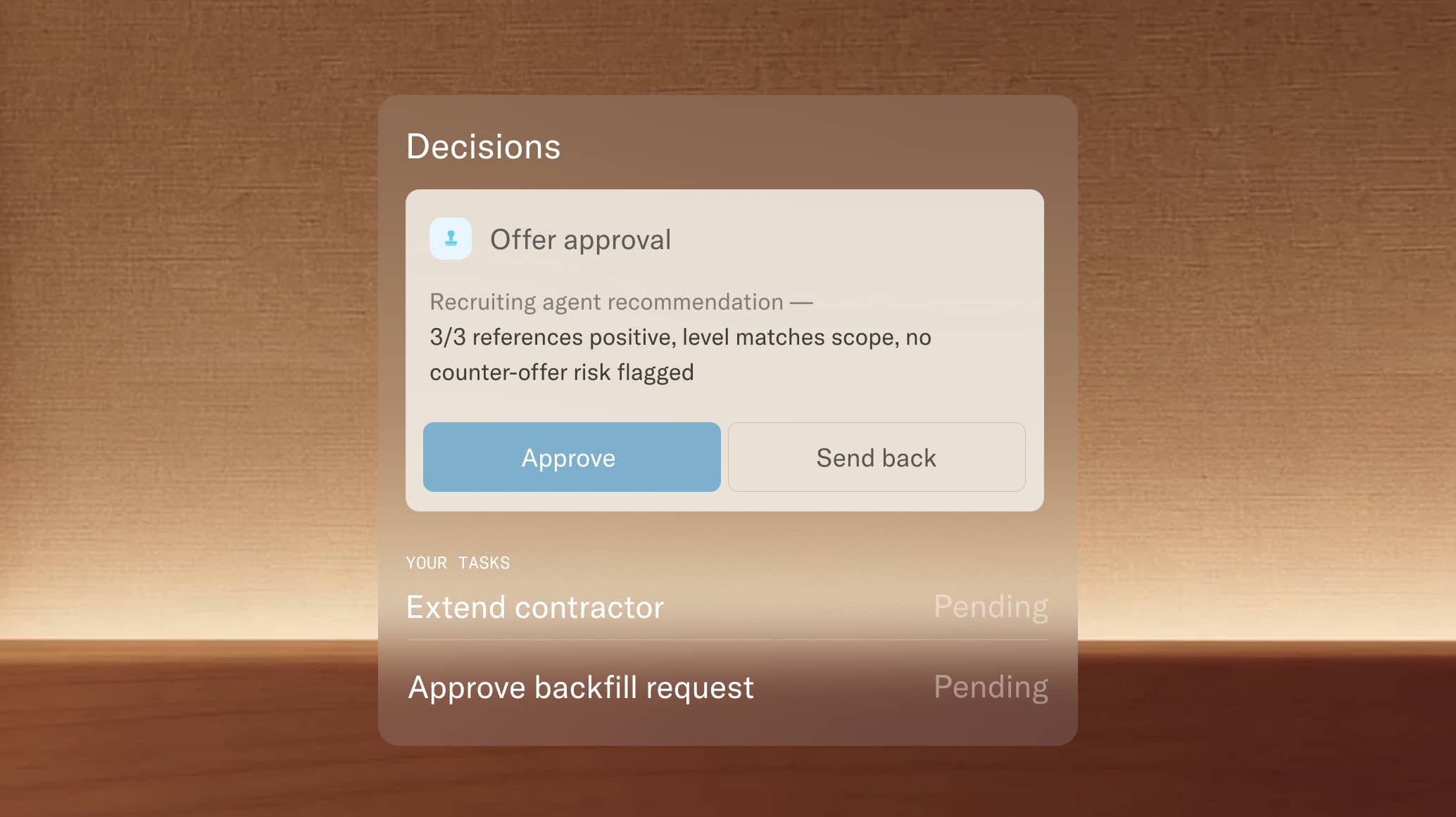
With Moxo, the Q2C cycle gets a coordination layer that connects these steps into a structured workflow. AI agents handle the validation, routing, and follow-up between teams while humans make the judgment calls that actually matter.
Quote to cash vs order to cash: what's the difference?
Quote to cash covers the full revenue cycle from pricing through payment, while order to cash starts after the deal is already closed.
Q2C includes O2C. Order to cash is the back half of the revenue cycle. Quote to cash adds the front half, where most coordination complexity lives because that's where most teams are trying to agree on terms before work starts.
For a deeper dive, check out the order-to-cash process mapping guide and the O2C vs P2P comparison.
8 steps in the quote to cash process
The Q2C process follows eight steps, each owned by a different team, each creating an opportunity for the handoff to go sideways.
Step 1: Configuration. The sales rep selects products, services, and options that match the buyer's needs. With hundreds of SKUs and bundling rules, misconfiguration cascades into wrong quotes and fulfillment errors. With Moxo, configuration decisions trigger a structured workflow that routes selections to a technical reviewer before pricing begins.
Step 2: Pricing. Configured products get priced according to rate cards, discounts, and negotiated terms. The problem is that pricing logic lives in the CPQ, the ERP, a spreadsheet the CFO maintains, and the rep's memory of what they promised on a call last Tuesday. With Moxo, pricing exceptions route automatically to Finance with full deal context attached.
Step 3: Quoting. A formal quote is generated and sent to the buyer. This sounds simple until the quote needs approval from Sales leadership, Legal, and Finance simultaneously. That's three approval chains for one document. With Moxo, multi-party approvals route automatically through structured workflows, notifying each stakeholder only when their decision is needed.
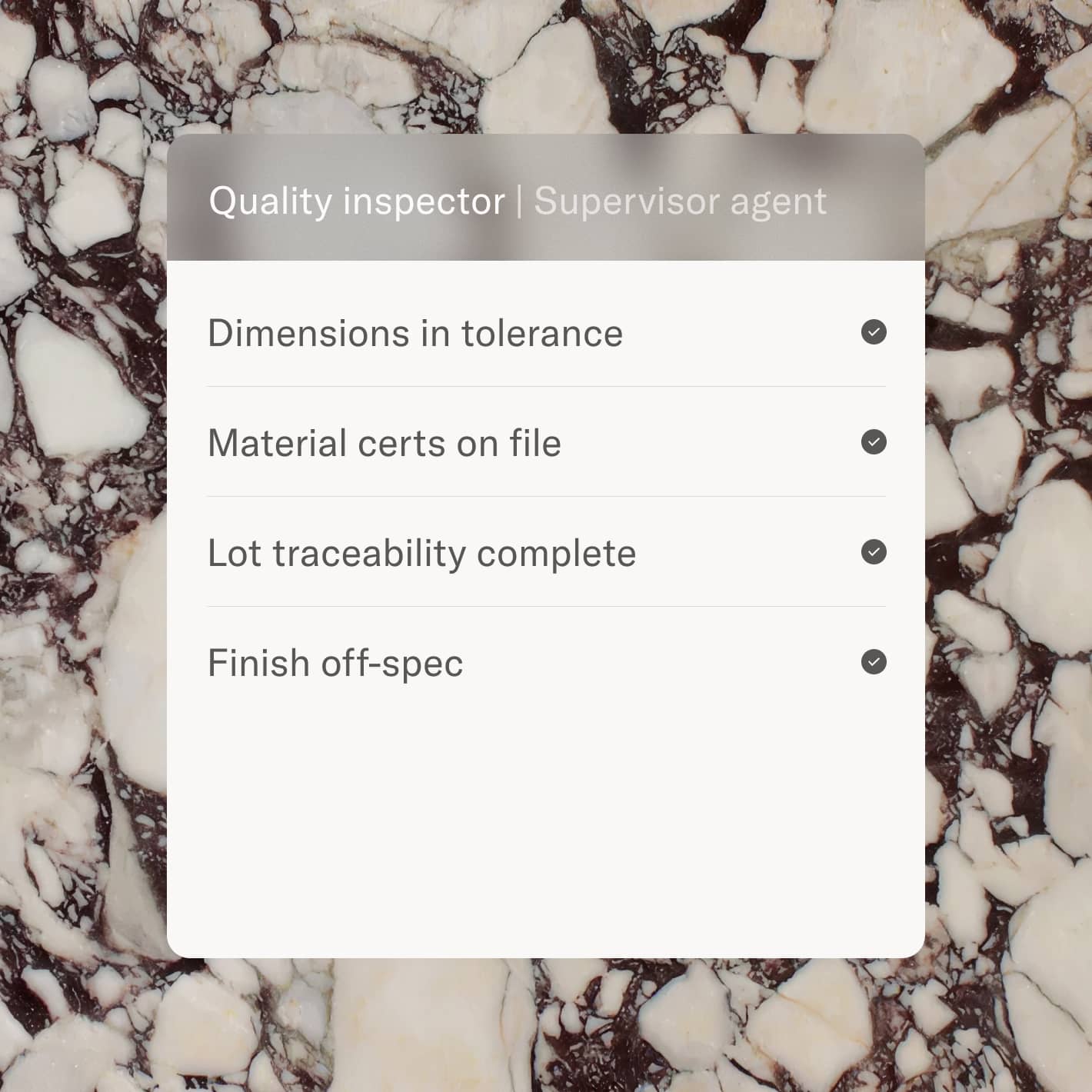
Step 4: Contract negotiation. Buyer and seller negotiate terms, redline the contract, and execute signatures. This is where deals go to die. With Moxo, the AI Compliance Screener validates document completeness before it reaches Legal, and the workflow tracks every version so nobody signs a contract Finance hasn't reviewed.
Step 5: Order management. The signed deal becomes a formal order. Manual re-entry between CRM and ERP is the single biggest source of order errors. With Moxo, order handoffs are structured workflow steps with validation checks.
Step 6: Fulfillment. Products ship or services activate. Fulfillment depends on accurate order data, which depends on clean handoffs in steps 1 through 5.
Step 7: Invoicing. Finance generates invoices based on order and contract terms. Invoice disputes are almost always a symptom of upstream coordination failure.
Step 8: Collections and revenue recognition. Payment is collected and revenue recognized. When the upstream process is clean, collections is straightforward. When it isn't, your AR team becomes a de facto dispute resolution department.
Why quote to cash breaks down
Q2C breaks down at handoffs, not at steps. Every tool in your stack handles its own step well. The problem is the white space between them.
Disconnected systems create data silos. Your CPQ doesn't talk to your CLM. Your CLM doesn't sync with your ERP. Every time data crosses a system boundary, someone re-enters it manually, and every manual entry is an opportunity for error. With Moxo, the orchestration layer connects these system handoffs into a single structured process with validation at each step.
Approval bottlenecks kill momentum. A non-standard discount needs Sales approval. A custom term needs Legal review. A payment exception needs Finance sign-off. Each lives in a different inbox with no visibility into the others. The deal sits. The buyer waits. The competitor sends their proposal. With Moxo, approval workflows run in parallel when possible and in sequence when required, with automatic escalation when SLAs are at risk.
Nobody knows where the deal actually stands. Ask three people on your revenue team where a deal is in the Q2C cycle, and you'll get three different answers. Sales says closed. Legal says in redline. Finance says they haven't seen it. With Moxo, every stakeholder sees the same real-time process view, and the AI generates status briefings so nobody has to chase updates.
Salesforce research found that sales reps spend only about 30% of their time actually selling, with the rest consumed by admin, data entry, and coordination work. That coordination tax is the Q2C problem in a single statistic.
3 examples of quote to cash in action
The Q2C process looks different depending on the industry, but the coordination challenges are eerily similar.
B2B SaaS with usage-based pricing. A SaaS company sells per-seat licensing plus usage overages. The rep configures a custom package, but usage tiers need Finance approval. Legal reviews the MSA for a custom SLA. The order goes to billing with a prorated start date. Three teams, four systems, one deal that takes 23 days instead of 5. The coordination between CPQ, Legal, and billing is entirely manual.
Manufacturing with complex BOMs. A manufacturer quotes a custom product requiring engineering review before pricing. The customer requests modifications, each triggering a new engineering review, repricing, and contract update. The order hits the ERP, but the BOM version doesn't match the latest spec. Fulfillment builds the wrong thing. With Moxo, the modification loop runs as a structured workflow: engineering validates, pricing updates, and the contract regenerates before the order moves forward.
Professional services with milestone billing. A consulting firm scopes a six-month engagement with milestone payments, but billing milestones aren't mapped to the project plan. Three months in, Finance invoices a milestone the client says wasn't completed. Nobody has a single source of truth. With Moxo, milestone completions trigger structured approval workflows that confirm delivery before invoicing begins.
Top 3 software to streamline the quote to cash process
The right Q2C software depends on which part of the cycle you're trying to fix.
Salesforce CPQ (now Revenue Cloud) for configuration and pricing. Handles product configuration, pricing rules, and quoting within the Salesforce ecosystem. Solves configuration accuracy. Doesn't solve what happens after the quote leaves Salesforce: the handoff to Legal, the order entry into ERP, and the downstream coordination that determines whether the deal converts to cash.
Conga (formerly Apttus) for contract lifecycle management. Specializes in document generation, redlining, contract approval workflows, and e-signatures. Addresses the middle of the Q2C cycle well. But the handoff from Conga into order management and billing still requires coordination the tool doesn't provide.
Moxo for end-to-end process orchestration. Moxo addresses the layer CPQ and CLM tools don't: the coordination between steps, teams, and systems across the entire Q2C cycle. AI agents validate data at each transition, route approvals with full context, and ensure nothing stalls between systems. Humans stay accountable for every judgment call while the platform handles preparation, routing, and follow-up.
How to run your quote to cash process on Moxo
Moxo turns your Q2C cycle from disconnected steps into a single orchestrated workflow.
Step 1: Generate your Q2C workflow from a prompt. Describe your process in the prompt box. Moxo's AI generates a structured workflow covering configuration review, pricing approval, contract negotiation, order management, invoicing, and collections. Or build manually by defining stages, actions, and stakeholders.
Step 2: Assign stakeholders and configure AI agents. Assign each step to the correct owner. The AI Intake Validator pre-fills deal data at kickoff. The AI Compliance Screener validates documents before they reach Legal. The AI Strategic Advisor surfaces recommendations during complex approvals.
Step 3: Test and deploy. Validate that handoffs trigger correctly and stakeholders receive context only when action is needed. Deploy as your standard Q2C process.
Step 4: Bring external stakeholders in without friction. Customers and partners act through magic-link access. No account setup. They click, they act, the process moves forward.
Step 5: Monitor and optimize. Process Pulse reporting shows where deals stall and how cycle times trend. Conversational reports let you ask "which Q2C stage has the longest delay?" and get data, not a dashboard to interpret.
Get started for free and build your first Q2C workflow on Moxo today.
Improving your quote to cash process
Quote to cash is not a finance problem or a sales problem. It's a coordination problem that spans every revenue-touching team in the organization. The companies that treat Q2C as disconnected steps will keep losing time and revenue to the gaps between them. The companies that design the handoffs are the ones growing at multiples of their peers.
Moxo gives revenue teams the orchestration layer that CPQ, CRM, and ERP tools leave missing. AI agents handle validation, routing, and follow-up between Q2C steps while humans stay accountable for pricing decisions, contract approvals, and exception handling.
Get started for free and orchestrate your entire quote-to-cash cycle on Moxo today.
FAQ
What is the difference between quote to cash and CPQ?
CPQ (Configure, Price, Quote) handles only the first three steps of the broader quote-to-cash cycle. Q2C includes everything CPQ covers plus contract negotiation, order management, fulfillment, invoicing, collections, and revenue recognition. CPQ is a tool within Q2C, not a replacement for it.
How long does a typical quote-to-cash cycle take?
Most B2B organizations report Q2C cycles between 2 and 8 weeks. The variance is almost entirely driven by coordination delays: approval bottlenecks, contract redline loops, and manual data re-entry. Organizations that design their handoffs typically compress cycle times by 40-60%.
Can you automate the entire quote-to-cash process?
You can automate most execution work: data validation, routing, notifications, and follow-ups. But judgment calls (pricing exceptions, contract terms, credit approvals) still require human accountability. The most effective Q2C systems use AI for coordination while keeping humans in the loop for decisions that carry risk.
What is quote-to-cash software?
Quote-to-cash software is any tool supporting one or more Q2C steps. This includes CPQ platforms (Salesforce Revenue Cloud, DealHub), contract tools (Conga, Ironclad), billing systems (Zuora, Stripe), and process orchestration platforms like Moxo that coordinate handoffs between them.
How does quote to cash connect to revenue operations?
RevOps owns the operational health of the entire revenue cycle, and Q2C is the largest process within that scope. When Q2C handoffs break, RevOps absorbs the coordination overhead. Fixing Q2C is often the single highest-leverage initiative a RevOps leader can prioritize.