BSA/AML compliance officer
Alert analyst
AML investigator
Compliance manager
Chief compliance officer
Financial crimes director

This process is used when the organization’s transaction monitoring system generates an alert based on rules or models that detect potentially suspicious transaction patterns such as structuring, rapid movement of funds, high-risk geography activity, unusual transaction volume, or transactions inconsistent with the customer’s profile. It applies when each alert must be triaged, investigated if warranted, and resolved with a documented disposition within the organization’s required timeframes and regulatory standards. It is common when alert analysts, senior investigators, and BSA officers must coordinate on alert volumes that range from hundreds to thousands per month. Ideal for banks, credit unions, broker-dealers, money services businesses, and any financial institution operating a BSA/AML compliance program.
The AML alert investigation process typically involves alert analysts who perform initial triage and Level 1 review, senior investigators who conduct deeper analysis on escalated alerts, compliance officers who review investigation findings and approve dispositions, BSA officers who authorize and file SARs when suspicious activity is confirmed, and quality assurance staff who review completed investigations for consistency.
Timely alert resolution with every alert triaged, investigated, and dispositioned within the organization’s SLA and regulatory expectations. Accurate SAR filing because investigations are thorough and the SAR narrative is supported by documented analysis. Consistent investigation standards across analysts through structured workflows, documented rationale, and quality review. Reduced regulatory risk through demonstrable compliance with BSA/AML alert investigation and reporting requirements. Actionable management reporting on alert volumes, disposition rates, investigation timelines, and SAR filing trends.
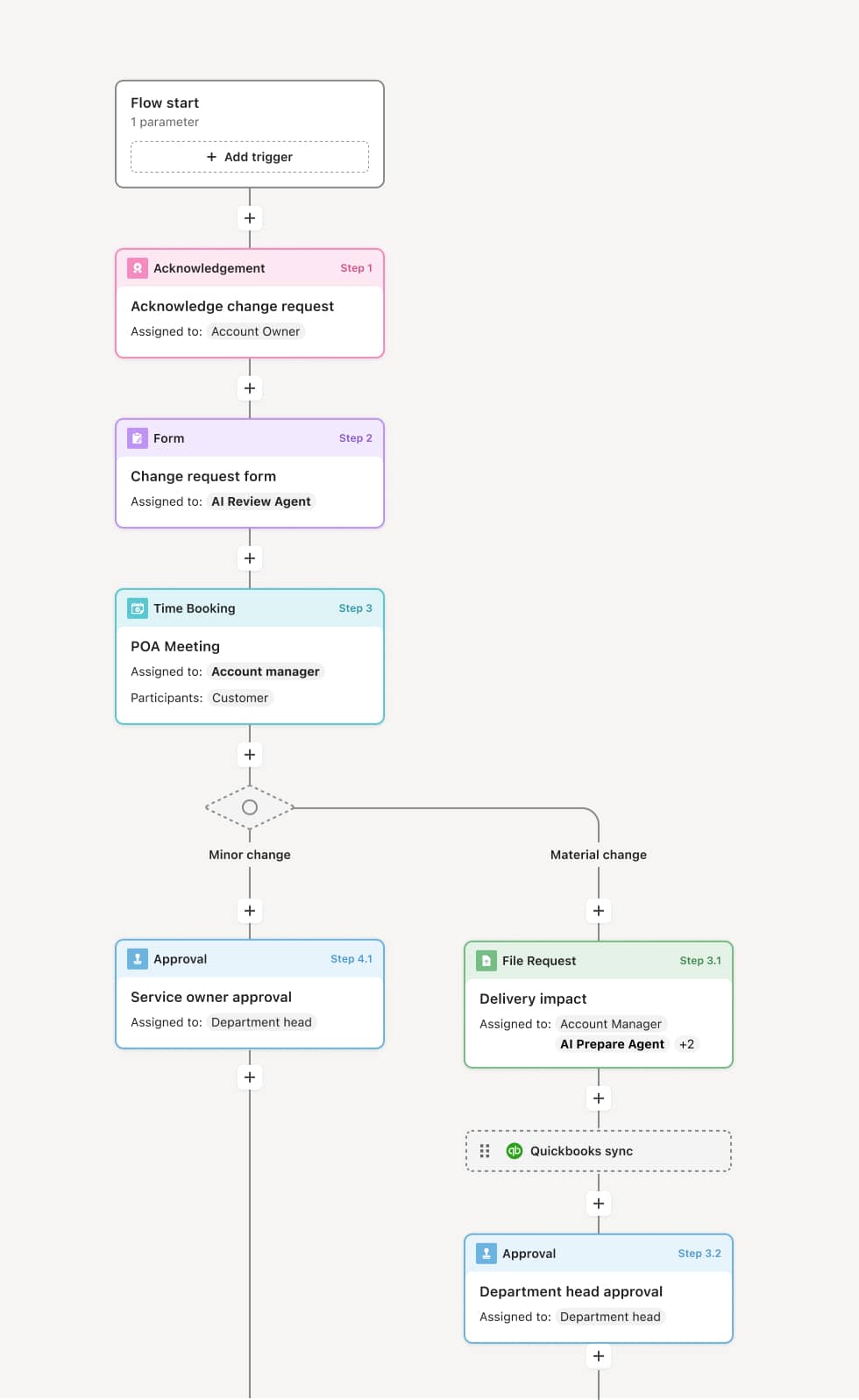
Your version of this process may vary based on roles, systems, data, and approval paths. Moxo’s flow builder can be configured with AI agents, conditional branching, dynamic data references, and sophisticated logic to match how your organization runs this workflow. The steps below illustrate one example.
Alert generation and triage
The process begins when the transaction monitoring system generates an alert based on a rule trigger or model score. The alert analyst reviews the alert details, the triggering transactions, and the customer profile to determine whether the alert warrants investigation or can be closed as a false positive with documented rationale. An AI Agent can assist by enriching the alert with customer risk rating, account history, prior alert history, and relevant negative news screening results.
Level 1 investigation
If the alert warrants investigation, the analyst conducts a Level 1 review, analyzing the customer’s transaction patterns, account activity, known source of funds, business type, and any available context. The analyst documents findings and determines whether the activity can be explained, requires escalation to a senior investigator, or warrants a SAR recommendation.
Escalation and Level 2 investigation
Alerts that cannot be resolved at Level 1 are escalated to a senior investigator for deeper analysis. The investigator may conduct enhanced due diligence, review additional account relationships, examine beneficial ownership information, and consult internal or external data sources. An AI Agent may surface related alerts, prior SARs, and network connections to support the investigator’s analysis.
Disposition determination
Based on the investigation, a disposition is recommended: close as no suspicious activity identified, file a SAR, or refer for further action such as account restriction or law enforcement referral. The disposition rationale is documented. Dispositions involving SAR filing are routed to the BSA officer for review and authorization.
SAR preparation and filing
If a SAR is warranted, the investigator or compliance analyst prepares the SAR narrative and supporting documentation. The BSA officer reviews and approves the SAR before filing with FinCEN. The SAR is filed within the required 30-day timeline from the determination of suspicious activity.
Quality review and case closure
Completed investigations are subject to quality assurance review to confirm that the analysis was thorough, the disposition was consistent with policy, and the documentation supports the conclusion. The case is closed and the complete investigation record is preserved.
This process commonly relies on inputs such as transaction monitoring alerts, customer account data, transaction records, KYC documentation, negative news screening results, prior alert and SAR history, and beneficial ownership records. It may be triggered by automated transaction monitoring rules or model-based scoring. Connected systems often include transaction monitoring platforms like Actimize, Verafin, or SAS AML, case management systems, KYC/CDD platforms, and FinCEN’s BSA E-Filing system.
Key decision points include whether the alert warrants investigation or can be closed as a false positive, whether the investigated activity is suspicious and warrants a SAR filing, whether the case should be escalated to a senior investigator or referred for enhanced due diligence, and whether the SAR narrative accurately reflects the investigation findings.
Alert backlogs that cause investigation SLAs to be exceeded, creating regulatory risk and reducing the value of timely detection. Insufficient investigation documentation that does not support the disposition decision if challenged during an examination. Inconsistent disposition standards across analysts, resulting in similar activity being treated differently. SAR narratives that lack specificity, failing to communicate the suspicious activity clearly to law enforcement. Quality review not performed consistently, allowing investigation deficiencies to persist without correction.
Orchestrates AML alert investigation from triage through disposition and SAR filing across analysts, investigators, BSA officers, and quality reviewers in a single workflow.
Enriches alerts at triage with AI Agents that pull customer risk data, account history, prior alerts, and negative news into the investigation package.
Routes alerts based on complexity so straightforward false positives are resolved quickly while complex cases reach senior investigators with full context.
Tracks investigation SLAs and SAR filing deadlines within the workflow, alerting the team when cases are approaching their required resolution timelines.
Connects to transaction monitoring, case management, and KYC platforms like Actimize, Verafin, and FinCEN E-Filing so investigation data and regulatory filings are managed in context.
Preserves the complete investigation record including alert data, analysis, disposition rationale, SAR documentation, and quality review for examination readiness.