
Privacy officer
Health information management director
Compliance manager
Patient experience officer
Clinical operations director
IT systems manager

This process is used when the organization must collect, update, or enforce patient consent across multiple scenarios — including general treatment consent, consent for specific procedures, authorization for data sharing with external parties, consent for research participation, communication preferences, and advance directive documentation. It applies when consent preferences must be tracked over time, updated when circumstances change, and made available to clinical and administrative systems that need to respect those preferences. It is common when clinical staff, privacy officers, registration, and IT teams must coordinate to maintain a unified consent record. Ideal for hospitals, health systems, integrated delivery networks, and any healthcare organization managing consent across multiple care settings and systems.
The consent management process typically involves registration or intake staff who collect initial consent forms, clinical staff who obtain procedure-specific or treatment-related consent, privacy officers who manage data sharing authorizations and revocations, patients who provide and update their consent preferences, and IT or systems teams who ensure consent preferences are enforced in clinical and administrative systems.
Unified consent record that consolidates all patient consent preferences across treatment, research, data sharing, and communications in one accessible location. Regulatory compliance with HIPAA, state privacy laws, and research consent requirements through structured consent capture and tracking. Real-time consent enforcement so clinical and administrative systems respect the patient’s current preferences at the point of care or data exchange. Reduced consent-related compliance findings because consent records are complete, current, and auditable. Improved patient trust through transparent management of their preferences and prompt action when they request changes.
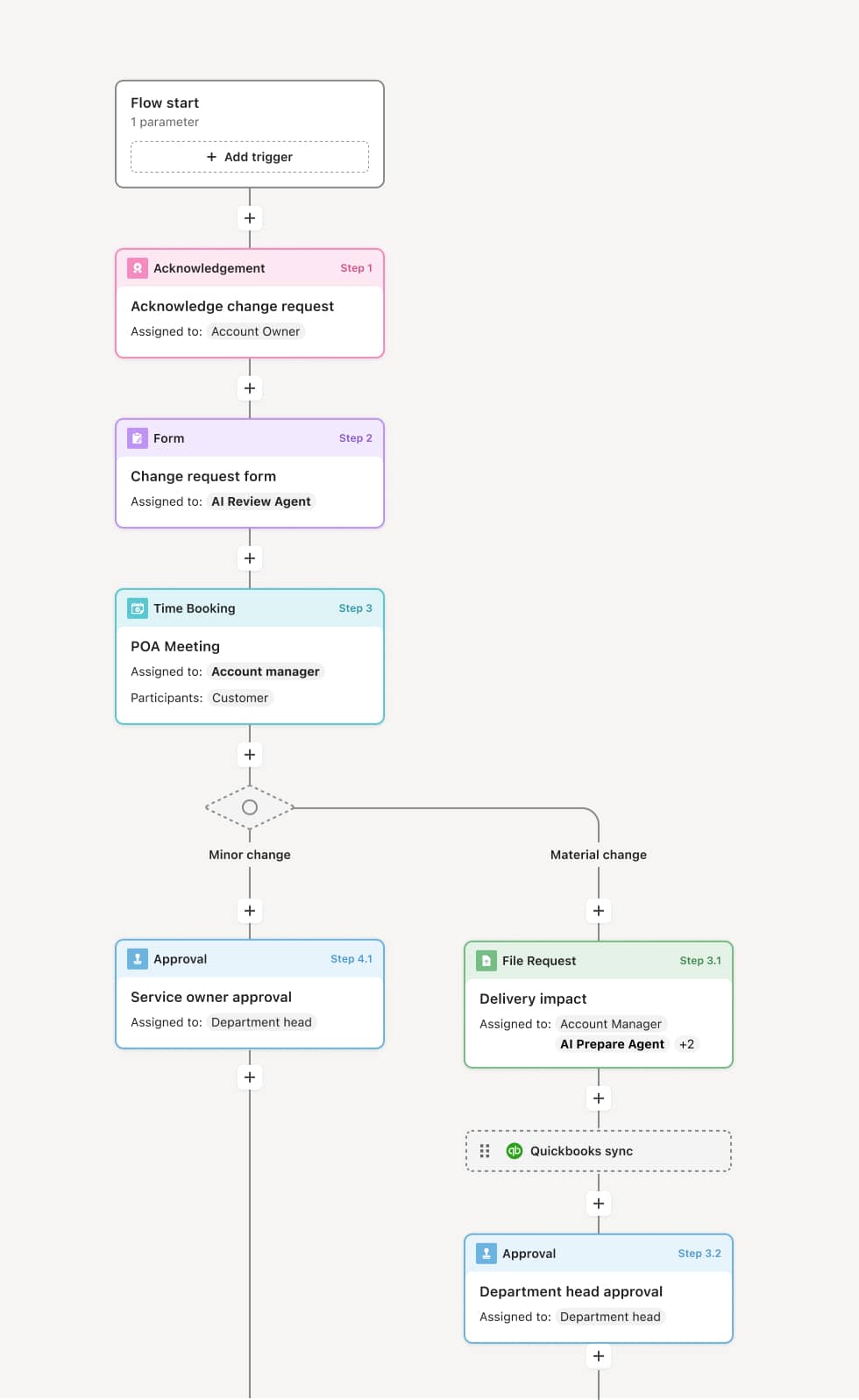
Your version of this process may vary based on roles, systems, data, and approval paths. Moxo’s flow builder can be configured with AI agents, conditional branching, dynamic data references, and sophisticated logic to match how your organization runs this workflow. The steps below illustrate one example.
Initial consent collection
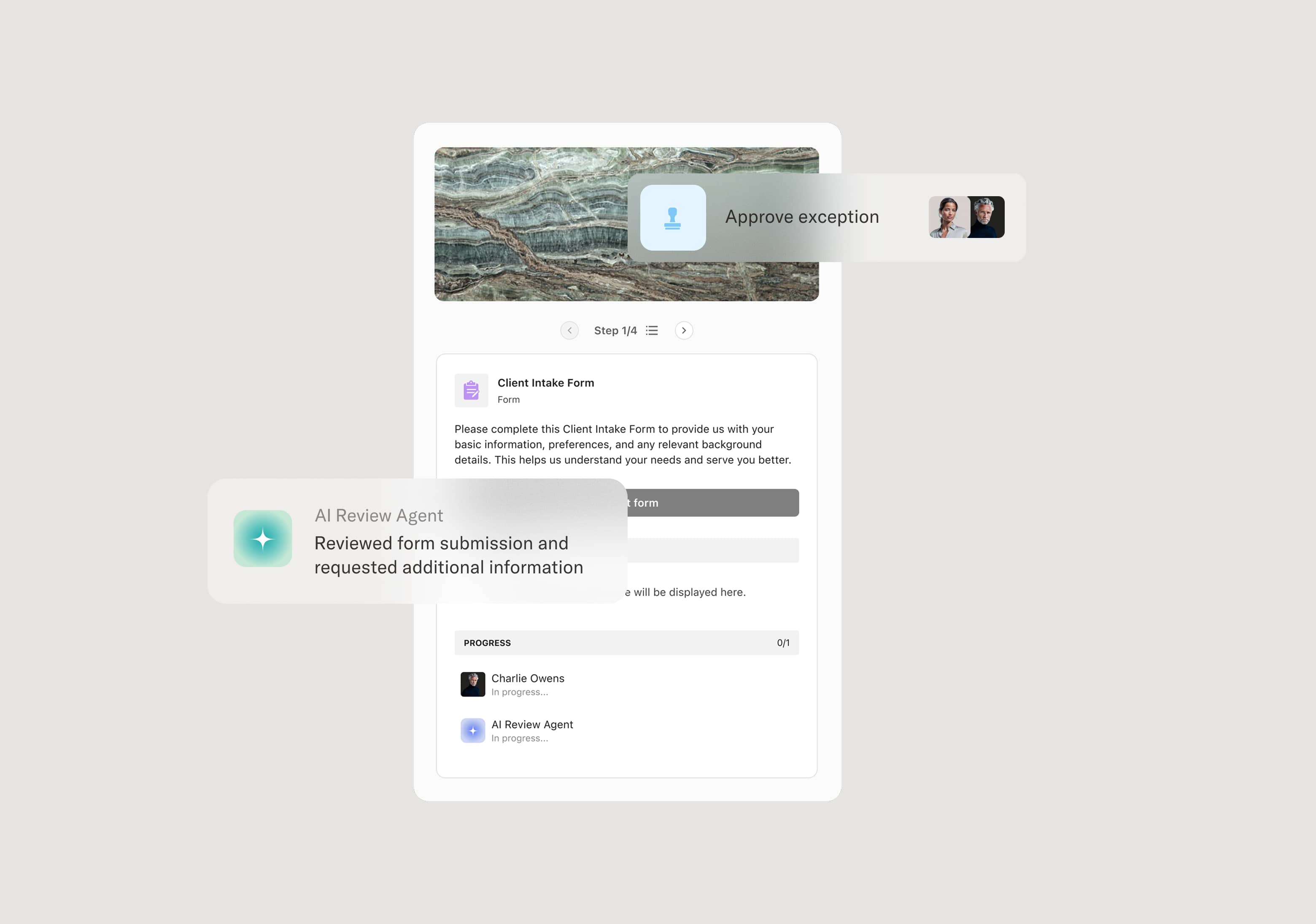
The process begins when a patient first engages with the organization — at registration, admission, or initial visit. Standard consent forms are presented, including general treatment consent, notice of privacy practices acknowledgment, communication preferences, and data sharing authorizations. An AI Agent can assist by verifying that all required consent documents are presented based on the patient’s care context and that the correct form versions are used.
Procedure or activity-specific consent
When the patient requires a specific procedure, treatment, or participation in research, the relevant consent is obtained following the informed consent process — including disclosure, comprehension verification, and signature. Procedure-specific consents are linked to the patient’s central consent record.
Consent preference updates
When a patient requests a change to their consent preferences — such as revoking a data sharing authorization, opting out of communications, or updating advance directive documentation — the change is processed and the consent record is updated. An AI Agent may verify that downstream systems and workflows are notified of the change.
Consent record maintenance and synchronization
The patient’s consent preferences are maintained in a central consent management system and synchronized with clinical, administrative, and data exchange systems. When consent preferences affect data flows — such as health information exchange participation or research data sharing — the applicable systems are updated to enforce the current preferences.
Periodic consent review and reaffirmation
At defined intervals or when care circumstances change, the patient’s consent preferences are reviewed and reaffirmed. This may occur during annual visits, care transitions, or when new consent requirements arise due to regulatory changes.
Audit and compliance reporting
The consent management record supports audit activities by providing a complete history of all consents obtained, updated, and revoked, with timestamps and responsible parties. Compliance reporting can demonstrate that the organization consistently collects, tracks, and enforces patient consent preferences.
This process commonly relies on inputs such as consent forms, patient identity verification, communication preferences, advance directive documents, and data sharing authorizations. It may be triggered by a patient registration, a procedure scheduling event, a patient request, or a regulatory change. Connected systems often include EHR platforms like Epic or Cerner for consent documentation, consent management platforms, patient portal systems, and health information exchange networks.
Key decision points include which consent documents are required based on the patient’s care context, whether the patient’s consent preferences have changed and require record updates, whether consent changes affect data sharing or system integrations that must be updated, and whether periodic reaffirmation is due based on the organization’s consent review schedule.
Consent forms not collected at initial registration, creating gaps that are discovered when the consent is needed for a procedure or data exchange. Outdated consent preferences persisting in clinical systems because updates were not propagated from the central record. Revocations not enforced when a patient withdraws a data sharing authorization but downstream systems continue to exchange data. Consent records fragmented across departments and systems, making it impossible to provide a complete view of the patient’s preferences. Paper-based consent processes that are not digitized or linked to the patient’s electronic record, creating audit and retrieval challenges.
Orchestrates consent collection, updates, and enforcement across registration, clinical, privacy, and IT teams in a single workflow that keeps the patient’s consent record unified.
Ensures the correct consent documents are presented based on the patient’s care context, with AI Agents verifying form versions and completeness at the point of collection.
Processes consent preference changes submitted by patients and routes updates to all affected systems and workflows.
Tracks consent across care settings so procedure-specific, research, and data sharing consents are linked to the patient’s central record.
Connects to EHR and consent management platforms like Epic, Cerner, and health information exchange networks so consent preferences are enforced in real time.
Preserves the complete consent history including every collection, update, and revocation with timestamps and responsible parties for audit and regulatory compliance.