Patient financial counselor
Revenue cycle director
Charity care coordinator
Compliance officer
Patient access manager
Chief financial officer

This process is used when a patient indicates financial hardship, is identified as potentially eligible for financial assistance based on screening criteria, or when the organization’s policy requires proactive financial assistance evaluation before collection activity. It applies when the patient’s income, household size, insurance status, and financial circumstances must be assessed against the organization’s financial assistance policy and any applicable regulatory requirements (such as IRS 501(r) for nonprofit hospitals). It is common when financial counselors, billing, compliance, and the patient must coordinate to gather documentation, evaluate eligibility, and communicate the determination. Ideal for nonprofit hospitals, health systems, community health centers, and any healthcare organization operating financial assistance programs.
The financial assistance process typically involves patient financial counselors who screen patients and guide them through the application, billing staff who provide account and charge information, compliance officers who ensure policy adherence and regulatory alignment, supervisors or finance leadership who approve determinations above defined thresholds, and the patient who provides financial information and documentation.
Timely financial assistance determinations so eligible patients receive support before accounts are sent to collection or patients forgo necessary care. Consistent eligibility decisions because every application is evaluated against the same policy criteria and documented uniformly. Regulatory compliance with IRS 501(r), state charity care requirements, and organizational policies for financial assistance screening and notification. Reduced bad debt by identifying patients who qualify for assistance before their accounts become uncollectible. Better patient experience because financial counselors engage patients proactively, explain their options, and guide them through the process.
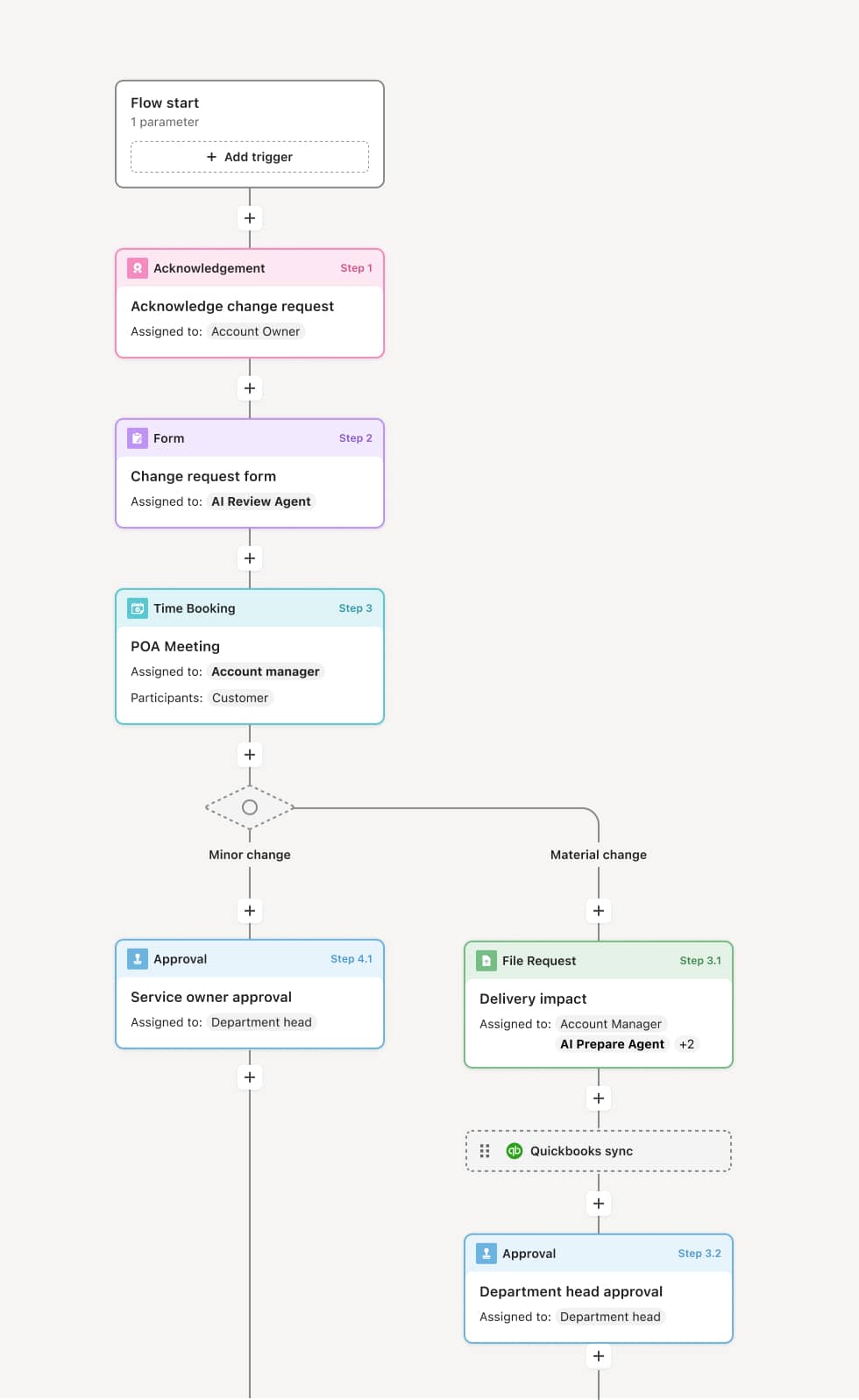
Your version of this process may vary based on roles, systems, data, and approval paths. Moxo’s flow builder can be configured with AI agents, conditional branching, dynamic data references, and sophisticated logic to match how your organization runs this workflow. The steps below illustrate one example.
Financial screening and identification
The process begins when a patient is identified as potentially eligible for financial assistance — through self-reported financial hardship, screening at registration, referral from billing, or presumptive eligibility data. The financial counselor initiates a conversation with the patient to explain available programs and begin the screening. An AI Agent can assist by checking the patient’s insurance status, account balance, and demographic data against preliminary eligibility criteria.
Application and documentation collection
The patient completes a financial assistance application and provides required documentation — which may include proof of income, tax returns, pay stubs, household size verification, and insurance coverage details. The financial counselor assists the patient in gathering the required materials. An AI Agent may verify that the application package is complete and flag missing documents before the evaluation begins.
Eligibility evaluation
The financial counselor or designated reviewer evaluates the application against the organization’s financial assistance policy — including income thresholds, asset limits, family size, and insurance status. The evaluation determines whether the patient qualifies for full charity care, partial discount, payment plan, or does not meet eligibility criteria. If the determination is above a threshold amount, it may require supervisor or finance leadership approval.
Approval and determination communication
The determination is communicated to the patient in writing, including the assistance granted, the adjusted balance, and any remaining patient responsibility. If the patient does not qualify, the denial is communicated with the reason and information about appeal rights or alternative resources.
Account adjustment and billing update
Upon approval, the patient’s account is adjusted to reflect the approved financial assistance. Billing records are updated, and any related collection activity is suspended or resolved. If a payment plan is established, the terms are documented and the plan is activated.
Documentation and compliance record
The complete financial assistance record — including the application, supporting documentation, evaluation, determination, and patient communication — is preserved for regulatory compliance, audit, and program reporting.
This process commonly relies on inputs such as the financial assistance application, income documentation, insurance verification, household data, and the organization’s financial assistance policy. It may be triggered by patient self-report, registration screening, billing referral, or presumptive eligibility data. Connected systems often include patient accounting and billing systems like Epic, Athenahealth, or Meditech, insurance verification platforms, and financial assistance tracking tools.
Key decision points include whether the patient meets the preliminary screening criteria for financial assistance evaluation, whether the submitted documentation is sufficient to determine eligibility, which level of assistance the patient qualifies for based on income, household size, and insurance status, and whether the determination amount requires additional approval.
Patients not screened proactively, resulting in eligible patients being sent to collections before assistance is offered. Incomplete applications that delay determination because required documentation is missing and follow-up is not tracked. Inconsistent policy application when different counselors interpret eligibility criteria differently for similar circumstances. Delayed account adjustments after approval, causing the patient to receive collection notices after they have been approved for assistance. Compliance documentation gaps when financial assistance records are not maintained in a manner that satisfies IRS 501(r) or state audit requirements.
Orchestrates the financial assistance process from screening through determination and account adjustment across financial counselors, billing, compliance, and the patient in a single flow.
Engages patients directly within the workflow for application completion, document submission, and determination communication, keeping every interaction tracked and contextual.
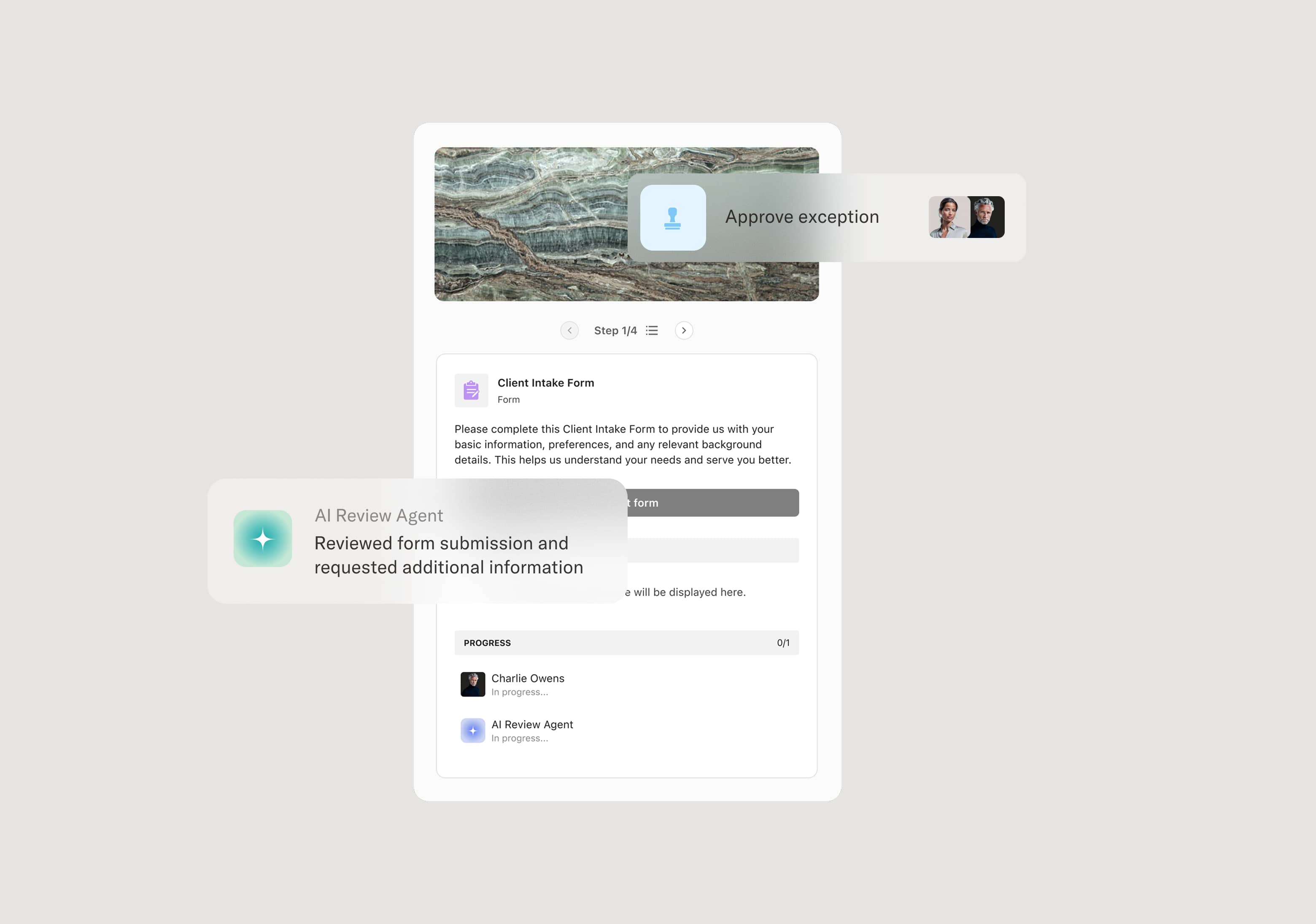
AI Agents verify application completeness at submission, flagging missing income documentation, insurance verification, or household data before the evaluation begins.
Routes determinations for approval based on assistance level and amount, ensuring high-value adjustments receive appropriate authorization.
Connects to billing and patient accounting systems like Epic, Athenahealth, and Meditech so account adjustments are applied promptly upon approval.
Preserves the complete financial assistance record including applications, documentation, evaluations, determinations, and patient communications for regulatory compliance and audit readiness.