Patient financial services manager
Billing supervisor
Revenue cycle director
Patient access coordinator
Collections manager
Finance controller

This process is used when a patient has an outstanding balance and requests or is offered a structured payment arrangement rather than paying the full amount immediately. It applies when the patient’s financial circumstances, balance amount, and organizational policy determine the appropriate payment terms. It is common when patient financial services, billing, and the patient must agree on terms and the payment schedule must be monitored through completion. Ideal for hospitals, physician practices, ambulatory care centers, and any healthcare organization offering patient payment plans.
The payment plan process typically involves patient financial counselors who assess the patient’s financial situation and propose terms, billing staff who set up the plan in the billing system, the patient who agrees to and makes payments under the plan, collections staff who follow up on missed payments, and supervisors who authorize non-standard plan terms.
Increased patient collections by offering structured payment options that patients can manage, reducing the likelihood of accounts going to bad debt. Clear payment terms communicated to the patient in writing, reducing disputes and misunderstandings about the arrangement. Consistent plan setup because every plan is evaluated against organizational policy and approved at the appropriate level. Proactive default management through automated payment tracking and follow-up on missed payments before the plan fails. Reduced collection costs because payment plans resolve balances at lower cost than external collection activity.
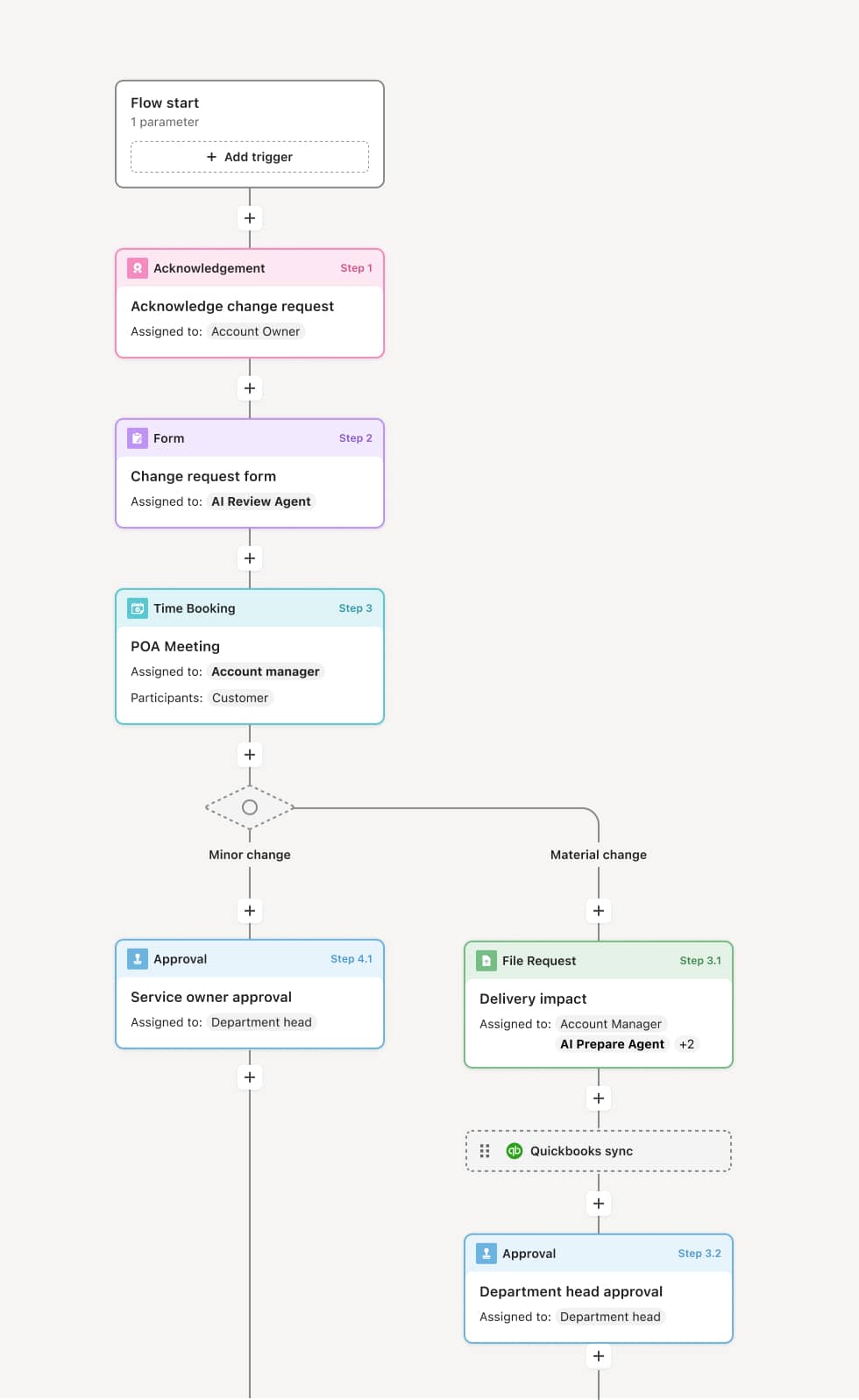
Your version of this process may vary based on roles, systems, data, and approval paths. Moxo’s flow builder can be configured with AI agents, conditional branching, dynamic data references, and sophisticated logic to match how your organization runs this workflow. The steps below illustrate one example.
Financial assessment and plan eligibility
The process begins when a patient contacts the organization about an outstanding balance or is identified as a candidate for a payment plan. The financial counselor reviews the balance, insurance adjudication status, and the patient’s financial situation to determine eligibility and appropriate terms. An AI Agent can assist by pulling the patient’s account summary, prior payment history, and applicable payment plan policy parameters.
Plan proposal and patient agreement
The counselor proposes payment plan terms including the monthly payment amount, duration, and any conditions. The patient reviews and agrees to the terms. The agreement is documented with the patient’s acknowledgment, including the consequences of default. An AI Agent may generate the payment plan agreement based on the proposed terms and organizational policy.
Plan activation and system setup
The approved payment plan is set up in the billing system with the agreed terms, payment schedule, and automated payment reminders. The patient’s account is flagged to prevent collection activity during the active plan period.
Payment monitoring and reminders
Payments are tracked against the schedule. Automated reminders are sent before each payment due date. If a payment is missed, the patient is contacted promptly to resolve the situation and prevent the plan from defaulting.
Default management
If the patient misses multiple payments or fails to respond to follow-up, the plan is assessed for default. Depending on organizational policy, the account may be offered revised terms, referred to collections, or offered financial assistance screening. The patient is notified of any changes to the plan status.
Plan completion and closure
When the patient completes all payments, the plan is closed and the balance is resolved. The complete payment plan record is preserved including the agreement, payment history, and any communications.
This process commonly relies on inputs such as the patient’s account balance, insurance adjudication status, payment history, financial assessment data, and organizational payment plan policy. It may be triggered by a patient inquiry, a billing statement response, or a proactive outreach to patients with outstanding balances. Connected systems often include patient billing systems like Epic, Athenahealth, or Meditech, payment processing platforms, and patient communication tools.
Key decision points include whether the patient is eligible for a payment plan based on the balance amount and organizational policy, what payment terms are appropriate given the patient’s financial situation, whether non-standard terms require supervisor authorization, and whether a missed payment warrants revised terms, default, or referral to collections.
Payment plan terms set without adequate financial assessment, resulting in plans the patient cannot sustain. Plan agreements not documented clearly, leading to disputes about terms or default consequences. Missed payments not followed up promptly, allowing plans to drift into default without intervention. Plans not set up correctly in the billing system, causing erroneous collection notices to be sent to patients on active plans. Completed plans not closed, leaving resolved accounts open in the system.
Orchestrates payment plan setup, monitoring, and closure across patient financial services, billing, and the patient in a single workflow.
Engages patients directly within the workflow for financial assessment, plan agreement, and payment reminders, keeping all communications in context.
AI Agents pull account data and policy parameters to prepare the financial counselor and generate plan agreements based on approved terms.
Automates payment reminders and missed payment follow-up within the workflow to keep plans on track before they default.
Connects to billing and payment processing systems like Epic, Athenahealth, and Meditech so plan setup and payment tracking are synchronized with the patient’s account.
Preserves the complete payment plan record including the agreement, payment history, communications, and closure documentation for financial reconciliation and audit.